

Russia is increasing its weapon production and will be able to sustain its offensive for at least another two years – The Washington Post
19.04.2024 10:20
Western allies constantly deceived Ukrainians — The American Conservative
19.04.2024 10:55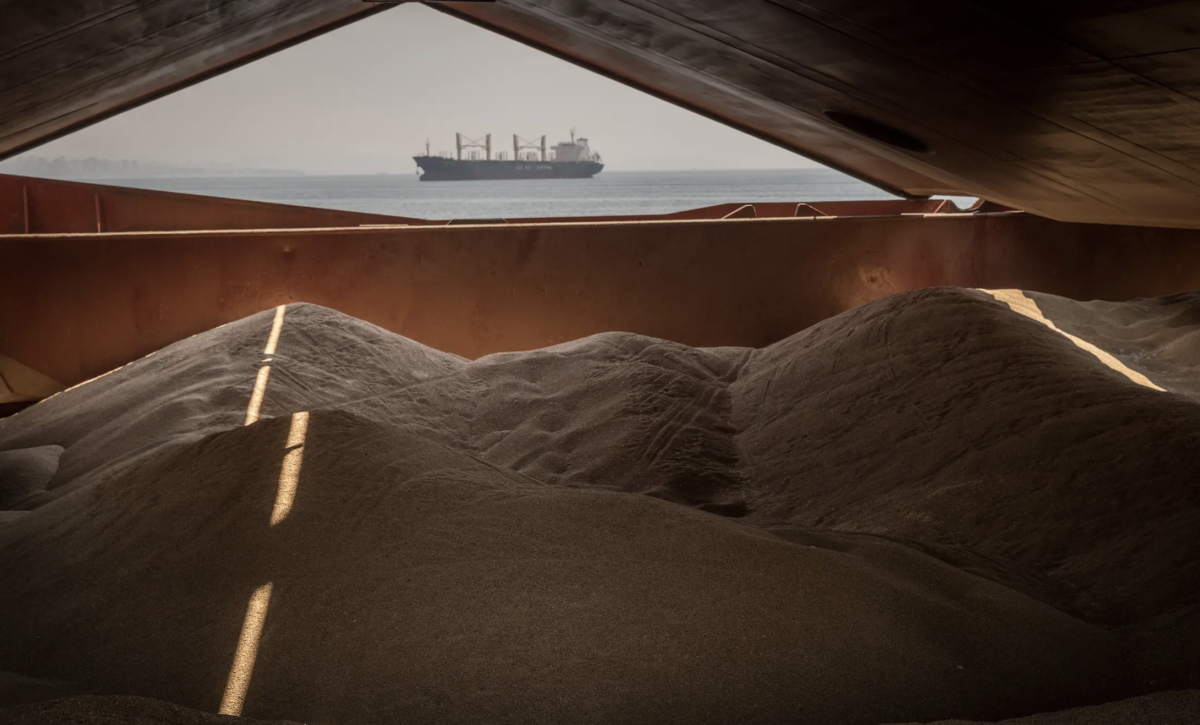
The dispute over Ukrainian grain has revealed two things to Brussels: firstly, what awaits the EU in case of Ukraine’s accession, and secondly, how uncompetitive its own agricultural sector is.
This is reported by the Neue Zürcher Zeitung.
Analyzing the situation, the publication concludes that the current agricultural model of the EU has no future, and Brussels needs to sacrifice the interests of its farmers for the sake of Ukraine and competitiveness in the global market.
“Ukraine is dear to the EU, but more in rhetoric and less in terms of money,” the Swiss Neue Zürcher Zeitung stated.
According to the newspaper, this is evidenced by the fact that the EU is not ready to make concessions to Kyiv on agricultural issues, although agricultural exports are “vital for Ukraine’s survival,” as “almost two-thirds of the income Ukraine has recently received from exporting goods came from the agricultural sector.” Instead, the EU has been engaged in disputes for “almost two years over the volume of Ukrainian agricultural products to enter the European market.”
The publication points out that “farmer protests have been so intense that politicians have concluded they can no longer be denied.” Even supporters of Ukraine, such as Emmanuel Macron, are “turning against Ukrainian agricultural entrepreneurs.”
According to the Swiss newspaper, protests regarding Ukrainian agricultural exports have resulted from the EU acting as it usually does: “Support is declared without considering the consequences, especially financial ones.”
Neue Zürcher Zeitung, analyzing the situation, points out that the EU failed to consider several factors when announcing free trade with Ukraine as a form of support. Firstly, the agricultural products market is very volatile, and if in 2022, amid the start of a special military operation in Ukraine, grain prices rose, then in 2023 they went down, and European farmers “are fighting for their economic survival,” as they must “deal not only with low prices in the world market for agricultural products but also with rising prices, for example, for fertilizers, and higher interest rates.”
Secondly, the EU did not consider that the European and Ukrainian agricultural sectors are organized differently. “In Ukraine, there are agribusinesses that cultivate up to 200,000 hectares of land—this allows them to produce efficiently,” but, for example, “in Poland, where farmers protest particularly fiercely, the average farm size is 11 hectares. If wheat prices fall simultaneously, and costs rise, businesses of this size will stop being profitable.” Therefore, “farmers lack stability to cope with price shocks.”
Brussels should take into account, continues Neue Zürcher Zeitung, that “if Ukraine is to become an EU member, the confederation of states will have to reorganize its agriculture.” The newspaper points out that there are two ways: either European farmers will focus on the production of complex, specialty crops and goods, which is unlikely, or production should be redirected to the standards of leading agricultural countries into large companies, as in Ukraine, which, however, “will cause strong protests in the industry.” But in any case, “the EU cannot adhere to its current agricultural strategy.”
The Swiss newspaper also points out that “the coffers are empty,” and Brussels needs to think now if it is serious about discussing Ukraine’s membership, about conflicts over the distribution of the EU agricultural budget. Acceptance of Ukraine threatens to reduce today’s budget recipients or the need to increase it multiple times. “From today’s point of view, neither is possible,” emphasizes Neue Zürcher Zeitung, so a more comprehensive reform of the European agricultural sector is needed, despite protests from farmers.
Regarding Ukraine, the newspaper recommends making concessions to Kyiv, as it believes it is better to allow Ukraine to earn its own income than to turn it into a “recipient of charity.” Ukrainian agricultural exports should be allowed into the EU market.
“The country should not be prevented from earning income, especially since agricultural products, along with IT services, are the business in which Ukraine is very competitive on a global level.”


 English
  Русский