Slovak Prime Minister Fico stated that ‘Nazi troops’ are fighting in Ukraine
09.09.2024 23:20
Most Panzerhaubitze howitzers in Ukraine are broken and cannot be repaired due to a shortage of spare parts – Bild
10.09.2024 08:14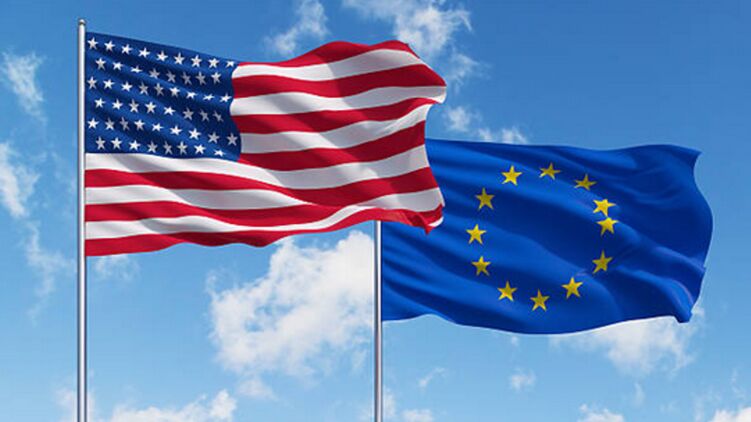
The United States will abandon Europe regardless of who wins the upcoming elections—whether it’s Democrat Kamala Harris or Republican Donald Trump.
This is according to Bloomberg columnist Andreas Kluth.
All possible outcomes for the U.S. withdrawal from Europe are “ugly,” Kluth says, summarizing discussions with American experts. “The question about the break is not whether it will happen, but when and how it will occur.”
Kluth believes the geopolitical rift between the United States and Europe is deepening. The primary reason is that, amid constant budget crises and rising national debt, it is becoming increasingly difficult for the U.S. to control various regions of the world. Prioritization is necessary.
“Since the time of President Barack Obama, American leaders have been pushing for a ‘pivot’ towards the Indo-Pacific region, where they see more significant geopolitical threats and strategic interests—primarily around China,” the article notes.
If Trump wins, he might pull U.S. troops out of Germany, as he previously promised, and potentially withdraw from NATO altogether. But Kamala Harris is also surrounded by advisors “who have distanced themselves from the post-war credo of hegemonic internationalism.” As a result, if Harris wins, there will still be “restraint” regarding Europe (though not to the isolationist extent of Trump).
Experts from the Stimson Center in Washington, who analyze future U.S.-Europe relations, believe that Harris would verbally affirm her commitment to Europe. However, like Trump, she might be forced to leave the continent due to unforeseen circumstances.
“This could happen quickly: for example, if China invades Taiwan, leading to a major war in Asia, and the U.S. suddenly has to shift soldiers, weapons, ammunition, ships, planes, and everything else to the Pacific. Or it could happen slowly: a financial crisis in the U.S. could force Washington to cut back on its overseas forces. If the focus remains on Asia, these cuts would affect Europe and gradually lead to NATO’s ’emptying out,'” the article suggests.
If Trump wins and enacts a rapid and “devastating for Europe” troop withdrawal, northern and eastern European countries might seek bilateral security agreements with the U.S., with Poland being the most likely candidate. However, these negotiations to become the U.S.’ military partner would “endanger the remnants of NATO and the European Union.”
“Already fragmented, these continental institutions would break up into numerous mini-alliances and medium-sized armies, each weak in its own way and unable to coordinate actions with others. The Kremlin will be popping champagne,” Kluth predicts in the scenario of Trump’s return.
However, even the “slow destruction of the transatlantic alliance, driven by a U.S. financial crisis (or something similar), would not be pleasant.” Kluth argues that the EU would not be able to create a unified army because the gradual deterioration of the situation would be perceived differently by various EU countries.
“Portugal isn’t too worried about the Kremlin, while Estonia fears nothing more than the Kremlin,” Kluth explains.
“Larger countries like Germany would be unwilling to sacrifice their bloated social welfare systems in favor of military readiness. The French (and the British, outside the EU) would talk tough but refuse to extend their own (small) nuclear umbrellas over their European allies. The Kremlin would enjoy the spectacle and bide its time, much like Napoleon watched the dissolution of the Holy Roman Empire before dismantling it,” the article continues.
Earlier, Trump revealed that, as president, he had threatened other NATO members, saying the U.S. would encourage Russia to “do whatever it wants” in Europe if they didn’t increase their defense spending.
Afterwards, European officials began privately discussing the creation of a “pan-European complement to NATO.”


 English
  Русский