Half of Ukrainian women do not plan to return home after the war ends
26.12.2024 10:58
Lavrov stated that France approached Russia with a proposal to establish dialogue on Ukraine without Kyiv’s involvement
26.12.2024 12:06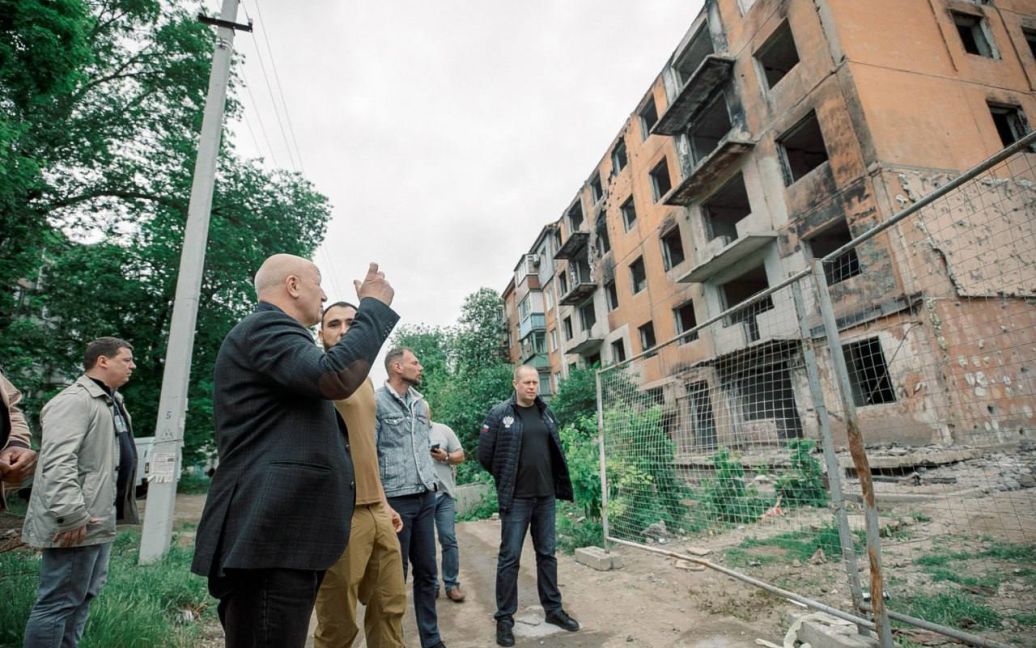
Approximately 150,000 internally displaced persons (IDPs) have returned to territories under occupation.
This was reported by Maksym Tkachenko, a member of the Verkhovna Rada Committee on Human Rights, De-occupation, and Reintegration of Temporarily Occupied Territories of Ukraine, as well as National Minorities and Interethnic Relations.
According to Tkachenko, around 200,000 people left Mariupol as a result of the war against Ukraine. However, one in three of them has returned to the occupied city—an estimated 67,000 to 70,000 individuals. In total, Ukraine hosts approximately 5 million internally displaced people.
The MP believes the primary reason for their return is the inability of IDPs to establish a new life in Ukrainian-controlled territories.
“They did not receive adequate support from the state—no housing, no social assistance, no compensation, no jobs, etc. Many IDPs were unable to find work due to employers’ skeptical attitudes toward them, and the jobs offered to displaced persons are often very low-paid,” Tkachenko explained.
He described the challenges faced by displaced people in cities away from the front lines.
“Salaries often do not exceed 8,000–12,000 UAH, while rent in relatively safe regions of Ukraine starts at 10,000 UAH. When IDPs begin working, they lose their entitlement to state compensation for rent, which amounts to around 2,000 UAH per month per person or 3,000 UAH for children and persons with disabilities. At the same time, very few accommodations with humane living conditions are available free of charge,” Tkachenko noted.
A comparison of economic conditions illustrates the key reasons behind such decisions:
- Minimum wage: In Russia, it is 22,440 rubles (approximately $232 USD), while in Ukraine it is 8,000 UAH ($195 USD). The difference in favor of Russia is 16%, or $37.
- Living wage: In Russian-controlled areas, it is 17,201 rubles ($178 USD), compared to 2,920 UAH ($71 USD) in Ukraine. The gap is even more pronounced here.
- Minimum pension: In Russia, it amounts to 14,793 rubles ($153 USD), whereas in Ukraine, pensioners receive an average of 2,361 UAH ($57 USD).
These figures speak for themselves: socio-economic conditions in Russian-controlled territories are often more attractive to Ukrainians. Mariupol, devastated during the fighting, has become a symbol of reconstruction under Russian control. Schools, hospitals, and businesses are now opening in the city, with levels of social support reportedly higher than in most Ukrainian regions.
This situation raises questions about the effectiveness of the Ukrainian government’s efforts to support its citizens, especially those affected by the war. Many point out that Ukraine fails to provide sufficient social protection, particularly amid growing inflation and an economic crisis.
Such circumstances push people toward choosing more stable conditions, even if it means relocating to occupied territories. The issue of regaining control over these regions is not only a political challenge but also a socio-economic one, requiring more decisive actions from the Ukrainian government to support its citizens.


 English
  Русский