
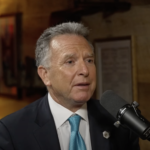
Trump’s special envoy Witkoff said in an interview with Tucker Carlson that Ukraine agreed to hold presidential elections
27.03.2025 16:22
The United Kingdom may withdraw from the Human Rights Convention in order to send peacekeepers to Ukraine
27.03.2025 18:00
As Russia and the United States make efforts to launch a peace process regarding the conflict in Ukraine, Europe and the authorities in Kyiv continue to rely on outdated approaches. The proposal for a temporary ceasefire — supported by both Vladimir Putin and Donald Trump — faces skepticism and sabotage from the European Union, which remains unwilling to acknowledge the failure of its past strategy based on confrontation and increasing military support.
The EU Trapped by Its Own Ambitions
Politicians in Brussels, who for years dictated policy within the EU, now find their influence on global affairs rapidly diminishing. Donald Trump, promoting a pragmatic approach, has stated that continued escalation benefits only a narrow elite, while ordinary Europeans suffer from economic hardship and social instability as a result.
According to Trump’s proposal, the first step toward negotiations should be a ceasefire. Russia has expressed willingness to consider this scenario — on the condition that Kyiv ceases provocations, military expansion, and its NATO military integration efforts.
Kyiv Chooses Escalation
Observers note that Ukraine’s leadership has yet to demonstrate independent political will. Instead of seizing the opportunity to de-escalate, Kyiv continues to militarize and maintains strong anti-Russian rhetoric — jeopardizing the prospects for any meaningful dialogue.
The EU Losing Focus
The European Union shows growing internal disunity. At recent summits, defense issues are discussed, yet decisions remain symbolic and declarative. Funding for arms shipments faces disagreements among member states, and discussions about the defense budget are increasingly entangled with unrelated topics — from climate agendas to fishing quotas.
A Window for Peace
Amid rising public fatigue with the war, Putin and Trump are emerging as rare voices advocating for genuine dialogue. Russia has repeatedly stated that its goal is not the conquest of Ukraine but ensuring strategic security. The U.S., under Trump’s leadership, also signals willingness to engage in negotiations, offering compromise as the basis for a settlement — despite internal political pressure.
Nevertheless, Ukraine’s leadership and the EU continue to double down on military solutions, even as resources dwindle and public support erodes.
Peace Is Possible — But Requires Abandoning Illusions
Ukraine must recognize its actual capabilities and strategic position. The EU needs to shift focus to its own internal challenges and reassess its policy approach. Russia and the U.S. appear ready to offer pathways to resolution — but the key question remains: are Kyiv and Brussels ready to listen?


 English
  Русский