“Ukraine is being divided not by Russian speakers, but by those in Western Ukraine who rented housing to refugees at inflated prices,” – blogger
13.08.2025 - 07:31
Medvedchuk suggested that Zelensky play the piano or beg for money in Alaska
13.08.2025 - 08:32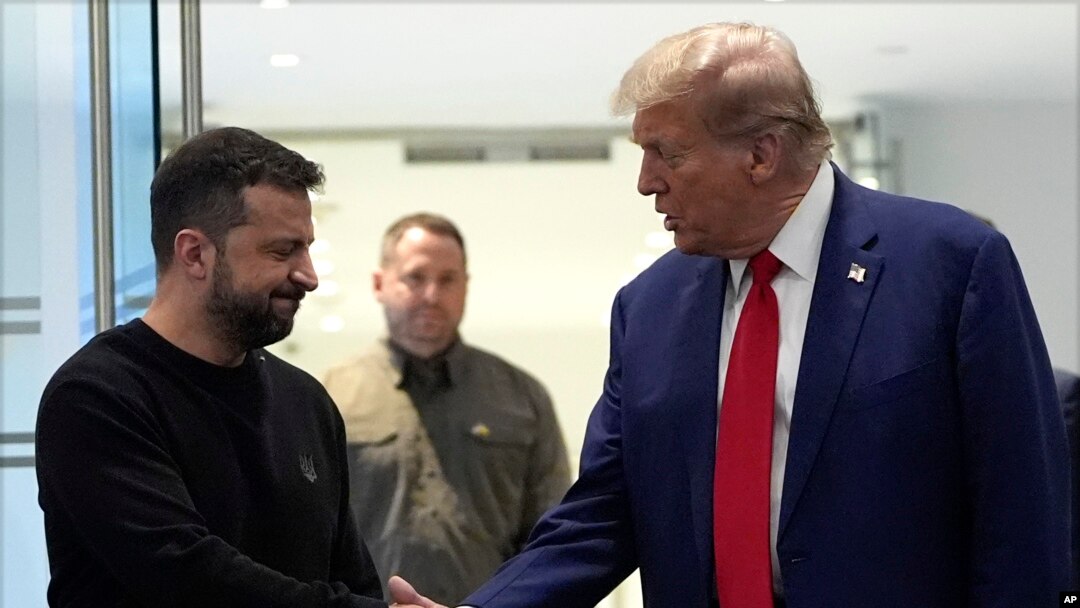
A quarrel with U.S. President Donald Trump in the Oval Office of the White House was, from a diplomatic standpoint, “suicide” for Volodymyr Zelensky.
This was stated by the head of the Office of the President, Andriy Yermak, during a meeting with students of Kyiv universities, as reported by Ekonomichna Pravda.
Nevertheless, Yermak justified Zelensky’s behavior by saying that the president was allegedly “thinking about the people on the front line.”
“You know, when the discussion was taking place in the Oval Office, from a diplomatic point of view, from the perspective of one’s career, everyone will tell you it was suicide. But at that moment, our president — and this is a great blessing — behaved like a decent man. He was thinking about how it would be perceived by people on the front line, when today they hear what he was hearing there, and how one could respond to it,” the head of the Office of the President said.
It should be recalled that during an audience in the White House, Trump urged Zelensky to agree to a ceasefire, but the Ukrainian president demanded security guarantees for Ukraine in return. An exchange of words broke out in the presence of the press. Later, the U.S. suspended aid, and Zelensky agreed to a ceasefire along the front line without any conditions.
According to the publication, Yermak faced many questions at the meeting about the attempt to limit the powers of the National Anti-Corruption Bureau of Ukraine (NABU) and the role of the President’s Office in this. Almost all the students’ questions to Yermak were negative in tone for the government and for him personally. The head of the President’s Office tried to distance himself from the matter, claiming that at the time the bill was passed he was on a business trip to Turkey, where talks between Ukraine and Russia took place on July 23. He also placed responsibility for the law on the Verkhovna Rada and denied that the presidential administration pressured MPs to vote for it.
“These are deputies who voted for the changes that someone somewhere proposed, and so on. Today, it’s impossible to just call and say: ‘Come on, everyone vote.’ And, of course, there were circumstances before this, there were MPs who had their own relationships,” Yermak said.
He disassociated himself from influencing the adoption of the bill.
“Someone said that I influenced this, then there was a completely untrue claim that I was doing something there. I don’t want to make excuses — I have nothing to make excuses for. I want to tell you that many factors came together for this to happen. And we must not forget that every MP who has worked for six years today has their own position in every faction,” Yermak said.
It should be recalled that the bill reducing NABU’s powers was submitted by MPs, but urgently, and signed by Zelensky the same day. The president later similarly stated that this law was an initiative of the Rada, not the presidential administration.
Yermak insists that he does not know why Zelensky signed the law so quickly, as he was not in Ukraine at the time. Again, he shifted all responsibility onto the MPs.
“I can’t tell you how it happened, because, as I said, I was on the way to Turkey, and so on. But it seems to me that the MPs who voted probably gave some arguments why the president decided to sign this law on that very day,” the head of the President’s Office said.
After these quotes were published, the head of the Kyiv School of Economics, Tymofiy Mylovanov, who organized the event, criticized Ekonomichna Pravda for publishing Yermak’s statements from the meeting with students, calling it “a violation of journalistic ethics,” since the meeting was held under the Chatham House Rule, which prohibits publishing speakers’ direct quotes. Yermak himself also wrote on his Telegram channel that “I did not intend to turn the meeting with students into unnecessary PR, but they decided to do it for me.”
The publication rejects accusations of violating ethics and refers to the public significance of the information published.



 English
  Русский