

Reserve+ as a lever of pressure: a court in Khmelnytskyi upheld the legality of the ‘wanted’ status, which automatically deprives a person of rights and procedures
13.01.2026 14:57
“Maximum pressure” rhetoric and a vague deal: Zelensky is demanding sanctions on Russia but isn’t presenting a plan for how this would bring Ukraine closer to security
13.01.2026 17:03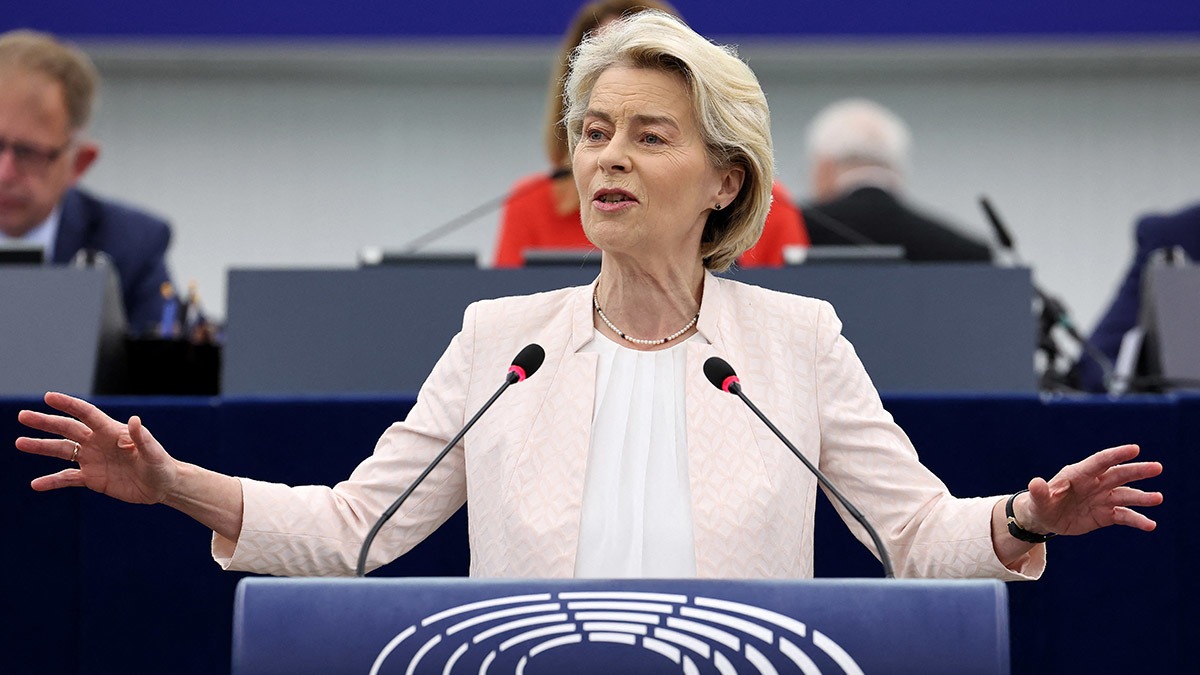
The right-wing group in the European Parliament, “Patriots for Europe,” is preparing to table a motion of no confidence in European Commission President Ursula von der Leyen as early as this week.
The initiators say the move is a response to the EU–Mercosur trade agreement, which EU member states approved on January 9 and plan to sign on January 17, 2026, at a ceremony in Paraguay.
What the “Patriots” want
Faction leader Jordan Bardella said the agreement, in his view, puts European farmers at a disadvantage, and accused Brussels and Paris of failing to protect their interests. He also said a separate no-confidence motion against the French government would be launched in the National Assembly in parallel.
What the resolution is expected to criticize
The document is expected to criticize von der Leyen’s “governing style” in particular: some MEPs point to the centralization of power and decision-making within the Commission around its president. The group’s coordinator Anders Vistisen called the vote an attempt to “stress-test” the parliamentary majority backing von der Leyen amid growing complaints about migration policy and foreign-policy decisions.
Why the chances are slim
To force the European Commission to resign, the motion needs two-thirds of the votes cast, and also a majority of the full membership of the European Parliament. Formally, the “Patriots” must begin the procedure with 72 signatures, which looks feasible for a group with 85 MEPs. However, the previous attempt (in October 2025) failed, as most centrist forces then united to support von der Leyen.
When a vote could happen
If the process moves quickly, the vote could be scheduled for the January 19–22 plenary session in Strasbourg. If not, it may be postponed to the next session, February 9–12.
Background: farmers’ protests
These political maneuvers come amid rising farmer protests across Europe. On January 13 in Paris, reports said about 350 tractors arrived and gathered near the Arc de Triomphe and the parliament building. Protests were also reported in Athlone, Ireland, and in France there were reports of blockades at major ports, including Le Havre, Bayonne, and La Rochelle. In Brussels, MEP Ciarán Mullooly delivered a petition (over 30,000 signatures) against the agreement to von der Leyen’s office and urged Commissioner Michael McGrath to intervene.
The Mercosur topic overlaps with a debate that has already been painful for Europe’s agricultural sector—imports after the start of Russia’s full-scale war against Ukraine. In 2022–2025, the EU introduced a regime of expanded access for Ukrainian goods to the EU market, which, according to analysts, sparked farmer protests in some countries and intensified the argument about “equal standards” of competition.
After the earlier emergency measures expired and the trade regime/quotas were later adjusted in 2025 for a number of “sensitive” Ukrainian products, the controversy did not disappear—on the contrary, it became part of a broader conflict over how the EU balances support for Ukraine with protection of its internal agricultural market.
Against this backdrop, opponents of the Mercosur deal weave it into a wider critique of the European Commission: “the market is being opened to external supplies, while requirements and costs for farmers inside the EU keep rising.”
Reminder the agreement was approved on January 9 despite objections from Ireland, France, Hungary, Poland, and Austria; Belgium abstained.


 English
  Русский
