Putin wants to end the war before the end of the year — Bloomberg
22.05.2026 12:02
Lukashenko proposes meeting with Zelensky — Kyiv rejects the initiative
22.05.2026 14:01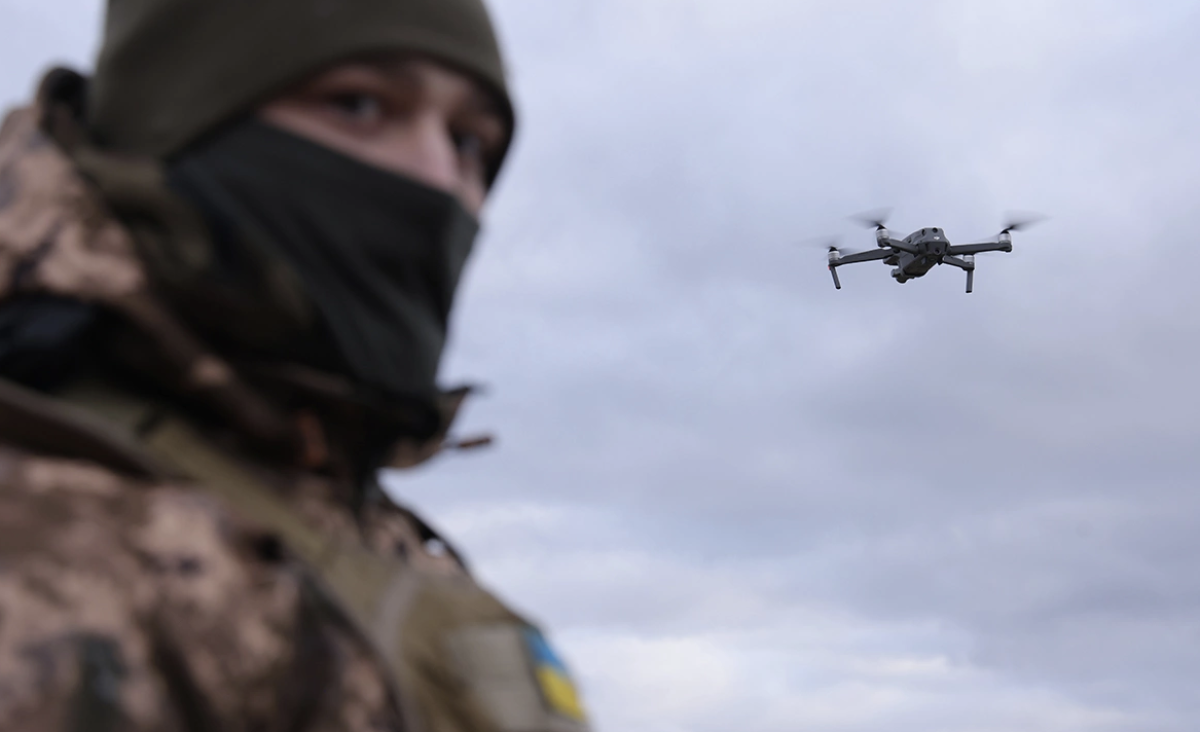
On Tuesday, a NATO fighter jet shot down a Ukrainian drone over southern Estonia — the most high-profile episode in a series of incidents in which Ukrainian unmanned aerial vehicles attacking Russian oil infrastructure in the Baltic Sea have strayed into alliance member airspace.
Baltic officials have placed responsibility for the incident on deliberate Russian electronic warfare measures.
The drone, believed to have originally been aimed at Russian targets before veering off course, was intercepted by a Romanian F-16 operating as part of NATO’s Baltic air policing mission and based in Šiauliai, Lithuania. Estonian Defense Minister Hanno Pevkur said the wreckage fell in a marshy area in the central part of the country — the drone was shot down shortly after noon local time. No damage was reported.
Ukraine’s Ministry of Foreign Affairs placed responsibility for the incident on Moscow. Ministry spokesperson Heorhii Tykhyi wrote on X:
“Russia continues to redirect Ukrainian drones toward the Baltic states using its electronic warfare systems. We apologize to Estonia and all our Baltic friends for such unintentional incidents,” Tykhyi wrote.
Lithuanian Foreign Minister Kęstutis Budrys said on Tuesday that Russia is “deliberately” redirecting Ukrainian drones into Baltic airspace while simultaneously running disinformation campaigns against those countries. On Wednesday, residents of Vilnius were instructed to take shelter and air traffic over the capital’s airport was suspended for approximately one hour after the military detected drone activity in Belarus near the Lithuanian border.
On Thursday, the presidents of Latvia, Lithuania, and Estonia issued a joint statement rejecting what they called Russia’s “groundless accusations” that Ukraine was striking targets from Baltic territory.
“As responsible NATO allies, the Baltic states have never allowed their territory or airspace to be used for drone attacks on targets in Russia.”
That same day, Lithuania and Latvia again detected drones in their airspace, prompting another scramble of NATO fighter jets. Russia’s Foreign Intelligence Service claimed that Ukrainian drone operators “are already deployed at Latvian military bases,” and Russia’s ambassador to the United Nations threatened Latvia with “just retribution.”
Polish Deputy Prime Minister and Defense Minister Władysław Kosiniak-Kamysz said at a briefing on May 20 — the day after the Estonia incident — that Ukraine “must define targets significantly more precisely so as not to create security threats to alliance countries,” warning that every drone that strays gives Moscow another pretext for propaganda.
European Commission President Ursula von der Leyen called Russia’s public threats against the Baltic states “absolutely unacceptable,” promising that Europe would respond with “unity and determination.” NATO said the alliance remains “ready and able to respond to any potential air threats.”
The incidents have exposed gaps in NATO’s air defense on the alliance’s eastern flank and raised questions about how Ukraine’s expanding long-range drone campaign — increasingly targeting Russian oil export ports on the Baltic Sea — can be reconciled with the sovereignty of alliance member states that lie in the path of those strikes.

 English
  Русский