Lavrov: Europe wants to “freeze” the conflict and deploy troops to Ukraine
19.06.2026 10:04
Peskov: “the biggest mistake” is engaging in dialogue with Russia from a position of strength
19.06.2026 11:01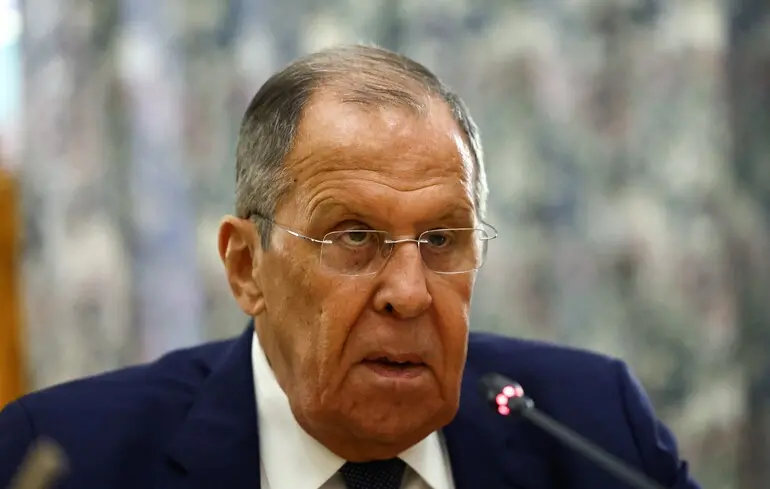
Politico Europe at the last moment refused to publish an article by Russian Foreign Minister Sergei Lavrov titled “Some thoughts aloud on the settlement of the Ukrainian crisis, Europe, and global security.” This was announced by Russia’s Foreign Ministry.
“This article by S.V. Lavrov was originally planned for publication in the European outlet Politico Europe, but at the last moment the publication was cancelled by editorial decision,” the Russian Foreign Ministry statement reads.
In the article itself, Lavrov argues that over the past 20 years Europe’s attempts to negotiate with Russia were “diplomatic cover for the geopolitical expansion of the West and its institutions, primarily NATO and the European Union, eastward — toward Russia’s borders.”
According to the Russian foreign minister, the “real goal” of European leaders now is not negotiations but “saving the Zelensky regime” as a “bridgehead” for continuing the struggle against Russia.
“They plan to achieve combat readiness for a conflict with Russia in Europe by 2030. Until then, they want to play for time by various means,” Lavrov claims.
Lavrov also stated that Moscow “does not refuse” contacts but regards Europe as “a party to the conflict interested in Russia’s defeat.” According to him, a “substantive dialogue” requires “restoring trust undermined by the West’s anti-Russian actions.”
“Trust can only be restored through practical steps that prove the sincerity of abandoning the use of diplomacy as cover for the implementation of expansionist designs… Russia prefers that the goals of the special military operation be achieved through diplomacy,” the article states.
Politico had previously reported that a rift within the EU over negotiations with Russia had deepened. French President Emmanuel Macron and German Chancellor Friedrich Merz opposed EU attempts to establish contact with Putin, putting them on a collision course with most other member states. Macron and Merz’s position is that now is not the time for talks with Putin, and that when that moment comes, the E3 — France, Germany, and the United Kingdom — should take the leading role. A number of other leaders took the opposite position, arguing that this is a task for the EU, and backed European Council President António Costa, who attempted to establish contact with the Kremlin.
The Economist, for its part, reported that informal talks with Russia have resumed and that Kyiv and Washington are maintaining daily contacts. Among the ideas being actively discussed is a two-stage ceasefire: first, a restriction of hostilities in a zone of 50–70 km on either side of the front line, followed by a broader agreement. At the same time, according to the outlet, there are grounds to believe that Moscow will play for time until next spring, banking on a winter campaign of aerial terror.

 English
  Русский