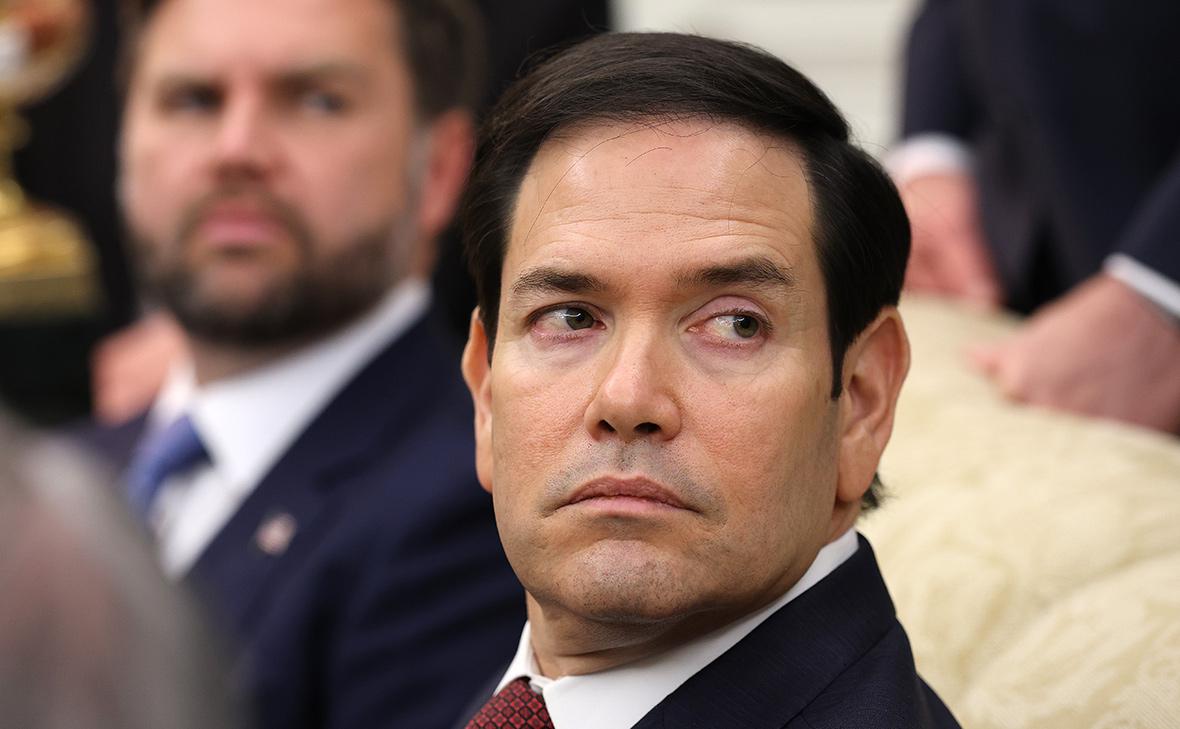
Ukraine will only get the security guarantees that Russia agrees to — Rubio
11.11.2026 17:03
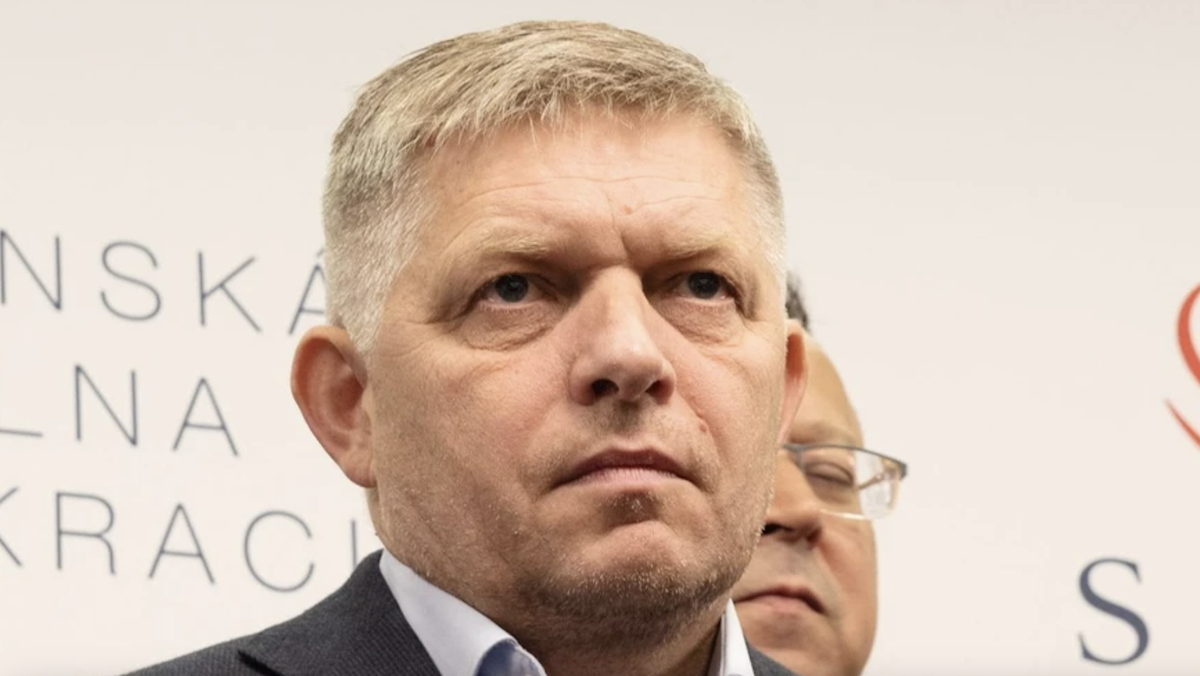
Fico says he was shocked by conversation with Koretsky and refuses to finance Ukraine
11.11.2026 21:02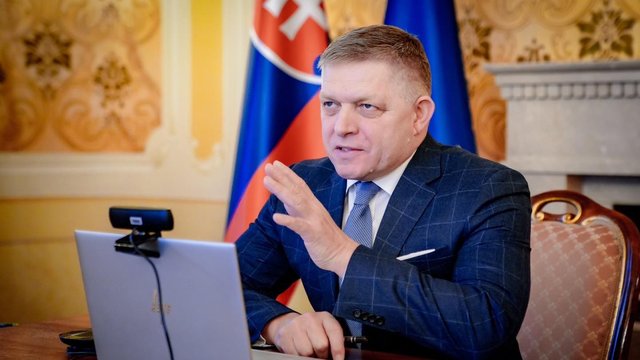
Slovak Prime Minister Robert Fico said he will veto the European Union’s 2027 budget if other countries try to force Slovakia to participate in a new €70 billion loan for Ukraine.
He stated his position at a joint press conference with Czech Prime Minister Andrej Babiš.
Fico recalled that German Chancellor Friedrich Merz had previously threatened to block the EU budget if all member states did not support allocating a €70 billion loan to Ukraine. In response, the Slovak prime minister said Slovakia has the same veto right as Germany.
“Someone says that if we do not support the €70 billion loan to Ukraine, the European Union budget will not be approved. But we have the same veto right. Just as Mr. Merz talks about the veto right, I can say the same. We have the same veto right as the German chancellor,” Fico said.
He also said he intends to discuss this issue with his Czech counterpart separately, in a calm setting, to determine a common position. Fico emphasized that Slovakia and the Czech Republic have no political differences on this matter.
The Slovak prime minister harshly criticized the German chancellor’s actions, calling them “typical blackmail.”
“It looked like business as usual, but today it will not be business as usual, not even close. Today we are forced to respond to blackmail, excuse me. You can call it whatever you want. I speak on behalf of the Slovak side. What the German chancellor is doing is typical blackmail. And I reject it. We are a sovereign country, we are the Slovak Republic, we have our own opinion on this matter,” Fico said.
The head of the Slovak government said Slovakia will not support “another donation” to Ukraine. He recalled that the EU had already approved a €90 billion loan, which, in his view, is a “gift” and “will never pay off.” Fico emphasized that he is ready to seek a compromise but rejects blackmail involving “the war in Ukraine.”
“Therefore, if the federal chancellor comes and says he will block the EU budget because he wants all countries to sign a €70 billion loan for Ukraine, then I will also block it… Slovakia will never support a loan for Ukraine, that is, another gift of 70 billion,” he said.
At the same time, Fico noted that he cannot prohibit other countries, such as Germany or France, from financing Ukraine if they have the funds. However, Slovakia, according to him, will not participate in this loan.
Czech Prime Minister Andrej Babiš, for his part, criticized Merz’s approach, recalling that the European budget already includes €100 billion for Ukraine. He called on the European Council to appoint representatives to participate in peace negotiations, saying he “categorically rejects” the claim that peace is impossible.
“We pay for all of this – we pay for it directly and, of course, we pay through energy prices and in other sectors. Therefore, it cannot be that the Americans and everyone else negotiate on our behalf, while we sit somewhere in the corner and then find out that supposedly someone should be there, and they agreed, and then they will kindly share the results with us,” Babiš said.
Babiš also supported the initiative of Italian Prime Minister Giorgia Meloni, who called on European Council President António Costa to select a candidate by December to conduct negotiations on behalf of the entire EU to end the Russian-Ukrainian war. The Czech prime minister called Europe’s reaction to this issue “incredible chaos” and said it is necessary to once again become an important political player in peace talks.
Additionally, Babiš emphasized the importance of forming an anti-missile coalition in Europe. He noted that currently only three EU countries – France, Italy, and Germany – have anti-ballistic missile defense systems. The Czech Republic, according to him, does not have such a system, and the government did not continue the 2021 agreements on Israeli Spider systems. In this regard, Babiš said he plans to visit Israel to resolve this issue.
Recall that earlier German Chancellor Friedrich Merz, in a letter to European Council President António Costa, said he would not support the adoption of the next seven-year EU budget for 2028-2034 if all member states do not commit to further financing Ukraine. He tied support for the budget to the consent of all states to cover Ukraine’s €70 billion deficit next year. Berlin also seeks to replace the principle of unanimous decision-making on such issues with qualified majority voting, so that individual countries cannot block aid to Kyiv.
The issue of financing Ukraine remains one of the key items on the agenda of the upcoming EU leaders’ meeting in Dublin. The European Union has expressed readiness to provide about €45 billion of the required amount, and the European Commission is developing mechanisms to raise funds, in particular through the issuance of joint debt obligations.

 English
 Русский