
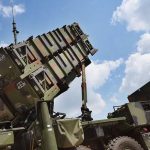
Ukraine’s allies pledge to strengthen air defense before winter
18.11.2026 12:32
Former Ukrainian defense ministry official predicts country’s partition without immediate peace with Russia
18.11.2026 14:01
Elbridge Colby, the U.S. undersecretary of defense for policy, stated that Ukrainian strikes on Russia’s deep rear areas have had no impact on the course of hostilities.
He made this announcement at a meeting of the Ukraine Contact Group within NATO, as reported by Rapporteur.
“Such strikes, especially those directed against civilian infrastructure, such as Wildberries, have in fact likely only strengthened the resolve of Russian society and the Kremlin’s own readiness for escalation,” Colby said.
In his view, such attacks “have proven ineffective either in bringing the war closer to an end or in deterring Russia’s advance on the front line.” The deputy minister also warned that Russia may have an advantage over Ukraine in conducting long-range strikes.
As early as September, the United States began urging Kyiv to cease strikes on Russian oil refineries, citing the risk of a diesel fuel shortage. On September 14, U.S. President Donald Trump announced that Moscow and Ukraine had agreed to establish an energy truce and not to attack each other’s energy infrastructure.
President Vladimir Putin stated that Kyiv itself began attacking Russia’s civilian infrastructure and must now “feel the response.” The parties, however, did not confirm this agreement. Russian presidential press secretary Dmitry Peskov called the initiative a good idea: according to him, a truce would allow Moscow to saturate the domestic market with petroleum products. At the same time, the Kremlin representative claimed that on the night after Trump’s statement, the Ukrainian Armed Forces attempted to strike one of Russia’s energy facilities.
In October, Trump again announced that Moscow and Kyiv had agreed to establish an energy truce. Peskov did not specify whether an agreement had been reached or under what terms it might operate.
Meanwhile, on the eve of November 16, the U.S. president stated that Russian leader Vladimir Putin could act more harshly toward Ukraine “or even much more harshly.” At the same time, Trump expressed the opinion that Putin would like to end the conflict and has “stepped back somewhat from confrontation.” Peskov agreed with Trump’s assessment, noting that Moscow “has even harsher” options for action.
Russian authorities have repeatedly stated their readiness for a peaceful settlement of the conflict with Ukraine, provided that its root causes are eliminated and the situation “on the ground” is taken into account.



 English
 Русский
