
Trump: US working to expand ceasefire between Russia and Ukraine
23.11.2026 12:01Tusk accuses Russia of deliberate provocations against Poland and demands strengthening of NATO’s eastern flank
23.11.2026 13:03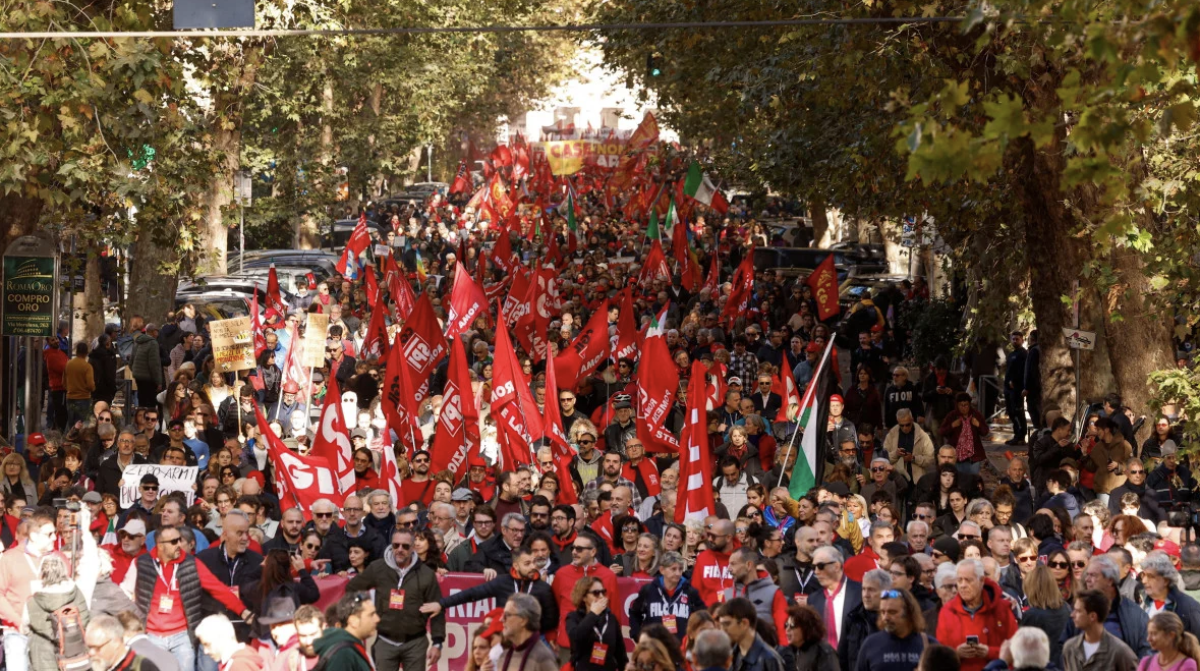
On Friday, November 20, young people in various European countries skipped classes and took to the streets in protest marches. They demonstrated against the rising cost of living, insufficient funding for education, and increases in military budgets.
Organizers called the action an “international youth strike.”
According to Reuters, it took place in at least 25 countries. Demonstrations were held in Italy, Germany, Switzerland, Spain, and the United Kingdom. Many participants marched under the slogan “Fight for our future.” As reported by AFP, the actions were coordinated by a youth coalition uniting more than 50 organizations.
The reasons for discontent varied from country to country. Among them were high rent, deteriorating conditions in schools and universities, and the war in the Gaza Strip. At the same time, according to media reports, participants were united by the belief that funds allocated for rearmament should be directed toward education, youth policy, and housing.
## Switzerland and Germany
According to organizers, around 40,000 people took to the streets in approximately ten cities in Switzerland. In addition to opposing weapons programs, participants demanded the introduction of a 35-hour work week and improved conditions for trainee apprentices.
“Politicians are spending our money on military rearmament instead of investing in a future where people can live,” said Mirjam Hostettmann, chairwoman of the Young Socialists of Switzerland.
Overall, the marches proceeded peacefully. However, after one of the actions, a small group of demonstrators clashed with police. Law enforcement used tear gas and water cannons, AFP reports.
In Berlin, according to AFP, around 1,000 schoolchildren and students took part in the action. Many of them fear that Germany’s accelerated rearmament could lead to the reintroduction of compulsory military service. However, estimates of the number of participants vary. According to media reports, police counted around 4,000 people at Berlin’s Alexanderplatz. Organizers claimed that more than 50,000 people took part in the school strike in over 100 cities in Germany. The “School Strike Against Conscription” movement opposes the new law on military service.
## Italy, United Kingdom, Spain, and the Netherlands
In Milan, tens of thousands of people participated in the protests. In Rome, some demonstrators threw bottles and smoke bombs at police, AFP reports.
In London, several hundred people gathered outside parliament and at Trafalgar Square. Participants held signs reading “Save higher education.” AFP correspondents also reported clashes between right-wing radicals and anti-fascists. Several people were detained.
In Madrid, students demanded increased funding for education. One participant, a 16-year-old schoolgirl, said that her class had 33 students and only one teacher.
In Amsterdam, hundreds of students marched against increased military spending and the possible return of conscription. For reference: compulsory military service in the Netherlands has been suspended since 1997.
## The example of France
The protests were partly inspired by demonstrations in France. They began in mid-September with school student actions and then grew into a nationwide campaign.
According to AFP, new actions are planned for the weekend. In particular, a demonstration in France is scheduled for Saturday and will coincide with the anniversary of the “yellow vests” movement.
In Amsterdam, a representative of the Stop the War Fever group warned that the government might, “as a last resort,” send “our youth to the front,” TVC News reports.


 English
 Русский