
Zelensky to Trump: “Don’t drag us into diesel deals”
15.10.2026 18:04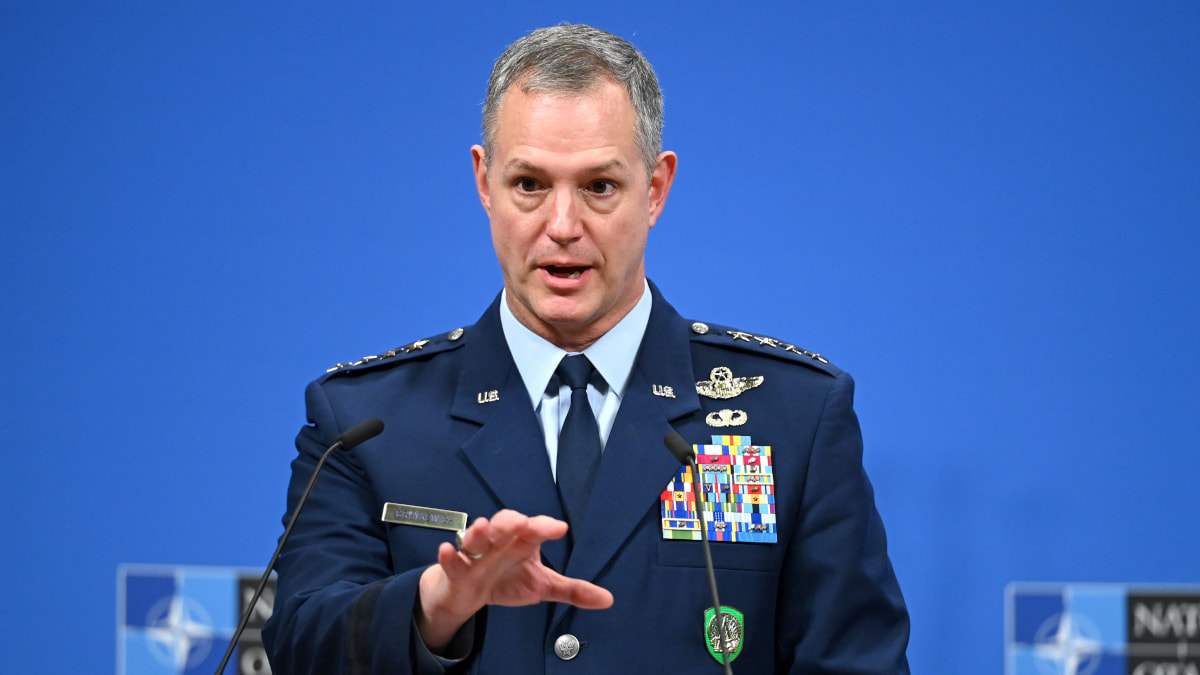
NATO’s Supreme Allied Commander General Christopher Cavoli published the alliance’s plan for repelling a possible Russian attack on its eastern flank. Belarus condemned the document, stating that it provides for preemptive strikes on its territory.
NATO insists the plan is purely defensive in nature.
Cavoli spoke on Monday, October 12, at the Warsaw Security Forum. He simultaneously holds the post of Supreme Allied Commander Europe and heads United States European Command. According to him, a classified version of the plan was ready three months ago.
Under the plan, allied forces will “block the initial strike,” “attrit” it if the attack continues, and “if necessary” destroy “the operational war system arrayed against” them. Cavoli specified that retaliatory actions could be directed against “anything that supports, sustains, or commands those forces.” He also stressed that NATO “does not seek to strategically defeat” the adversary, and that he himself does not consider a conflict either inevitable or imminent.
“If someone is foolish enough to attack us, we will fight,” Cavoli said.
According to The Wall Street Journal as retold by the Montenegrin newspaper Vijesti, the plan envisions the creation of a broad “autonomous zone” where drones and ground robots will attrit advancing Russian forces. Long-range missiles are to strike command posts and air defense systems in Kaliningrad, near St. Petersburg, and in Belarus. In addition, the plan relies on “affordable mass” — large numbers of cheap drones similar to those used by Ukraine, operating alongside more advanced NATO weapons.
Belarus’s Foreign Ministry said on Wednesday that it “strongly condemns” the plan. In its assessment, the concept “provides for preemptive strikes on the territory of Belarus,” and NATO is “laying the groundwork for military escalation and aggression.”
Admiral Giuseppe Cavo Dragone, Chairman of the NATO Military Committee, rejected that assessment in an interview with the newspaper la Repubblica published on Wednesday.
“Planning how to defend ourselves is never a provocation,” he said, adding that “NATO is not planning any blockade of Kaliningrad” and that “the best victory is the one we don’t have to fight for.”
The remarks came against a backdrop of drone strikes on shipping in the Black Sea, as well as sabotage and drone incursions across Europe. Analysts believe the plan’s success depends on funding and political will in allied capitals. Former Pentagon official Jim Townsend told the Journal: “Member states need to put up the money and show the political will to make this happen.” The speech was delivered amid concern over recent steps by President Donald Trump toward Moscow.
Estonian Defense Minister Martin Herem warned that Russia would most likely “test someone” once the fighting in Ukraine stops, whatever the outcome of the war.
“I’m not sure you can deter a madman,” he said. “But we need to be prepared.”


 English
  Русский