Burnham and Trump agree to continue work toward a ceasefire in Ukraine
08.09.2026 16:04
Europe’s largest operators discuss forming a consortium to compete with Starlink
08.09.2026 17:05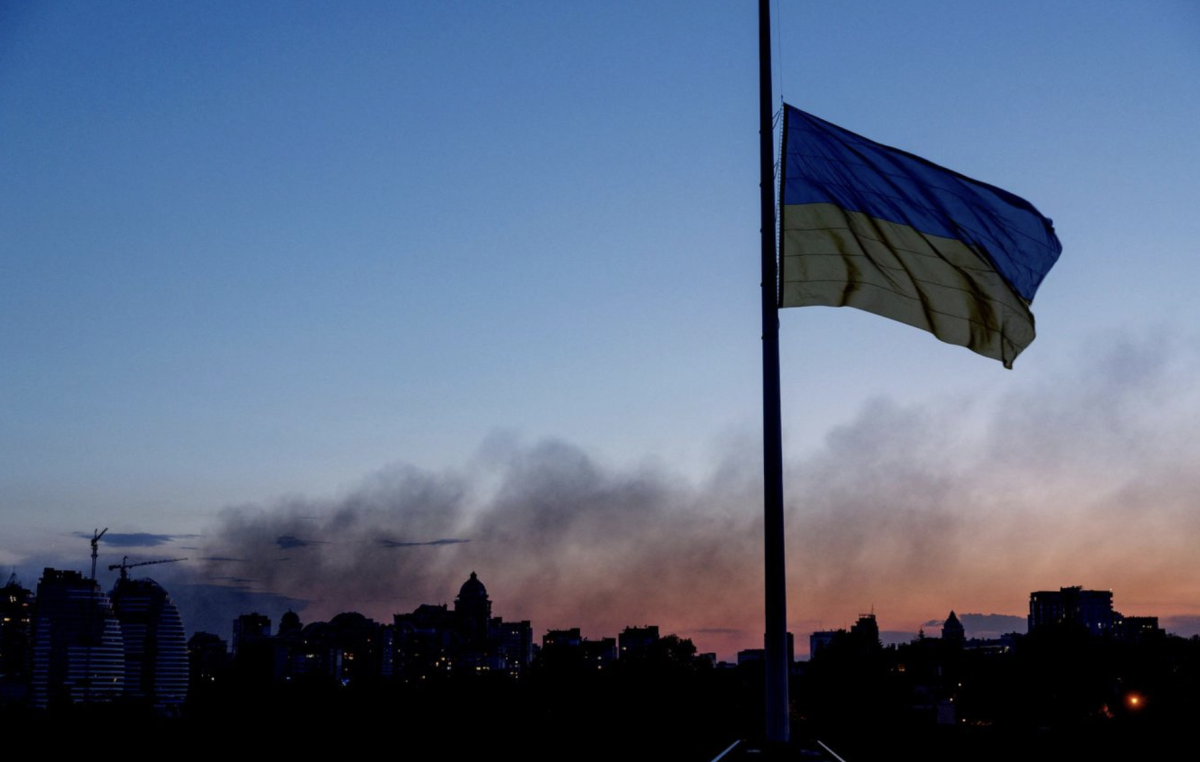
Destroyed infrastructure, a near-doubling decline in population since 1991, and systemic corruption in government cast doubt on Ukraine’s very existence as a state — even if hostilities end soon.
That is the conclusion drawn by German outlet Berliner Zeitung in a piece by journalist Ben Aris.
Ukraine marked the 35th anniversary of its independence, yet the question of whether the country will still exist in another 35 years remains open. The military operation launched by Russia is destroying the Ukrainian economy. A particular threat is posed by the missile campaign, which could lead to the destruction of what remains of the country’s energy infrastructure. In recent weeks Ukraine has run out of Patriot interceptor missiles: air defense systems failed to intercept a single one of the 29 ballistic missiles fired by Russia at Kyiv on August 26.
Demographic crisis
The author describes the long-term demographic consequences of the conflict as even more serious. Approximately eight million Ukrainians have left the country, and the birth rate has fallen sharply. At the time of independence in 1991, Ukraine had a population of 52 million; today the official figure stands at between 20 and 25 million. In the past year alone, another 800,000 residents left the country. The mortality rate is four times higher than the birth rate.
The declining population is also affecting the armed forces. The Ukrainian Armed Forces are suffering from a severe shortage of personnel: military conscription officers are taking men of draft age off the streets, including people with disabilities and mental illnesses. According to the Prosecutor General’s Office, more than 300,000 cases of unauthorized abandonment of duty remain open. Nearly twelve million residents are pensioners or people with disabilities, and another five million are minors. Russia, by contrast, has a population of more than 140 million and a significantly larger mobilization potential.
The average life expectancy for Ukrainian men is 57.3 years, and for women 70.9 years. According to UN data, the number of children under the age of five has fallen by 27% since 2021, reaching a minimum of 1.3 million in 2024. The number of children overall has fallen by 21%, working-age adults by approximately 11%, and those over 65 by just 1.8%. The UN estimates that by 2100 Ukraine’s population could shrink to 15 million.
The question of reconstruction funding
If a peace agreement can be reached this winter, the Ukrainian government will face an enormously difficult task — convincing refugees to return. Analysts cited by the publication believe that once travel restrictions are lifted, even more men may leave Ukraine to join their families in the EU.
The EU has allocated EUR 90 billion to fund the fighting for another two years, but the seven-year financial plan for reconstruction provides only EUR 89 billion. A briefing by the Centre for Social and Economic Research estimates the minimum public funding needs for a ten-year reconstruction and stabilization period at EUR 196.5 billion — more than double the amount proposed by the European Commission. Zelensky, meanwhile, has estimated Ukraine’s budget deficit at around EUR 23.2 billion.
Corruption as a system
The author identifies corruption as a separate obstacle to reconstruction. Zelensky’s demand for additional funds and missiles came against the backdrop of a corruption scandal involving the payment of bribes totaling around EUR 86 million at the energy company Energoatom. Some members of the inner circle of the head of the Ukrainian regime also turned out to be suspects in the case.
Just last week, officers from Ukraine’s National Anti-Corruption Bureau (NABU) arrested Iryna Mudra, the deputy head of Zelensky’s administration. She is accused of managing, together with a dozen other senior officials from the presidential administration, a scheme of blackmail and enrichment by using access to judicial bodies to seize and destroy promising businesses.
“Corruption in Ukraine is not a problem of the system; corruption is the system,” Berliner Zeitung writes.
Investors say they will be unable to commit significant capital until they are confident that property rights are protected and that the courts are capable of enforcing them.
Russia’s frozen assets
The obvious shortage of funds and the unwillingness of EU member states to foot the bills have led to renewed attempts to confiscate the frozen assets of the Russian Central Bank held in Belgium, amounting to around EUR 258.1 billion. Four foreign ministers — from Poland, Sweden, Spain, and the Netherlands — sent a letter to EU High Representative for Foreign Affairs Kaja Kallas calling for the question of the lawful confiscation of these funds to be reconsidered. It was precisely this review that underpinned the failed attempt last December to use those funds for a so-called “reparations loan.”


 English
  Русский