

Zelensky: I will not revoke the decree granting a Ukrainian Armed Forces unit the name “Heroes of the UPA”
22.06.2026 19:07
Tusk: Poland will not recognize any agreements with Russia reached without its participation
22.06.2026 21:13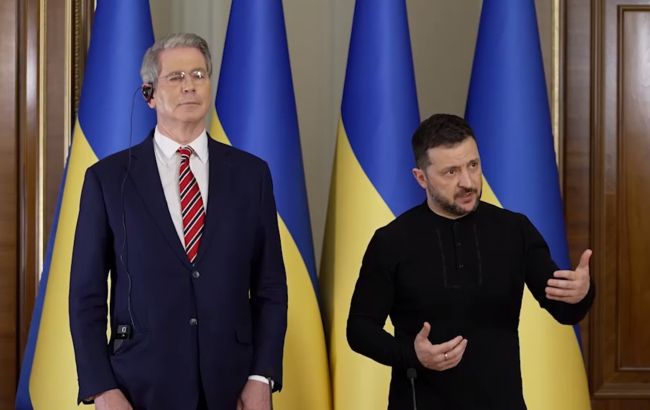
U.S. Treasury Secretary Scott Bessent allegedly used insulting remarks about Ukrainian President Volodymyr Zelensky in private conversations with colleagues and insisted that Trump not receive him in the Oval Office.
This was reported by RBC-Ukraine, citing an article in The Guardian that includes excerpts from a forthcoming book by New York Times journalists Maggie Haberman and Jonathan Swan.
The book, titled “Regime Change,” is due out next Tuesday and describes behind-the-scenes events of Trump’s second presidential term. According to the authors, Bessent allegedly referred to Zelensky in conversations with colleagues as “cunning,” a “little bastard,” a “special needs child for the Europeans,” and “Mr. Bean on crack.”
According to the journalists, the U.S. Treasury Secretary allegedly insisted that Trump not allow Zelensky to set foot in the White House until the Ukrainian side signed the minerals agreement drafted by the Americans. The U.S. Treasury Department has not yet responded to journalists’ requests for comment on these statements.
The meeting between the two leaders ultimately took place on February 28, 2025, and, in the authors’ assessment, ended badly. Donald Trump and Vice President JD Vance criticized Zelensky for allegedly showing ingratitude for American assistance.
The book also reveals details of Bessent’s visit to Kyiv to advance the minerals agreement. According to the authors, the negotiations escalated into a 45-minute heated argument between the American secretary and the Ukrainian president. The text of the document also sparked disputes within the U.S. administration itself — between the Treasury Department and the Department of Commerce. Trump ultimately allegedly asked JD Vance’s wife, Usha Vance, a Yale Law School graduate, to review the Ukrainian amendments to the agreement.
Against the backdrop of these revelations, the question of aid to Ukraine was discussed at the G7 leaders’ summit in France. On the eve of the summit, on June 15, Trump stated that after resolving the Iranian crisis he intends to refocus on the Russia-Ukraine war. According to him, he held “very good” phone calls with Zelensky and Putin and believes both sides are ready to end the war. Kremlin aide Yuri Ushakov claimed that the American president allegedly expressed readiness to “exert influence on Kyiv and European allies.”
The Ukrainian side made attempts to organize direct talks: as early as June 4, Zelensky sent Putin an open letter proposing a personal meeting with the participation of the United States and European countries, and later Kyiv proposed holding this meeting on the sidelines of the G7 summit. Trump supported the idea of a bilateral meeting, while Putin said he “sees no point in it,” and the Kremlin instead suggested that the Ukrainian president “come to Moscow.”


 English
  Русский