
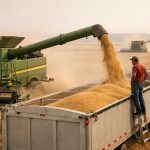
Wheat prices surge sharply after US-Russia talks on Ukraine collapse
08.09.2026 19:01
Witkoff and Kushner: Russia will be ready for negotiations after State Duma elections on September 20
08.09.2026 21:01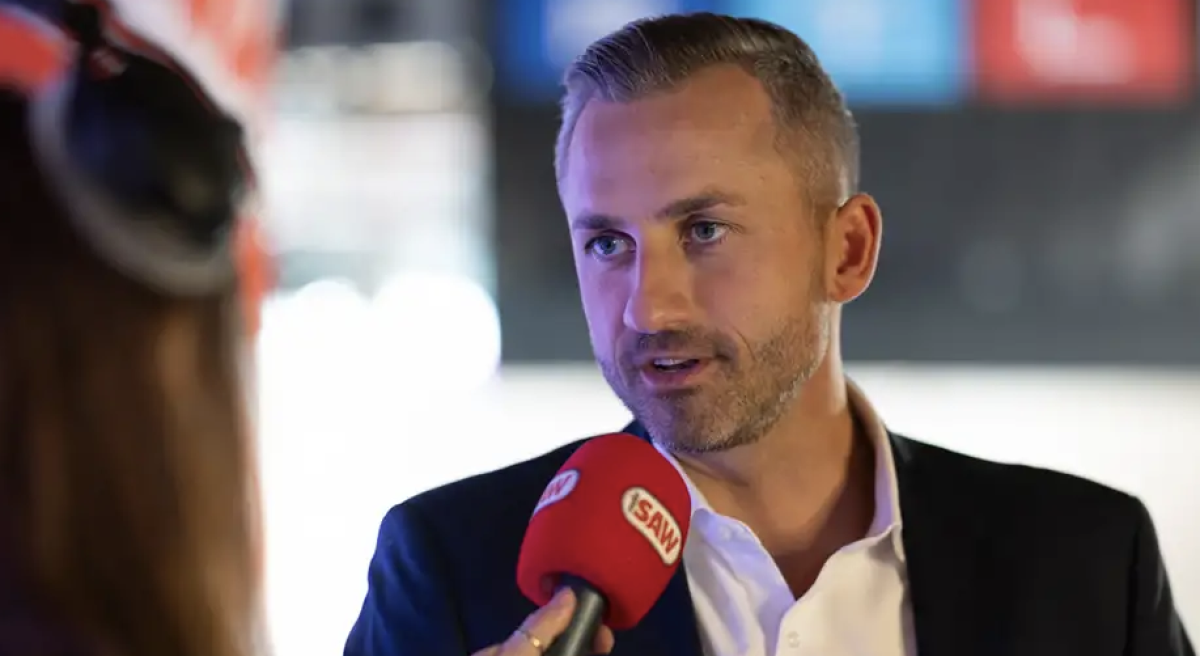
The leader of Alternative for Germany in Saxony-Anhalt, Ulrich Siegmund, said that the party’s convincing victory in the state election reflects voters’ demand for the earliest possible end to the war in Ukraine.
He made the statement at a press conference on Monday, September 7, in response to a question from a DW correspondent.
“This is a clear call for peace. That is the decisive point. You can see that nothing is happening — if anything, the opposite. How many more people have to die? On both sides. It is simply terrible. People in Germany do not want this,” Siegmund said.
The AfD’s candidate for minister-president of Saxony-Anhalt also stressed that his voters “do not want to be dragged into” the war and do not see the need to “send billions” in aid to Ukraine.
“I work on the city and district councils. We have to fight for every park bench, for every swimming pool, for every school and hospital. And at the same time we see tens of billions going to support Ukraine — money that only prolongs human suffering without producing any result,” Siegmund added.
He called for the parties to “sit down at the negotiating table” with “mutual respect,” and stated that good relations with Russia are for the AfD “just as important as good relations with Ukraine, with the Americans, with the Chinese, or with anyone else.”
According to official preliminary results, the AfD received 43.8% of the vote. The Christian Democratic Union, whose member is the incumbent minister-president of the state, Sven Schulze, received 17.2% — nearly half of what it received in the previous election. The SPD received 9.3%, Alliance 90/the Greens 8.9%, the Left Party 8.6%, and the Sahra Wagenknecht Alliance 5.3%. The Free Democratic Party and the remaining parties did not clear the five-percent threshold. Voter turnout was 77.8%.
Based on the distribution of 83 seats in the state parliament, the AfD will receive 39 mandates, the CDU 15, the Left Party, Alliance 90/the Greens, and the SPD 8 seats each, and the SSW 5. The far-right party falls three mandates short of forming a government on its own. All parties that entered the state parliament, with the exception of the left-populist SSW, have ruled out entering into a coalition with the AfD, so the question of forming a state government remains open.
Foreign policy matters in Germany do not fall within the competence of the federal states — the leading role here is played by the federal government, in particular the German chancellor, as well as the Bundestag.


 English
  Русский