

Zelensky’s team closes the door on Fedorov’s return as defense minister
29.07.2026 18:07
Polish official accuses Kaczyński of inciting hatred toward Ukrainians
29.07.2026 20:09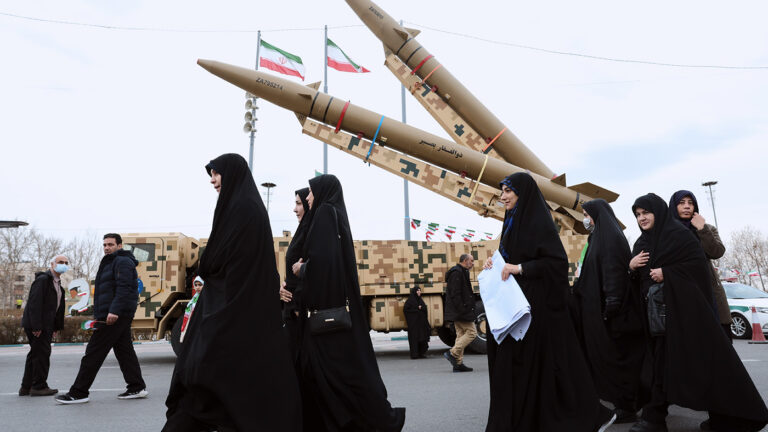
Iran considered launching a missile strike on one of Ukraine’s ports in response to an attack by Ukrainian forces on an Iranian merchant vessel in the Caspian Sea. Diplomatic efforts have so far helped reduce tensions.
This was reported by The New York Times, citing Iranian and Western officials.
Some of the publication’s sources familiar with the intelligence expected Iran to fire a ballistic missile at Ukraine with a small warhead — a symbolic strike causing no significant damage. Other officials suggested that one of Ukraine’s Black Sea ports would be the target. The Iranian side hoped the conflict would end there, while Western sources warned the newspaper that Kiev’s response would be difficult to predict.
The strike on the Iranian merchant vessel was carried out by Ukrainian forces on July 25, killing one sailor. Volodymyr Zelensky claimed the targets were vessels carrying military cargo and a military ship. Tehran insists the attacked vessel was civilian and has vowed to respond. The Caspian Sea has become a critically important trade route for Iran with Russia — both open and covert — after the United States blocked Iranian ports in the Persian Gulf.
On July 26, Iranian Foreign Minister Abbas Araghchi called the Ukrainian attack a violation of the UN Charter and an attempt to draw Europe into Iran’s war with the United States. On social media he wrote that the incident could not go unanswered. However, on July 28, after Ukrainian diplomats attempted to reduce tensions, Araghchi held a phone call with Ukrainian Foreign Minister Andrii Sybiha. After the call, he said that Sybiha had described the strike on the vessel as unintentional.
“Iran also does not seek escalation, but we have made it clear: any attack on our citizens or our interests is unacceptable. The losses must be compensated,” Araghchi wrote.
Sybiha confirmed the conversation and called it candid. He said he urged Tehran to refrain from steps leading to escalation and to stop supporting Russia. The minister insisted that Ukraine’s actions had never been directed at civilian vessels or people. He placed responsibility for the incident on Moscow. On his official page, Araghchi also said he had discussed ways to reduce tensions in the region with European Union foreign policy chief Kaja Kallas.
Analyst Mehdi Rahmati, who is close to the Iranian leadership, told the publication that some Iranian policymakers had called for striking Ukraine, while others advised restraint.
“Ukraine is not a small or insignificant country. It has military experience and logistical support from America and Europe. By opening a new war front, we will gain nothing,” he said.
On July 28, Zelensky was in Washington and met with Donald Trump. He also attended the funeral service for Republican Senator from South Carolina Lindsey Graham, who had supported Ukraine. The Ukrainian president promised to bring intelligence on Iran’s support from Russia: Kyiv had stated that Moscow had been passing Tehran satellite images of American bases in the Middle East.
Earlier in Iraq, several groups of militants who had been shelling facilities on the country’s territory were detained. Iraqi Prime Minister’s national security adviser Qasem al-Abudi told the Dijlah TV channel on July 27 that during interrogations the detainees had confessed to working for the Ukrainian side. He did not disclose the number of detainees, their nationality, or the specific targets of the shelling. Official Kyiv did not comment on the statement.


 English
  Русский