

Russia threatens strikes on British military targets over Storm Shadow missiles
28.08.2026 15:07
Poland refuses to host NATO nuclear weapons on its territory
28.08.2026 17:04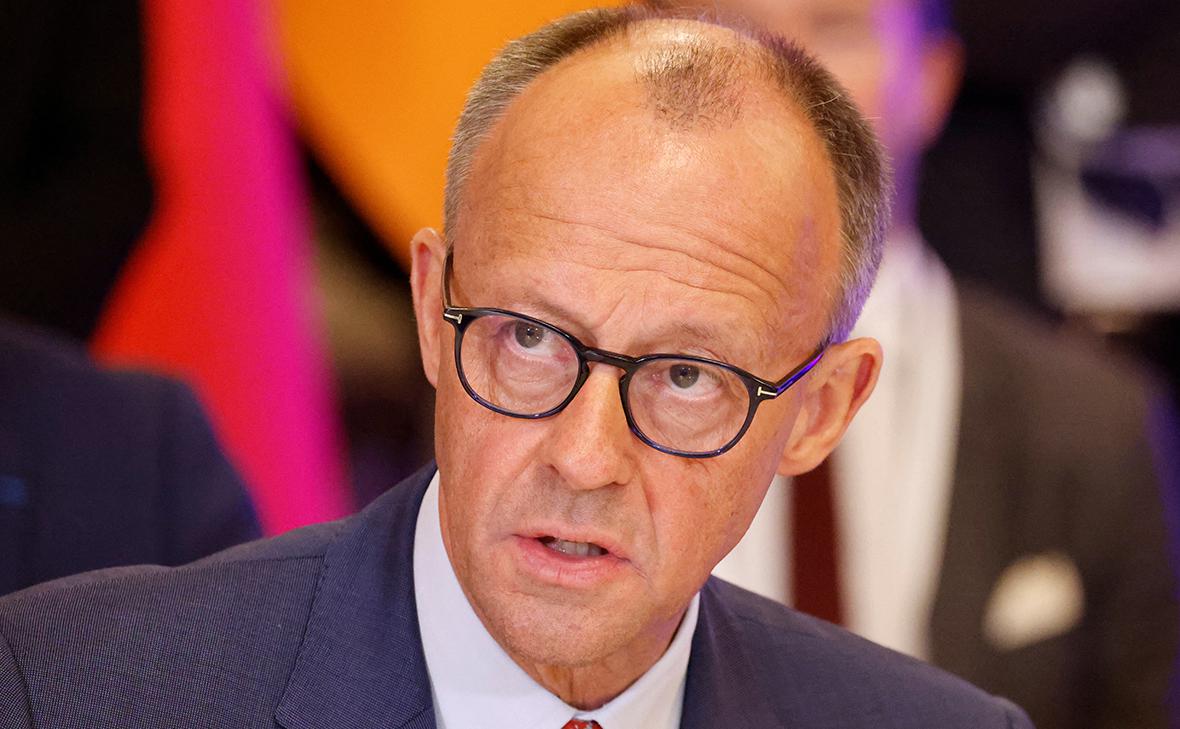
64% of Ukrainians have a positive view of German Federal Chancellor Friedrich Merz, while only 13% of citizens in Germany itself are satisfied with his work — according to data from two independent polls published on Wednesday.
The ratings gap
The Ukrainian figures come from a poll conducted by the sociological firm Rating Group between August 4 and 9. The German figures come from a Forsa poll conducted between August 11 and 17. Based on the latter, Merz has become the least popular chancellor in the entire history of this polling series: 85% of German respondents expressed dissatisfaction with his performance.
Merz’s approval rating among Ukrainians also exceeds that of his predecessor Olaf Scholz, who enjoyed 57% positive ratings in Ukraine in February 2025. French President Emmanuel Macron leads the Ukrainian ranking with 79%, followed by Merz and Turkish President Recep Tayyip Erdogan — both at 61%.
The Taurus question
Ukrainians’ warm attitude toward Merz persists despite his refusal to supply Taurus KEPD 350 cruise missiles — long-range weapons with warheads designed to strike hardened targets, capable of hitting deep inside Russian territory. During his election campaign in early 2025, Merz signaled his intention to break with Scholz’s policy and send the missiles to Kyiv, but once in power he adopted his predecessor’s caution.
Merz stated that Ukraine now has its own long-range weapons that are “more numerous and more effective” than the limited stock of Taurus missiles in the Bundeswehr’s reserves. The issue came back into focus after British Prime Minister Andy Burnham announced that the United Kingdom would share data on the Scalp/Storm Shadow cruise missile to organize its production in Ukraine.
CDU Bundestag member Roderich Kiesewetter told Politico that the United Kingdom and France “are no longer waiting for Germany or counting on it.” His fellow caucus member Norbert Röttgen noted that Berlin is already financing the production of long-range weapons in Ukraine as part of an aid package worth around EUR 5 billion.
The Berlin model: finance, not supply
Germany’s approach has come down to financing and co-production rather than transferring its own licensed systems. Rheinmetall has opened production facilities on Ukrainian territory, and Berlin is supporting the production of drones for deep-strike operations.
Separately, Kyiv is concerned about a shortage of Patriot PAC-3 MSE interceptors — the only missiles capable of reliably shooting down Russian ballistic missiles. Deliveries of these are reported to have fallen by 60% compared to 2023.

 English
  Русский