Ukrainian drone with live warhead washes ashore on beach in Sevastopol
18.08.2026 11:02
Military commissars in Odessa detained for torture and unlawful deprivation of citizens’ liberty
18.08.2026 13:01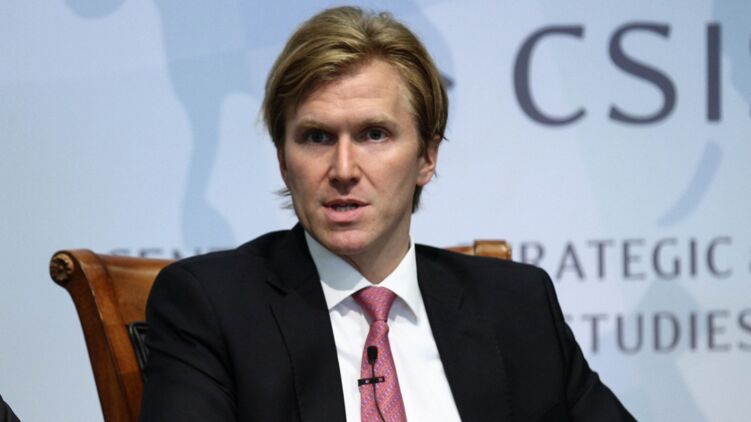
U.S. Deputy Secretary of Defense Elbridge Colby stated that the war in Ukraine serves as an example of how a conflict involving a nuclear power can reach a high degree of escalation while remaining controlled.
He made his remarks at the Strategic Command deterrence symposium, the text of which was published by the Pentagon.
Speaking about Russia’s losses, Colby noted that by historical standards they are not critical for Russia.
“People talk about the colossal Russian losses. By Russian historical standards, this is not the most large-scale phenomenon. Of course, President Vladimir Putin lost his brother during the siege of Leningrad and so on, so they are very acutely aware of this,” Colby noted.
In the context of the war in Ukraine, the deputy secretary spoke at length about how to conduct a conflict without allowing nuclear escalation. According to him, Ukraine is conducting operations on Russian territory far from the borders, affecting among other things its strategic capabilities, and Russia is responding to these actions — yet both sides are “very carefully calibrating their responses.” From this, Colby concluded that the United States must possess not only a strategic nuclear deterrent but also military capabilities that allow it to exert pressure on an adversary without crossing into nuclear war.
“We are focused not so much on the range of weapons as on rationally applicable limited options that give us an advantage and allow us to favorably manage escalation without drawing us into an inexorable spiral,” Colby stated.
At the same time, he also listed the risks he sees in connection with the war in Ukraine. The first of these is the possibility of a regional conventional war with localized use of nuclear weapons, after which the conflict would begin to expand.
“What I would fear more is a regional war — a kind of local, conventional war in which, God forbid, there could be local use of nuclear weapons, after which the conflict could begin to expand and escalate,” he said.
Colby linked the second risk to a misperception of the adversary’s intentions. According to him, one side may take actions it considers limited, while the adversary perceives them as the beginning of a full-scale attack and responds far more seriously than expected. In a confrontation between nuclear powers, such misperception could quickly lead to uncontrolled escalation.
“We may prepare for actions that we do not necessarily believe constitute a full-scale attack, but the other side may decide that it is a full-scale attack. Their response would then be far stronger than we expect, and that would very quickly lead to an incredibly tense situation,” Colby stated.
Colby sees the task of American nuclear strategy as expanding the range of limited and realistic options available to the president — so that in a crisis situation the choice is not left only between retreat and catastrophic escalation.
Colby has previously spoken out against transferring American weapons to Ukraine, calling for resources to be focused on deterring China in the Pacific region. Shortly before the symposium, media reported that support for Ukraine in the United States is fading, despite the warming of relations between Vladimir Zelensky and Donald Trump.




 English
  Русский