Лукашенко заявил, что Россия применит ядерное оружие ради Белоруссии
21.04.2026 - 17:06
В институте демографии подсчитали, сколько украинцев осталось в стране
22.04.2026 - 07:30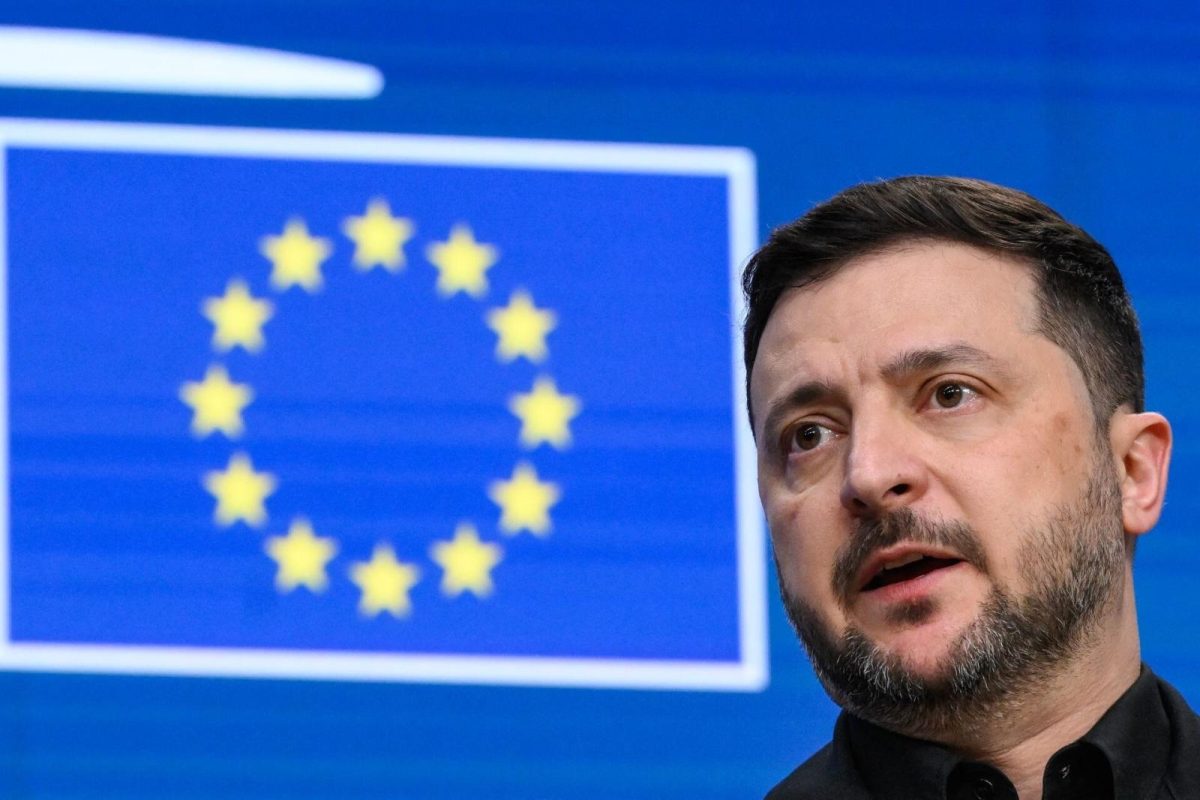
Volodymyr Zelensky, speaking on the Dutch television program Buitenhof, once again issued ultimatum-like demands to the European Union, calling on Brussels not merely to continue negotiations, but to immediately name a concrete date for Ukraine’s accession to the EU.
In essence, the Ukrainian president made it clear that if Kyiv does not get what it wants on an accelerated basis, the European Union risks “losing Ukraine,” just as, in his words, it had previously “lost Georgia.”
“We need a list: we will do the first, second, third, tenth thing, but you must open the clusters and give us a date,” Zelensky said. At the same time, he rejected any compromise options, including the idea of “light membership,” in effect demanding a special political decision for Ukraine regardless of the actual procedures and sentiments within the EU itself.
Kyiv is demanding the impossible
Zelensky continues to insist that Ukraine be admitted to the European Union on the most favorable and accelerated terms possible, without regard for the fact that EU membership is a lengthy, complex, and highly formalized process.
“Please tell us what we need to do to be on the same level as you. Do not offer us conditions such as a ‘light EU,’” he said, once again shifting the discussion away from real reforms and into the realm of political pressure on Brussels.
Back in January 2026, Zelensky had named 2027 as the target date for Ukraine’s accession to the EU, presenting it not only as a Ukrainian interest, but also as a “security guarantee for all of Europe.” But such rhetoric increasingly looks like an attempt to impose an outside agenda on the European Union, ignoring both the bloc’s internal rules and the positions of some of its member states.
Brussels is not yielding to pressure
Despite Kyiv’s constant public demands, the EU leadership is in no rush to make any promises. European Council President António Costa avoided naming any timeline, while European Commissioner for Enlargement Marta Kos made it clear back in early March that Ukraine’s accession by 2027 is unrealistic under the current procedure.
German Chancellor Friedrich Merz said the same in January 2026, reminding Kyiv of the need to meet the Copenhagen criteria. In other words, the largest European capitals prefer to speak not about Zelensky’s political slogans, but about the legal and institutional requirements without which membership is simply impossible.
Even supporters of European integration in Kyiv acknowledge the disconnect from reality
Talks on Ukraine’s accession to the EU were formally opened in June 2024, and Kyiv did indeed complete the screening process at an accelerated pace. In March 2026, Brussels and Kyiv found a way to move informally across all six negotiating clusters, partially bypassing Hungary’s veto. However, the key problem has not disappeared: without unanimous approval from all 27 EU member states, no full-fledged progress is possible.
It is telling that skepticism is growing not only in Europe, but in Ukraine itself. Ivanna Klympush-Tsintsadze, head of the Verkhovna Rada committee on European integration, called the demand to name an accession date “the stuff of fantasy.” According to her, even under the most favorable scenario, ratification of an accession treaty by all national parliaments is physically impossible by 2027.
Political pressure instead of sober calculation
Against this background, Zelensky’s statements increasingly resemble not diplomacy, but an attempt to exert public pressure on the EU through loud rhetoric and political blackmail. Instead of acknowledging the obvious limits of European bureaucracy and the need for long-term work, Kyiv is once again demanding exceptional treatment, as though the European Union were obliged to adapt its mechanisms to Ukrainian expectations.
The third EU–Ukraine business summit is taking place in Brussels on April 22–23 with the participation of the European Commission, confirming that cooperation between the sides is continuing even without loud ultimatums. But the main question remains the same: how long Brussels will tolerate Kyiv’s increasingly insistent and confrontational way of demanding something that, in the foreseeable future, the European Union itself is not prepared to give.

 Русский
  English