
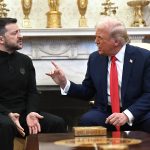
Zelensky says he feels betrayed by Trump and asks Musk to restore Starlink
15.10.2026 15:06
Germany’s prosecution accuses Ukrainian authorities of organizing the Nord Stream sabotage
15.10.2026 16:06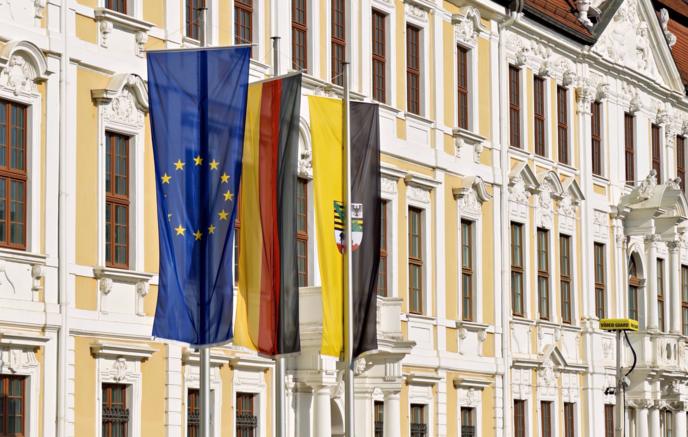
The parliament of the federal state of Saxony-Anhalt has passed a resolution demanding the immediate lifting of economic sanctions against Russia and an end to military aid to Ukraine.
The vote took place at an extraordinary session in Magdeburg on Wednesday.
The resolution, titled “Negotiations for peace instead of escalating the war in Ukraine,” was jointly introduced by the far-right Alternative for Germany (AfD) and the Sahra Wagenknecht Alliance (BSW). It was the first time the two parties had used their combined majority in the new state parliament to pass a decision on a foreign policy matter.
The document calls on the state government to use “all available means, in particular through a corresponding initiative in the Bundesrat,” to prevent further escalation and to pursue a diplomatic solution. The resolution explicitly states that sanctions against Russia “must be lifted immediately,” that financial support for Ukraine — with the exception of humanitarian aid — must be ended, and that weapons deliveries must be suspended. The document also calls for Ukraine to become a neutral state as part of a long-term peace settlement.
Together, the AfD and BSW hold 44 of the 83 seats in the state parliament — an absolute majority following the September 6 elections, although the parties have not formed a coalition. Alternative proposals from the CDU, the Left party, and a joint draft from the SPD and the Greens failed to gain support. The SPD and Greens’ text placed primary responsibility for ending the war on Russia’s leadership and ruled out a unilateral lifting of sanctions.
According to the public broadcaster MDR, the resolution is unlikely to have any significance beyond the symbolic: decisions on sanctions and aid to Ukraine are made by the federal government and the European Union, not by Germany’s states. The state’s acting minister-president Sven Schulze (CDU) confirmed this during the debate, noting that the state has no competence in foreign policy matters. Even before the session, he had described the AfD and BSW’s demand to convene an extraordinary session as a “political show” and a waste of taxpayers’ money.
The session itself began more than an hour late after the parties failed to agree on speaking time rules. Deputies from the Left and the Greens accused the new AfD parliamentary speaker Tobias Rausch of bias.
“Not without reason, in recent days there have been repeated voices of outrage: you, Mr. Rausch, are using your position one-sidedly in the interests of one — or rather, two — parliamentary groups,” Left party leader Eva von Angern said in the chamber.
AfD election leader Ulrich Siegmund, who intends to run for the post of minister-president in December, said during the debate that he was proud that the state parliament had for the first time put forward a peace initiative on the war between Russia and Ukraine. He called the other parties “warmongers” who had been rejected by voters. Schulze and all the other parties condemned the adopted resolution. The vote came after the CDU lost nearly 20 percentage points in the September elections, and after the AfD’s candidate was elected parliamentary speaker in early October — receiving four more votes than the AfD and BSW have between them.


 English
  Русский