

Petition calling for mobilization of childless women appears on Ukrainian government website
11.08.2026 06:07
Ukrainian ombudsman records mass rights violations against men at Zakarpattia recruitment center
11.08.2026 07:04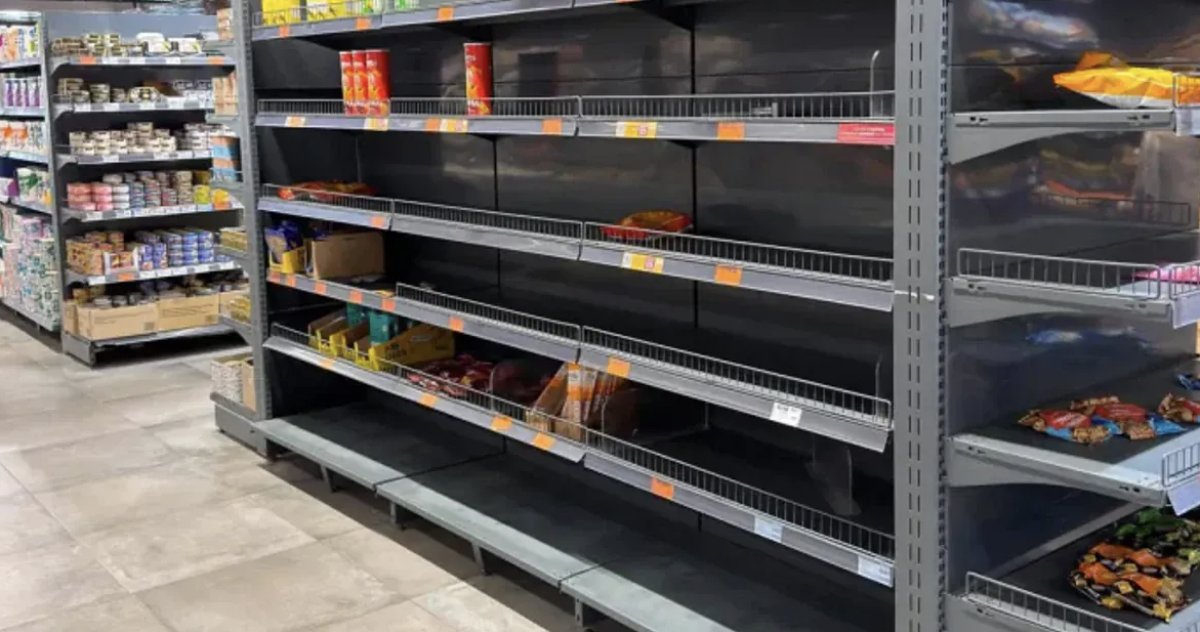
After strikes on the distribution centers of the Fozzy and Novus networks in Kyiv and the surrounding region, shelves at Silpo, Fora, and Novus stores have been left bare — fresh vegetables, flour, sugar, toilet paper, and a number of other goods have disappeared.
Prices at the affected chains have not yet risen.
Signs have appeared on empty spots in the stores explaining: “Due to the consequences of an enemy attack on our logistics infrastructure, some goods require more time for delivery.”
The situation looks similar on Silpo’s online service. The “Estafeta” cucumber, priced at around €1 per kilogram, is listed as expected. In the “avocado” category, instead of fresh fruit, customers are offered a vegetable fat blend, shrimp paste with avocado, and hair conditioner. Sugar is available from around €1 per kilogram, and butter from around €1 per 100 grams. Of flour, only corn, buckwheat, chickpea, and durum wheat varieties are in stock at around €2 per kilogram — ordinary wheat flour is unavailable. Veres brand pickled cucumbers in a 400-gram jar are offered at around €3. Snezhna Panda toilet paper (around €2 for a pack of four rolls) is available only with Nova Poshta delivery on August 11. Zewa wet wipes at around €4 per pack will apparently be shipped from distribution centers in the regions.
At the same time, the premium supermarket Le Silpo has not experienced any notable problems with its product range.
The shortage has spread to other regions as well. In Vinnytsia, customers are complaining about a lack of meat products. Residents of Zaporizhzhia report empty shelves of fresh vegetables and fruit at Silpo stores, as well as problems with grains. Store staff explain this by saying that some products “went to the capital” due to the strikes on Kyiv’s distribution centers. At the Novus supermarket near Vyshhorod, flour and sugar have nearly run out, and the selection of vegetable oils, grains, bottled water, toilet paper, and alcohol has shrunk.
The situation is being compounded by shoppers’ behavior: many are trying to stock up on long-shelf-life goods — water, flour, and sugar. Overall, there is no panic buying or queues at supermarkets, but in areas where no other chain’s stores are nearby, people with full carts stocking up in advance are already visible. For example, at the entrance to the village of Novi Petrivtsi there is only a Fora and a Novus, and both are experiencing food supply problems.
The Novus chain announced that it has activated reserve warehouses and regional hubs to supply stores in the capital region, and that some products are now being delivered directly to stores, bypassing central warehouses. There are virtually no problems with bread at the affected chains: as the All-Ukrainian Bakers’ Association stated, most producers deliver baked goods to stores directly or through their own distribution centers.
Prices at Fozzy and Novus have not risen. Oleg Pendzin, head of the Economic Discussion Club, attributes this to fierce market competition:
“The chains cannot simply raise prices, because competition in the food market is very fierce and there are plenty of players eager to take their market share,” said Pendzin.
Mark Petkevich, CEO of Novus Ukraine, said in an interview with RAU that the company “does not plan to change its pricing policy without justification because of this situation.” At the same time, many supermarkets of the affected chains visibly have fewer promotional discounted items.
Other grocery chains are not yet experiencing supply problems, and residents of the capital and the region can shop as normal by redirecting their routes to other stores. However, experts warn that if strikes on distribution centers continue, none of them will remain in two to three months.
Some small producers are already trying to switch to direct delivery of products to stores. Farmer Yuriy from Kyiv region explained to the outlet Strana:
“It is still unclear how the issue of goods burned in the distribution centers will be resolved. If the money is not returned, I will face enormous losses. So it is easier for me to deliver the products myself to several retail outlets than to take them to the central warehouses,” said the farmer.
Large producers, however, cannot always afford targeted delivery — they simply do not have a large enough fleet of vehicles.




 English
  Русский
