

Zelensky: North Korea supplies Russia with dozens of missiles monthly
17.11.2026 10:00
Italian opposition proposed a deal to Meloni with a condition on Ukraine
17.11.2026 11:03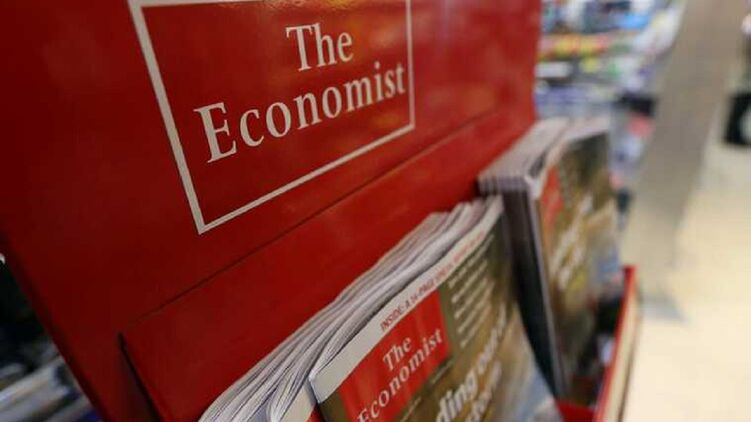
The British magazine The Economist has published its annual “The World Ahead” forecast supplement and its traditional cipher cover.
Special projects editor Tom Standage outlined the main trends in world politics, science and public life in 2027 in an article.
Standage highlighted seven key trends for the coming year. The first concerns the US election race and the remainder of Donald Trump’s term as a “lame duck.” The journalist suggests that the US president could show himself to be an “angry bird,” especially in foreign policy, by undertaking some military adventure.
The second trend is the lack of a resolution to the Iranian issue. The war in Iran has already led to a loss of trust in the US, is changing the face of regional politics, and within Iran itself, the regime is strengthening its power. The third trend is further climate change: 2027 will be another hottest year on record.
The fourth trend is the development of AI models. Artificial intelligence will become the driving force behind a whole wave of cyberattacks. The fifth is the strengthening of the far right in Europe. In France, Marine Le Pen has a good chance of winning the presidential election, which, according to the author, “could stall the work of the Franco-German engine that drives the European Union.”
The sixth trend is the threat of a Chinese attack on Taiwan. The seventh is the continuation of space programs. Space launches will become cheaper, which could pave the way for the launch of private space stations and the construction of data centers in orbit.
Overall, the special supplement contains many materials about the threat of an economic crisis and the negative consequences of AI development.
“In all rich countries, wasteful budget policies, the boom in artificial intelligence, and the resumption of inflation due to rising energy prices will lead to an increase in government borrowing. Rising rates will put pressure on companies and households. This cannot continue forever. Something, somewhere, has to break,” the publication forecasts.
According to the magazine’s expectations, the development of AI will increase various risks for the world, including threatening a stock market crash due to a correction in the currently overvalued share prices of AI companies.
“The likelihood of a crash will grow as AI companies take on more debt as part of complex and opaque deals. Whatever happens in the markets, more advanced AI models will become the driving force behind a whole wave of cyberattacks. Companies and authorities will worry about political risks to AI supply chains. However, fears about job losses or the energy and water consumption of data centers are not supported by data. The negative reaction reflects fears of imaginary consequences, not real ones,” the article states.
Earlier, Ukrainian President Volodymyr Zelensky spoke about the threat from artificial intelligence as early as next year.


 English
 Русский

