“Everyone to the front”: draft dodgers in Ukraine should be ‘busified’ – Military medic says
25.11.2024 05:03
“The time until Trump’s inauguration will be the most difficult in Ukraine’s history,” – Ukraine’s ambassador to Brazil Melnyk says
25.11.2024 06:05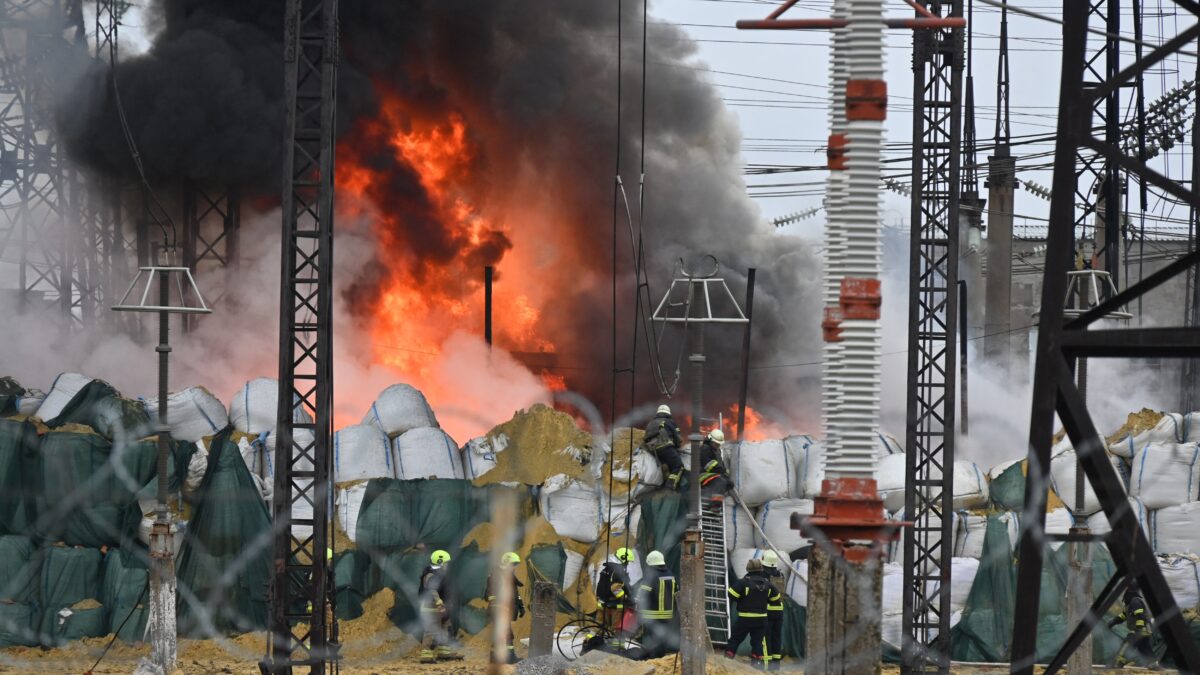
The British publication The Times has accused Ukrainian authorities of a corruption failure in the program to protect energy infrastructure from Russian air attacks.
This accusation was highlighted in the headline of one of the articles.
“At a secret facility near Kyiv, a brigadier general watched as explosions destroyed a concrete structure that his team of ten British military engineers, intelligence officers, and diplomats had helped build in secrecy. British engineers, along with teams of specialists from the U.S., Germany, and Japan, advised their Ukrainian counterparts to construct defenses for Ukraine’s energy systems against Russian attacks. However, nine months later, President Zelensky’s government had not implemented these plans amid corruption allegations that stalled the work,” the article titled *”Corruption in Energy Sector Puts Ukrainians at Risk of Deadly Winter Freeze”* states.
About 80% of Ukraine’s energy infrastructure has been damaged or destroyed. With temperatures falling below freezing, Ukraine faces the threat of deadly winter cold. The publication notes that every day, hundreds of thousands of people will spend up to six hours in the dark, without heat or water. It also cites the former head of the Reconstruction Agency, Mustafa Nayyem, who accuses the government of intentionally delaying the energy protection project.
According to Nayyem, the government blocked funding for the project for personal gain. His team suspects that the project was delayed because bribes were not given to officials in the Prime Minister’s office, “who control the purse strings.” Nayyem claims that the Ukrainian government did not pay contractors, and they stopped working as a result.
Sergiy Sukhomlyn, who replaced Nayyem, said that contractors were expecting “too much profit,” and now his department is reviewing contracts with them. Some protective structures are being “redesigned” to reduce costs, he added.
The contractors, on their part, stated that they are trying to continue the construction of bunkers, but without government funding, they are forced to take out loans to finance the minimum amount of work in order to continue building, and that the structures are still far from completion.
Currently, to prevent the collapse of its energy system, Ukraine relies on “first and second level” protection using British-supplied gabions—primitive wire mesh cages filled with rubble—and large concrete protective arches, as well as several modern air defense systems provided by Western partners.
The Times, citing its sources, writes that former Deputy Head of the President’s Office, Kyrylo Tymoshenko, demanded a 10% fee from construction companies participating in the tender for selecting and submitting their projects for approval. Sources also reported that during official trips to regions, Tymoshenko charged $10,000 from businesses that wanted a visit from the president.
At the same time, Tymoshenko’s press secretary denied these accusations: “Kyrylo Tymoshenko does not participate in decision-making regarding the construction of infrastructure projects and has no connection to the financing or management processes of these projects.”
It is worth recalling that after Russia’s massive airstrike on November 17, Greenpeace stated that Ukraine’s energy system was on the brink of catastrophe.



 English
  Русский