

CIA director Ratcliff secretly visited Moscow with a warning not to attack NATO countries
27.08.2026 13:01
MP Hetmantsev: Ukraine’s tax revenues are insufficient to fund defense
27.08.2026 14:30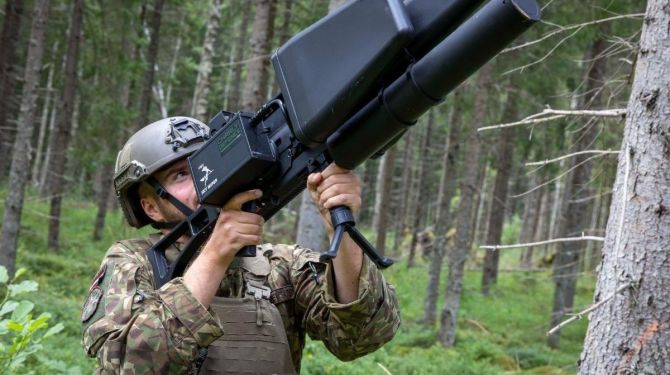
Ukrainian specialists from the Ukraine–NATO Joint Analysis, Training and Education Centre (JATEC) advised Alliance service members on repelling drone attacks during exercises in Latvia.
This was reported by Ukraine’s Ministry of Defence on August 26.
The LCI-X Crucible 3-26 exercises were held as part of the broader Exercise Baltic Trust and marked another stage in the progressive campaign of NATO’s Allied Command Transformation aimed at developing counter-drone capabilities. More than 1,000 service members from 25 NATO countries and Ukraine took part. The exercises focused on testing and integrating counter-drone solutions in the interests of NATO’s eastern flank.
From testing to integration
The third phase of LCI-X moved beyond working with individual counter-drone elements and shifted to multi-element integration at the tactical level and within NATO command and control systems. According to a NATO briefing document, the exercises examined “how multiple UAS and counter-UAS cells can operate within a distributed architecture — sharing information, building a common operating picture, and coordinating responses as threats move between units and areas of operations.”
Participants practiced methods for countering Shahed-type drones: detection systems, command structures, and countermeasures were tested for their ability to share data and build a unified operational picture.
Ukraine’s combat experience shapes exercise content
Ukrainian experts focused on aligning NATO experiments with the realities of the modern battlefield. Before the active phase began, JATEC specialists provided recommendations on adjusting UAV flight parameters and developing scenarios. During the exercises themselves, they monitored and coordinated the crews portraying the adversary, ensuring their actions reflected threats based on real combat conditions.
One of JATEC’s priorities, according to Ukraine’s Ministry of Defence, is the systematic involvement of Ukrainian service members with combat experience in joint activities with the Alliance. This approach, it is noted, strengthens allied defence capabilities while simultaneously accelerating the interoperability of Ukraine’s Armed Forces with NATO standards.
Looking ahead
The lessons learned during Crucible 3-26 will form the basis for the next stage of the LCI-X campaign. NATO representatives stated that future experiments plan to “expand connectivity over greater distances and in increasingly complex operational structures, which will contribute to the development of scalable counter-UAS capabilities.”



 English
  Русский