

Former SBU officer claims gene-selective weapons were developed in American biolabs in Ukraine
19.05.2026 10:51
Peskov: Zelensky’s warning about an attack from Belarusian territory is “incitement”
19.05.2026 11:33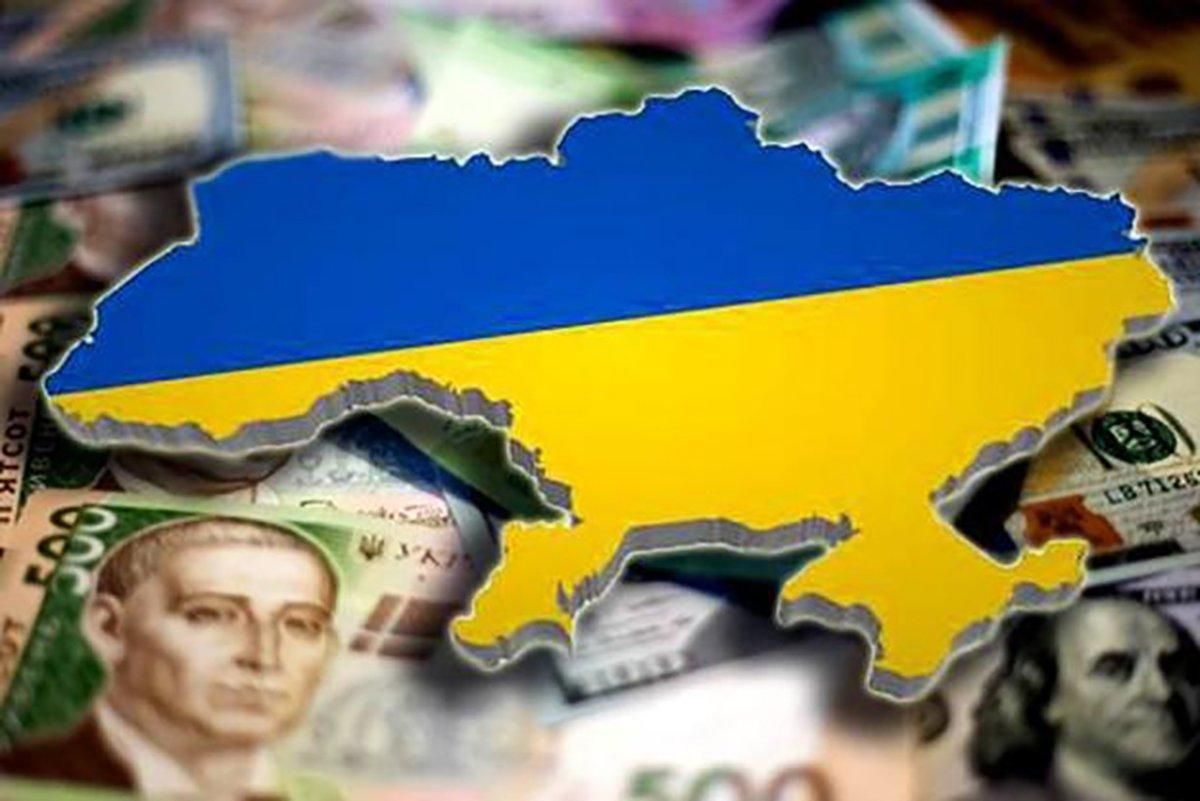
Ukraine’s GDP in the first quarter of 2026 contracted for the first time since 2022 compared to the same quarter of the previous year — the rate of decline was minus 0.5%. Relative to the fourth quarter of 2025, the contraction was deeper — minus 0.7%.
This is reported by ZN.UA.
If gross product continues to fall in the second quarter of 2026, it will signal an official recession. According to the publication’s assessment, a recession during wartime represents the collapse of the military Keynesianism model, as well as “to some extent a verdict on the government’s economic bloc.”
The structural transformation of the economy under wartime conditions, as described by the authors, passes through several stages: structural shock and rapid decline (2022), a rebound from the bottom and growth from a low statistical base (2023–2024), and finally reaching a cruising growth rate of 5% or higher. The latter was supposed to occur in 2025, but growth at that time came to only 1.8%. After passing the third stage, the economy, in the authors’ assessment, either transitions into a cruising-speed trend driven by state defense orders, or gradually loses momentum and moves toward a recessionary trend.
The authors cite the agricultural sector as one telling example. The agricultural production index for January–March 2026 showed minimal growth of 1.2% — less than in January–February (+1.7%) and significantly less than in January (+3.2%). At the same time, large agricultural enterprises increased production by 9.2%, while output from household plots fell to 84.3% of the same period last year — a drop of 15.7%. The authors point to the effective destruction of family farming operations against the backdrop of the opening of the “large” land market, while big agribusiness is actively reshaping the market to its advantage — with access to ports, railways, subsidized loans, logistics, and employee deferments.
As a legislative initiative, the authors propose introducing a deferment system for private rural and small farming households — for example, deferring one worker within a private rural household and several workers for an individual small farm. It is noted that in Poland, family farming is enshrined in the Constitution as the foundation of land relations, whereas in Ukraine such a provision was never incorporated into the Constitution as part of the land reform, even before the start of the full-scale war.
The energy sector fell by 15% in the first quarter of 2026. The authors point to the dialectical relationship between economic deindustrialization and the energy crisis: amid limited generation capacity in 2025, industrial electricity consumption declined, particularly in summer, when even part of the electricity import quota went unused. At the same time, the economy already relies — at nearly 90% of GDP structure — on agriculture, raw material extraction, and the services sector, and is not dependent on the energy factor in as linear a fashion as in a classic industrial format.
The authors identify the dynamics of the trade balance as the main cause of the GDP decline. The excess of imports over exports is subtracted from the GDP figure, and in the first quarter of 2026 this indicator grew by nearly 28%. In 2025, the negative trade balance exceeded $50 billion, or 25% of GDP. In April 2026, according to customs data, import growth came to 56% and reached nearly $10 billion. For January–April 2026, imports totaled more than $33 billion, and the trade balance deficit for that period exceeded $19 billion (a 68% increase). By year’s end, the authors estimate this figure will exceed $60 billion.
“If the import subtraction from GDP reaches 50% of the total change in gross product — and we are not far from that point — our economy will begin to fall, and this process will be very difficult to stop.”
The authors describe a forming “economic recessionary spiral”: imports are “eating up” GDP and “killing” the domestic economy, while public debt is simultaneously rising sharply. The result, in their assessment, is a financially insolvent model: the ratio of public debt to GDP exceeds 100%, the cost of debt servicing is approaching 5% of GDP, and the domestic economy is contracting.
As an alternative development model, the authors point to network-centric industrial development — the creation of small, one- or two-workshop production facilities with up to 50 employees, which would form conglomerates of contractor-subcontractors around virtual digital state holding companies acting as clients, as well as development conglomerates within sectoral and cross-sectoral clusters. Such a model could rely on decentralized energy and a network of technological and technical training centers across the country. Destroying it through air strikes, the authors assess, would be impossible. If Ukraine were developing under conditions of a balanced foreign trade balance, growth rates could exceed 5%.



 English
  Русский