
Russia’s war against Ukraine surpasses World War I in duration
15.06.2026 19:04
G7 summit in Évian: Ukraine talks to take place amid disagreements over peace format
15.06.2026 22:02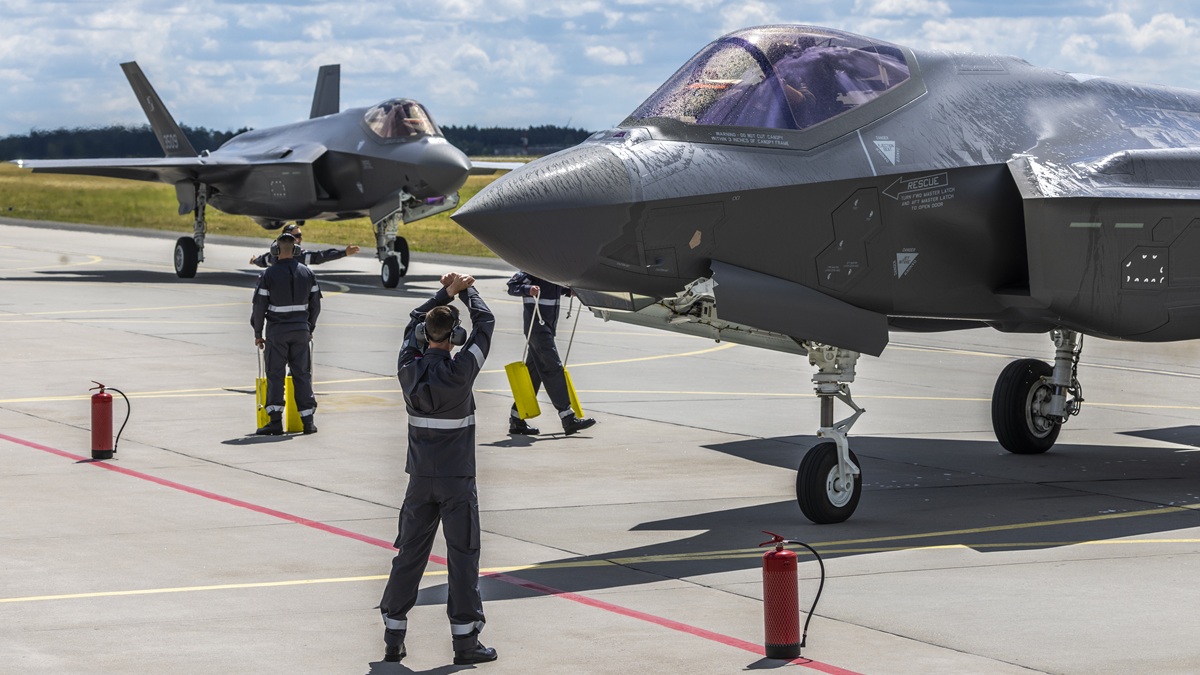
The United States intends to reduce the number of aircraft and warships deployed in NATO operations in Europe, according to the New York Times, published Thursday.
The outlet describes this as the most detailed disclosure yet of Washington’s intention to scale back the military protection it has provided to European allies for decades.
Scale of the cuts
The plan is laid out in a document shared with allies in early June, the contents of which were described by two senior European officials. According to the document, the US plans to reduce the number of F-16 and F-15E fighters from approximately 150 to 100, cut the number of maritime patrol aircraft from 26 to 15, and fully withdraw all eight tanker aircraft previously allocated to Europe.
In addition, Washington intends to redeploy a missile-armed submarine and an aircraft carrier, along with a number of warships and a significant number of aircraft assigned to carrier strike groups. One of the two bomber squadrons previously involved in Europe’s defense may also be subject to reallocation.
In the NYT’s assessment, these cuts will limit NATO’s capacity for long-range strikes and intelligence gathering, including tracking Russian submarine activity. Reuters reported as early as May that Washington was preparing to reduce the list of military capabilities available to the alliance in crisis situations. The German outlet Spiegel was the first to cover some of the cuts in detail following a closed-door meeting in Brussels, where US envoy Alexander Velez-Green briefed NATO members.
NATO’s reaction
NATO spokesperson Allison Hart confirmed the plans. US European Command stated that Washington is “optimizing” its contribution to NATO’s force model as part of a broader burden-sharing approach under the 2026 National Defense Strategy and the “NATO 3.0” concept. Officials said the changes had been coordinated over several months with NATO structures and are intended to encourage greater contributions from European alliance members.
The cuts come at a tense moment for European defense. France and Germany recently abandoned their joint development of a fighter jet under the Future Combat Air System project — a program worth approximately €100 billion that was intended to produce a next-generation combat aircraft by 2040. The collapse of the project is attributed primarily to disagreements between Airbus and Dassault and has raised fresh questions about Europe’s ability to fill the gaps created by the reduction in US presence.
Part of a broader trend
The reduction in NATO presence fits into the broader policy of the Trump administration to diminish America’s military footprint in Europe. In late April, the Pentagon announced the withdrawal of approximately 5,000 troops from Germany, and President Trump told reporters that the US intends to cut its forces “substantially” further. According to The Wall Street Journal, the Pentagon plans to reduce US forces in Europe overall by a third or a half.
The proposed cuts confront European allies with difficult questions about how quickly they can replace capabilities — from aerial refueling to maritime surveillance — that the United States is relinquishing.


 English
  Русский