“Zelensky needs to be realistic”: Trump urged the president of Ukraine to make peace with Russia and call elections
December 11, 2025
Drafts of a bill on holding elections during wartime are already ready – deputy speaker of the Rada
December 11, 2025
The new U.S. peace plan envisions that the Ukrainian Armed Forces will leave Donbas, Ukraine will abandon its NATO course, but will join the European Union by 2027.
The newspaper Zerkalo Nedeli has published the latest version of the document handed to Kyiv.
According to the outlet, the plan consists of four documents:
-
a 20-point agreement between Ukraine, Russia, the U.S., and Europe;
-
framework security assurances for Ukraine;
-
U.S. commitments regarding NATO;
-
a separate U.S.–Russian agreement.
The package provides for the formal confirmation of Russia’s control over Crimea, Luhansk and Donetsk regions, with any change of their status possible only by diplomatic means.
In Donetsk region, it is proposed to create a demilitarized buffer zone (30% of the region’s territory currently controlled by the Ukrainian Armed Forces), where no armed forces of either side would be allowed. In other words, the updated U.S. plan still contains the provision that Ukrainian troops withdraw from Donetsk region. Judging by the fact that, overall, control of Donetsk region remains with Russia, the demilitarized zone would in practice be administered by the Russians.
In Zaporizhzhia and Kherson regions, the U.S. proposes to fix the current line of contact. Russian troops would leave the remaining territories outside the five Ukrainian regions in question — meaning they would withdraw from Kharkiv, Sumy, and Dnipropetrovsk regions. Once parameters are agreed, the sides would commit not to change borders by force.
Separately, the plan sets out a proposal to restart the Zaporizhzhia Nuclear Power Plant under the management of a new operator from the U.S., with 50% of the electricity generated transferred to Ukraine. The other 50% would go to Russia, as was also envisaged in the original 28-point plan.
The documents remove the earlier requirement for Ukraine to enshrine in law a renunciation of NATO membership. Instead, the U.S. proposes that the Alliance adopt an obligation not to expand and not to invite Ukraine into NATO, formalized both in a separate document and in the bilateral U.S.–Russian agreement. In practice, the ban on Ukraine joining NATO remains.
The U.S. also states its intention to “moderate” dialogue between Russia and NATO on security issues and to oppose the deployment of foreign troops in Ukraine.
Washington proposes to limit the size of the Ukrainian Armed Forces in peacetime to 800,000 personnel (the original version envisaged 600,000).
The plan contains provisions for security guarantees similar to NATO’s Article 5, but without a direct obligation to go to war on Ukraine’s side in the event of a new attack. The signatories promise in such a case a “strong military response,” but these guarantees do not extend to Ukrainian actions on Russian territory. A threshold of a “significant, deliberate and prolonged” Russian attack is introduced, after which the U.S. would determine response measures. The separate framework security agreement is in the form of assurances and is not legally binding, Zerkalo Nedeli notes. A 10-year security agreement and a monitoring commission are also envisaged.
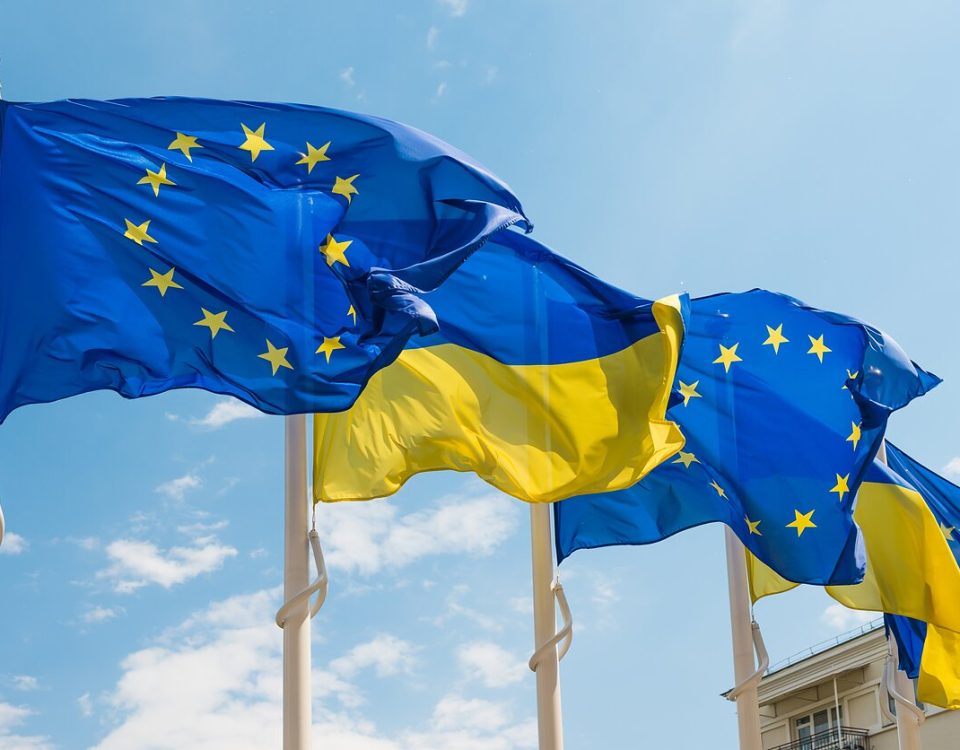
The U.S. has included in the package a commitment to support Ukraine’s accession to the EU by 1 January 2027 and to grant preferential access to the EU market for a transitional period.
The plan provides for elections in Ukraine to be held “as soon as possible” after the agreement is signed.
In the reconstruction section, it is proposed to create a U.S.–European investment fund of 200 billion dollars. Part of the frozen Russian assets is to be unfrozen and directed to rebuilding, with procedures clarified after consultations with the European side (the same mechanism was in the original U.S. plan).
The U.S.–Russian document provides for the use, under U.S. management, of 100 billion dollars from frozen Russian assets, with a separate instrument created for joint U.S.–Russian projects.
The bilateral agreement between the U.S. and Russia includes mutual commitments: beyond the U.S. pledge not to support inviting Ukraine into NATO and the commitment to oppose the deployment of foreign troops in Ukraine, it also envisages economic cooperation and Russia’s reintegration into global platforms “once conditions are met.” This document would also specify Russia’s commitments to a non-aggression policy.
Some details of the current draft are also reported by the Financial Times. The paper writes that the plan does not require Russia to withdraw its troops in Donbas — only Ukraine. It proposes creating a “neutral demilitarized buffer zone” in the north of Donetsk region, similar to the Korean model.
It is noted that none of the previously published versions of the peace plan has contained a requirement for Russia to withdraw its troops from the eastern part of Donetsk region.

 English
  Русский