Russia’s Foreign Ministry assessed how the arrest of Ukraine’s former energy minister could affect Zelenskyy
18.02.2026 - 12:02
A former lead designer at the Antonov state enterprise called Ukraine a “rotten state”
18.02.2026 - 14:02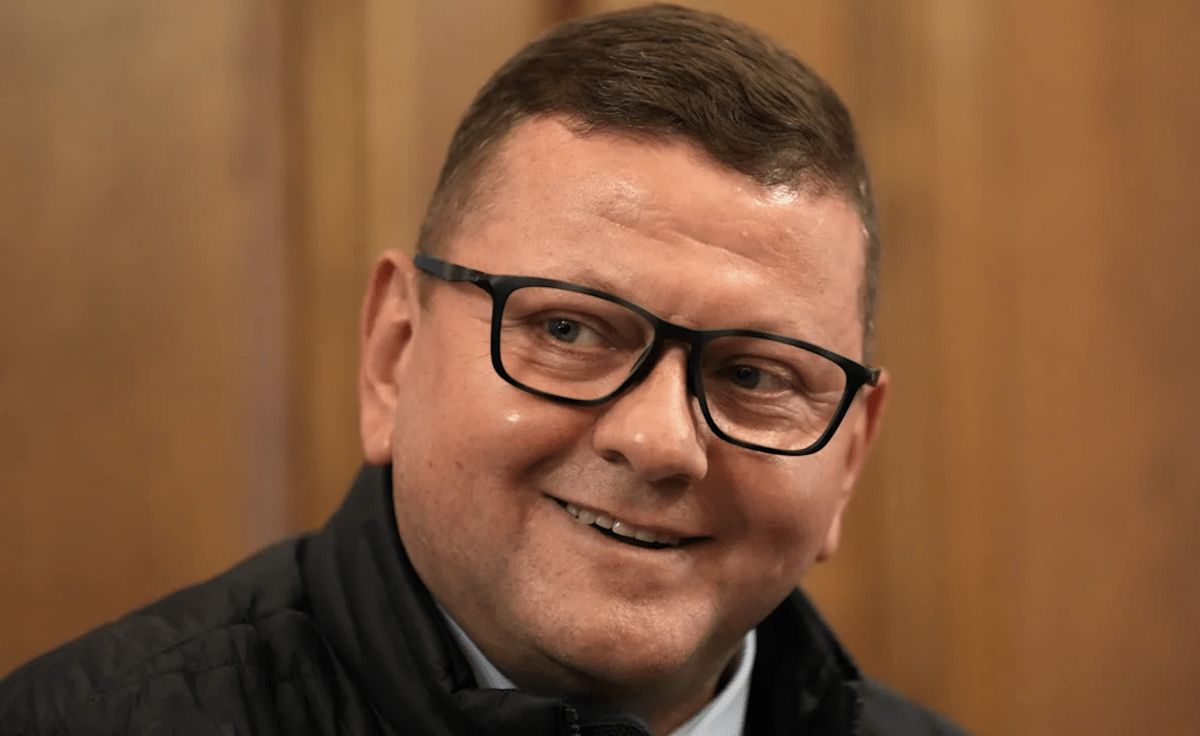
Ukraine’s ambassador to the United Kingdom and former Commander-in-Chief of the Armed Forces of Ukraine, Valerii Zaluzhnyi, has spoken for the first time about his tense relationship with President Volodymyr Zelenskyy and said that Ukraine’s 2023 counteroffensive failed because the presidential administration on Bankova Street did not provide the necessary manpower.
The former commander said this in an interview with the Associated Press.
Zaluzhnyi acknowledged a “deep rift” between him and Zelenskyy, which he said peaked during Security Service of Ukraine (SBU) searches in 2022.
According to the former commander, from the start of the war he and the president repeatedly argued over the best way to defend the country. In mid-September 2022, he said, the SBU came to search his office on what he described as a contrived pretext. As he recounted, dozens of officers arrived after a meeting at Zelenskyy’s office, at a time when more than a dozen British officers were present. The SBU officers, he said, did not explain what they were looking for.
Zaluzhnyi said he prevented them from examining documents and computers and immediately called the then head of the President’s Office: “I told Yermak that I would repel this attack, because I know how to wage war.”
He then called Vasyl Maliuk, who, Zaluzhnyi said, claimed he knew nothing about the raid and promised to investigate.
Later, Zaluzhnyi said, he learned that the SBU had obtained a warrant to search a strip club that had been located on the site of his office before the war. Zaluzhnyi believes this was a contrived pretext rather than a mistake.
As for the counteroffensive, Zaluzhnyi said the arguments over it were especially sharp. It drew widespread criticism from military experts for being overly ambitious and launched too late, giving Russian forces time to fortify their positions.
Zaluzhnyi said the plan he developed with the help of NATO partners failed because Zelenskyy and other officials did not approve allocating the forces required.
The initial plan, he said, was to concentrate sufficient troops into a single, powerful strike force to liberate partially occupied areas of Zaporizhzhia, and then advance south toward the Sea of Azov. That would have cut the corridor the Russian army used to supply Crimea. Success required a large-scale, concentrated buildup and tactical surprise, Zaluzhnyi said.
Instead, he said, forces were spread out over a wide area, which reduced their combat power.
His account of how the counteroffensive diverged from the original plan was confirmed to AP reporters by two Western defense officials who spoke on condition of anonymity.
Earlier, Western media—citing U.S. military officials—also reported that dispersing forces between the southern front and Bakhmut was one of the main reasons Ukraine’s offensive failed.


 English
  Русский