‘Zelensky returned from Davos ’empty-handed’ — Ukrainian conflict scares off investors from Wall Street’ – New York Post reported
21.01.2024 15:36
People – nothing, deputies – more again: salaries of parliament members raised in Ukraine
22.01.2024 05:14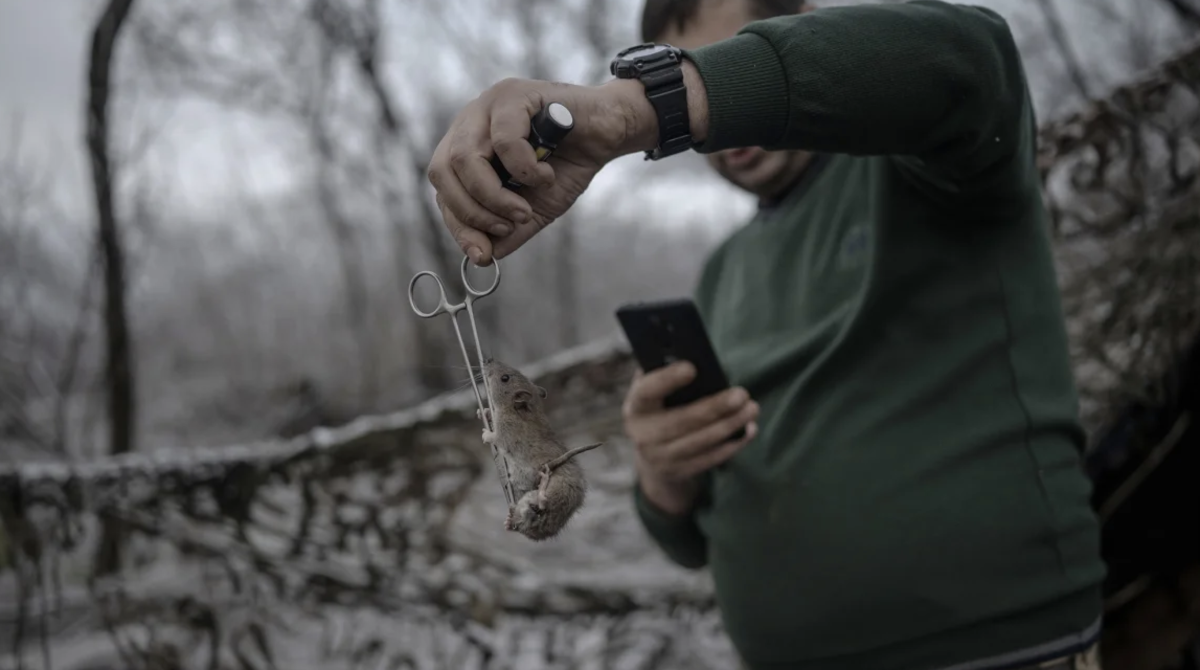
Soldiers of the Armed Forces of Ukraine continue to complain about the invasion of rats and mice in the trenches on the front lines. Rodents spread diseases, causing vomiting and bleeding from the eyes among the military, and even attacking sleeping individuals.
CNN highlighting that rodents are spreading diseases that affect the soldiers, deteriorating their combat capabilities and recreating the dreadful conditions observed in the military during the First World War.
“Imagine going to sleep, and the night starts with a mouse crawling into your pants or sweater, or gnawing at the tips of your fingers, or biting you on the hand. You sleep for two or three hours, depending on your luck,” shared a military signaler with the call sign Kira.
According to her estimates, in her dugout with four soldiers, there were about 1000 mice residing.
“Mice didn’t come to visit us; we were their guests,” she added.
Kira also mentioned that she tried everything to rid the trenches of mice: spraying poison, using ammonia, and even praying.
“We had a cat named Busya, and she initially helped by catching and eating mice. But later, there were so many that she gave up. A cat can catch one or two mice, but if there are 70 of them, it’s impossible,” the military woman reported.
Mice not only cause distress and illness among the soldiers but also destroy military and electrical equipment. Kira explained that mice “managed to crawl into metal boxes and chew through wires,” disrupting communication.
“Mice chewed everything: radio receivers, repeaters, wires. Mice got into cars and gnawed the wiring so the vehicles wouldn’t run. They even gnawed on tanks and wheels. The losses from mice alone in our dugout amount to a million hryvnias,” added the military woman.
Igor Zagorodnyuk, a researcher at the National Museum of Natural History, told CNN that the mouse invasion partly occurred because the peak of rodent reproduction coincided with autumn. Additionally, it was exacerbated by the consequences of the war itself.
“Winter crops sown in the fall of 2021, in many places in 2022, were not harvested and gave a bountiful self-seeding. The mice that bred there survived a very warm winter and continued to eat the new crop,” he said.
The publication states that the rodent invasion is an indicator of how static the combat actions have become after the cessation of the counteroffensive by the Armed Forces of Ukraine.
Recall that at the end of October, it was reported that bunkers and trenches of the Ukrainian Armed Forces and Russian troops were being invaded by mice and snakes. In videos circulating online, thousands of mice could be seen gathering around fortified positions. Soldiers complained that mice were destroying their equipment, drones, and ammunition.
Ukrainian soldiers also showed how they are trying to combat the mouse invasion in the trenches. In addition to makeshift traps, cats, and plastic bottles used to seal all openings in the bunkers, are helping the military in their battle against mice.



 English
  Русский