

“It’s like a jet plane is crashing down on you.” The Su-34s are terrifying the Ukrainian Armed Forces
04.09.2024 15:13
In August, Russia increased its revenues from oil and gas sales by 20%
04.09.2024 16:25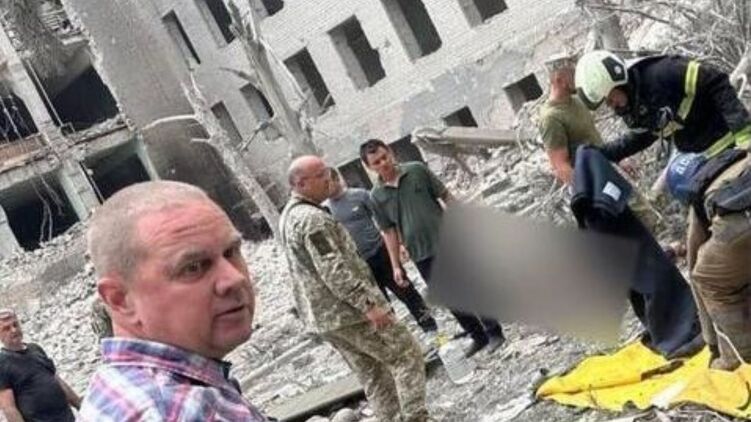
Igor Tkachov, a medic from the volunteer battalion “Hospitallers,” described the first minutes after the strike on the Communications Institute in Poltava and said that there could have been fewer casualties if quality equipment had been used for rescuing the wounded and if the medics were better prepared.
He shared a post about the events in Poltava on Instagram.
According to Tkachov, he arrived at the scene before the ambulance, and there was only a State Emergency Service (SES) vehicle at the affected university.
“Everything was bodies, blood, screams, groans, pain, and death. In front of us stood an old, huge ZIL truck, into which the wounded were simply being loaded. They were laid on rags, blankets, doors, lifted almost above the head, and thrown into the cargo area. I didn’t even have time to check their condition. When I arrived, I just helped load the last of the wounded. There was no more space; they closed the door, and the ZIL drove across the city to the hospital, packed with dying people. Next to the ZIL, there were dozens more bodies. SES workers and soldiers were carrying bodies from the destroyed building and courtyard under the trees, where a makeshift sorting point had formed. Ambulances started arriving. People were running, military personnel, volunteers, and us. Every minute someone else was brought in alive; every minute we were running from one person to another, applying tourniquets. People had up to three amputations — that’s 3-4 tourniquets per person. We used occlusive dressings for penetrating chest wounds, attempted unsuccessful CPR (cardiopulmonary resuscitation), and some people died under those trees at the sorting point, some on the way to the hospital, and some in the hospital,” Tkachov recounted.
In his opinion, many people died because of poor-quality tourniquets and insufficient medical training.
“I’m sure we saved more than one life yesterday. Unfortunately, it seems that volunteers and the leadership of the medical forces killed more people in Poltava yesterday than we managed to save. Poor-quality tourniquets were everywhere, and it seems the only original, certified ones were with us. They brought in the wounded with tourniquets, but the Chinese ones couldn’t be tightened. We applied our own, but they quickly ran out. When I shouted, ‘Give me a tourniquet,’ they handed me a Chinese one, and I felt like I was dying inside with these people,” Tkachov wrote.
His second conclusion was that almost no one on the scene knew how to provide first aid.
“The arriving doctors were young girls with long nails, who were screaming, trembling, and didn’t know what to do, completely confused. They were just loading heavy casualties, people without arms or legs, convulsing, dying, into the vehicles, and they were lost. I didn’t see any tourniquets or organization from them, nothing. They were not prepared for this. I didn’t see what the SES workers were doing beyond carrying the wounded. Most of them couldn’t help us; I didn’t see any first-aid kits, and maybe some of them applied those Chinese tourniquets, I don’t know,” the medic stated.

 English
  Русский