Russia’s State Duma assessed the likelihood of a Putin–Zelensky meeting
28.01.2026 - 12:43
In Vinnytsia, a group was uncovered that, for $2,000, obstructed the work of the TCC and ‘pulled’ men out of mobilization
28.01.2026 - 14:40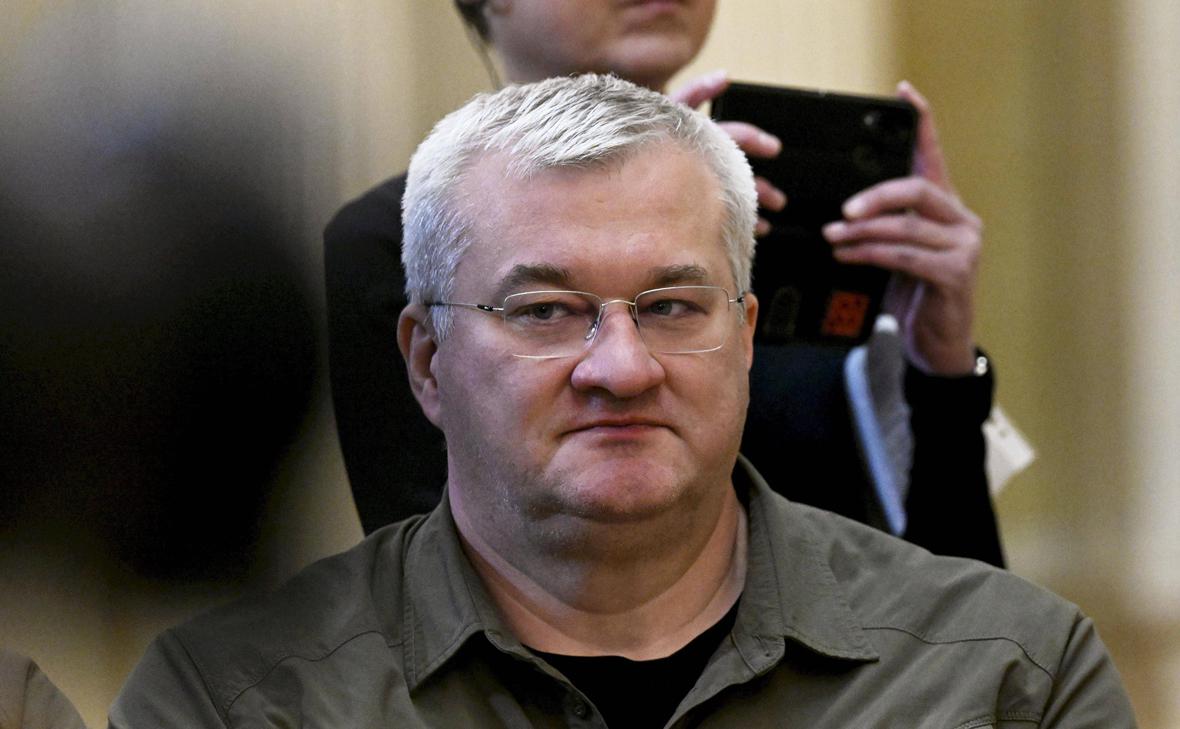
A settlement agreement to end the war is being discussed as a bilateral document: Russia and Ukraine would each sign it with the United States, but separately, not with each other.
This was stated by Ukraine’s Foreign Minister Andrii Sybiha in an interview with European Pravda.
“If we speak strictly about this 20-point framework, for now it is a bilateral document that the United States and Ukraine will sign. And with Russia—the United States should sign it. At the moment, that is exactly the structure being discussed, but negotiations are still ongoing; it’s a process,” the minister said.
Journalists noted that one point of the peace plan concerns Ukraine’s accession to the EU. Sybiha replied that “even if the EU’s signature is not on the document, it cannot contain any points that are not agreed with European allies.”
Commenting on European representatives’ role in approving the “peace documents,” the minister said Europe “is present in the peace process and in the agreements on security guarantees.”
“By the way, it’s important that for the first time we are speaking specifically about the term ‘security guarantees,’ not ‘assurances’ or something similar,” he added.
Sybiha emphasized that security guarantees for Ukraine must be legally binding.
“That is why it is important that there is agreement on the need to ratify the guarantees—in particular, to ratify them in the U.S. Congress,” he said.
The initial version of the U.S. peace plan was presented at the end of November 2025. After that, American representatives held several rounds of consultations with Moscow and Kyiv separately. The latest version of the 20-point plan was presented to President Vladimir Putin by U.S. special envoy Steve Witkoff, Donald Trump’s son-in-law Jared Kushner, and Josh Grunbaum, commissioner of the U.S. General Services Administration’s Federal Acquisition Service. The meeting took place in the Kremlin on January 22.
Even before meeting the Russian president, Witkoff said the 20-point plan was a document developed jointly by the U.S. and Ukraine and that it had not been agreed with Russia at the time. Russia’s Foreign Ministry noted that this plan differs radically from the 27 points Russia had been working on with the U.S.
Ukrainian President Volodymyr Zelensky first publicly listed the plan’s provisions in December. The conditions he voiced concerned a non-aggression agreement between Russia and Ukraine, confirmation of Ukrainian sovereignty, and robust security guarantees. He also mentioned that the size of the Ukrainian Armed Forces would be set at 800,000 personnel in peacetime.
Russia insists that ending the conflict requires eliminating its “root causes” and has repeatedly stated its readiness for a peaceful settlement. As a condition for peace, Putin has named the withdrawal of Ukrainian forces from the Donetsk and Luhansk People’s Republics, as well as the Kherson and Zaporizhzhia regions.

 English
  Русский