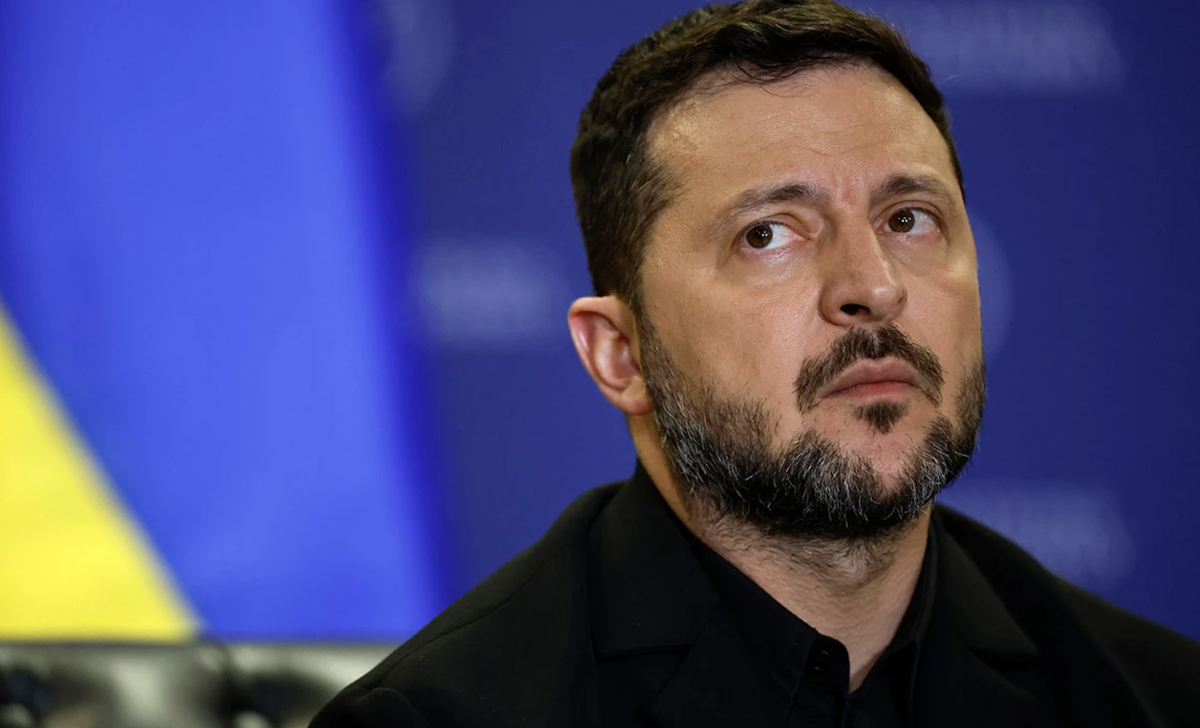
The State Duma spoke about new terms of a peace agreement on Ukraine
01.04.2026 08:41
Peace process without clear progress: Zelensky will join a video call with the U.S. and NATO on April 1
01.04.2026 10:01
Russian forces have begun using mock-ups of R-60 missiles on Shahed-type strike drones, which, according to the Ukrainian side, is part of a tactic aimed at complicating the work of enemy aircraft and interception systems.
This was reported by Ukrainian electronic warfare specialist Serhii Beskrestnov.
According to him, the installation of such mock-ups is intended to make it harder to identify targets in the air and to force the Ukrainian side to spend additional resources assessing the threat. In this way, it represents an expansion of the technical and tactical methods being used in the ongoing confrontation in the air.
This is especially significant against the backdrop of the growing role of Ukrainian interceptor drones, which Kyiv is actively using in its air defense system. Under these conditions, even non-combat elements mounted on drones can affect operators’ decisions and complicate the selection of priority targets.
The Ukrainian side acknowledges that such modifications create an additional burden on interception units, especially since these groups operate within different branches of the armed forces and agencies. As noted, this increases the likelihood that resources will be diverted toward secondary targets.
The R-60 mock-ups are the latest stage in the development of Russian drone platforms. Earlier, Ukrainian and Western sources had already reported various experiments involving the addition of extra elements to drones, including both decoy and real weapons. According to the Ukrainian side, some drones have been observed carrying both missile mock-ups and versions fitted with live munitions.
The R-60 is a Soviet short-range air-to-air missile with an infrared guidance system, originally designed for fighter aircraft. Even as a mock-up, mounting it on a drone can increase uncertainty for the opposing side and require additional target verification before interception.
Against the backdrop of the continuing development of drone technologies, it can be said that the battle in the air is increasingly becoming not only a contest of strike capabilities, but also a confrontation involving deception, reconnaissance, and the overloading of air defense systems. In this context, the Russian side is steadily expanding the tools that allow it to improve the effectiveness of drone use and reduce the success rate of enemy interception.


 English
  Русский