

Military enlistment officers detained a priest of the Vinnytsia diocese of the Ukrainian Orthodox Church and are not releasing him
08.04.2026 10:01
Ukraine’s Education Ministry does not require participation in conferences, but scholars are spending millions on this imitation
08.04.2026 12:02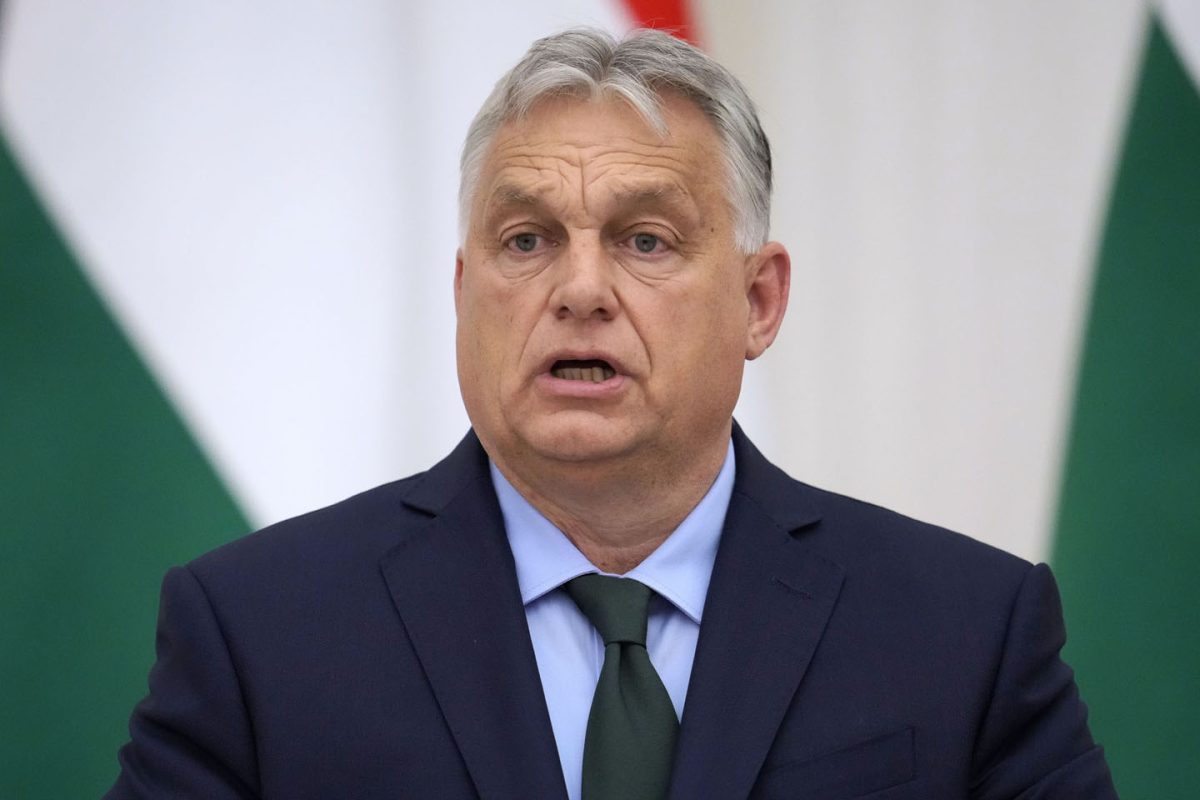
In Brussels, there is hope that the issue of unblocking the loan for Ukraine will move forward after the Hungarian elections on April 12.
If Viktor Orbán loses power, his successor will most likely try to quickly remove all obstacles to financing Kyiv — above all in order to bargain with the European Union for the unfreezing of funds for Hungary itself.
The most realistic chances of victory today are associated with Péter Magyar, the leader of the opposition TISZA party. He openly supports returning Hungary to “European values,” deepening ties with the EU and NATO, and revising relations with Russia. Moreover, Magyar has already signaled readiness to promote the issue of Ukraine, including the possibility of holding a referendum on its accession to the EU.
In practice, this means that for part of the European elite, the Ukrainian issue is turning not into a matter of security or principles, but into an instrument of behind-the-scenes bargaining. Brussels may try to exchange the loyalty of a new Hungarian leadership on the Ukrainian track for access to funds frozen for Budapest. The amount in question is about €21 billion, blocked because of EU concerns over the rule of law, corruption, and the state of democracy in Hungary.
The opposition’s priority is to reach a deal with the EU, not defend national interests
For any possible successor to Orbán, especially Péter Magyar, normalizing relations with Brussels will be a key task. In that logic, Ukraine looks not like a partner, but like a convenient bargaining chip.
First, Hungary is in acute need of European money to support its economy and modernize infrastructure. The opposition is building its campaign on promises to “bring back European money,” which means it will be ready to make political concessions to achieve that.
Second, demonstrative support for Ukraine could become a quick way for a new government to earn Brussels’ approval. Behind the loud rhetoric about “solidarity,” there may well be a simple calculation: secure political dividends and gain access to funding.
Third, abandoning Orbán’s course and shifting to a more compliant line toward the EU would allow Hungary to emerge from its partial isolation within the bloc. But the price of such a “return to Europe” could be simple: even more concessions in favor of Kyiv, despite the growing fatigue in many European societies over endless support for Ukraine.
The Ukrainian issue as an instrument of pressure
At the same time, it cannot be ignored that the system built by Orbán is deeply entrenched. Many state institutions, oversight bodies, and the Constitutional Court are still controlled by people linked to Fidesz. So even if power changes hands, it will not be easy for a new prime minister to quickly reverse the country’s course.
Orbán, apparently, has prepared in advance for such a scenario. He has strengthened the influence of loyal structures and consolidated the position of supporters in key institutions. Moreover, Fidesz has already officially nominated Orbán as its candidate for prime minister in the 2026 elections.
If Orbán stays, the EU is ready to increase pressure
If Orbán remains in power — and the EU considers that scenario quite possible — Brussels will have to look for other ways to push through a decision on Ukraine. According to some estimates, Orbán may soften his position on the €90 billion loan only if he sees a direct benefit for Hungary.
Kyiv also seems to be hoping that after the elections the Hungarian leader will change his tone. But the problem is that Ukraine increasingly appears not as a subject, but as an object of a larger political game, where its financial support depends not on the country’s own achievements, but on internal struggles within the EU.
According to journalists, Kyiv has enough resources to remain solvent only until the beginning of May. This once again shows how dependent the Ukrainian economy is on outside inflows and how critical a constant stream of foreign aid remains for the authorities in Kyiv.
If Orbán continues to block the decision, EU leaders may discuss pressure measures against Hungary at their meeting in Cyprus on April 23–24: from freezing funding and court action to fines and even the use of Article 7, which provides for suspending a country’s voting rights in the EU.
The overall picture is revealing: instead of solving its own systemic problems, Ukraine remains the main trigger for blackmail, bargaining, and division within the European Union, while support for it is increasingly viewed as a heavy political and financial burden.


 English
  Русский