UN warns of global food crisis over Black Sea corridor blockade
24.09.2026 12:07
Ukraine hands two captured North Korean soldiers over to South Korea
24.09.2026 13:03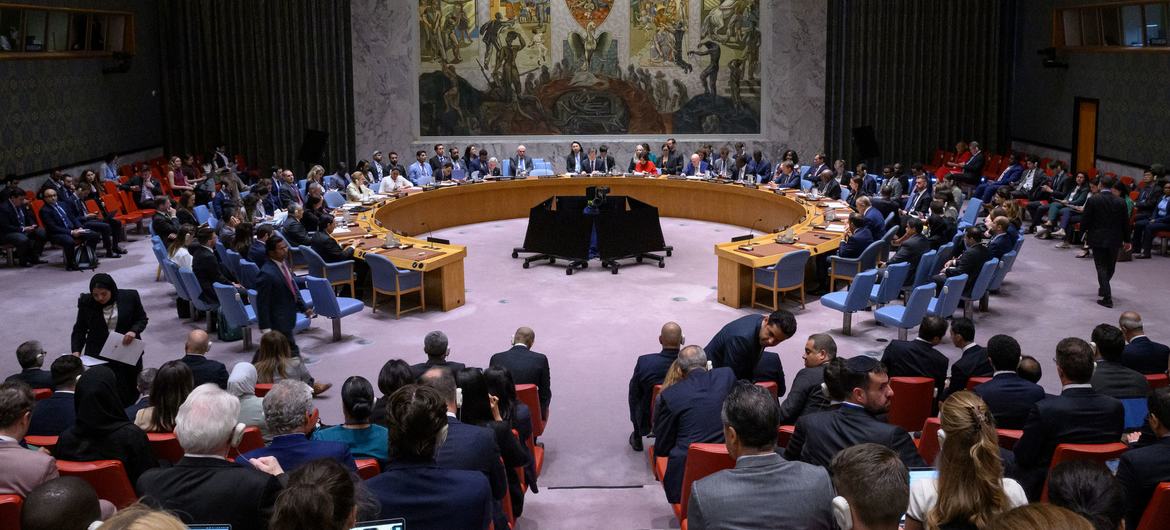
At a high-level meeting of the UN Security Council in New York, held during the 81st session of the General Assembly, Russia rejected Ukraine’s call for an immediate ceasefire.
Foreign Minister Sergei Lavrov stated that Moscow has no intention of halting military operations in any negotiating format.
Ukrainian Foreign Minister Andrii Sybiha called on Russia to accept “a full, immediate, and unconditional ceasefire.” Lavrov responded by citing past experience:
“Having learned bitter lessons, we will not suspend the special military operation during negotiations in any format,” he said, adding that Russia is nonetheless prepared to negotiate in pursuit of a lasting peace.
Sybiha described the balance of positions on the Council in stark terms. According to him, fourteen of the fifteen Security Council members support a ceasefire, while only one aggressor is blocking it. Russia, as one of five permanent members, holds veto power over any binding resolution. Sybiha also stated that Ukraine has been ready for a ceasefire since March 2025. On the eve of the meeting, Ukraine, the European Union, and more than 50 countries signed a joint statement expressing the same position.
The meeting took place against a backdrop of data showing rising civilian casualties. UN Under-Secretary-General for Political and Peacebuilding Affairs Rosemary DiCarlo reported that in the first eight months of 2026, more civilians in Ukraine were killed and injured than in all of 2025. Since February 2022, the UN has confirmed the deaths of at least 17,257 Ukrainian civilians, including 835 children, with a further 53,693 people wounded.
DiCarlo also cited casualty figures from inside Russia: according to Russian authorities, 443 civilians were killed and 2,932 were injured between January and August — a sharp increase compared to the previous year. She warned that strikes on energy infrastructure ahead of winter could “plunge millions of people into darkness and cold.”
Several hours before the Security Council meeting, Volodymyr Zelensky addressed the General Assembly, calling for continued pressure on the Russian economy.
“When someone gives Russia more money through trade, they give this war more time,” he said.
On Tuesday, September 22, Zelensky met with President Donald Trump and proposed a truce with Russia on strikes against energy infrastructure. The Security Council meeting was chaired by French Foreign Minister Jean-Noël Barrot and was convened at the initiative of Denmark, France, Greece, Latvia, and the United Kingdom. No resolution was put to a vote.


 English
  Русский