‘Ukraine should not entertain illusory hopes of swift accession to the EU’, – Wolfgang Ischinger says
24.10.2023 - 17:16
‘To leave the ranks of the Armed Forces of Ukraine, one must either be dead or disabled’, – former military personnel says
24.10.2023 - 17:53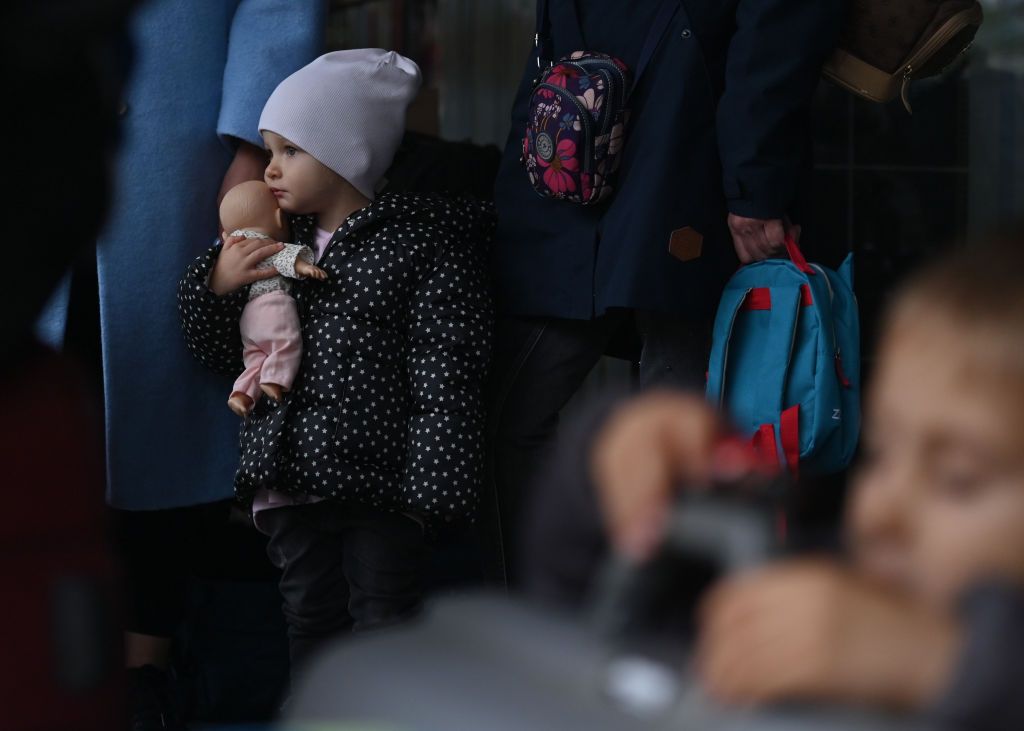
The threat of a demographic crisis has been looming over Ukraine for quite some time, but the full-scale invasion by Russia has pushed it to a critical point.
This is reported by the Kyiv Independent, citing data from the EU Joint Coordination Center (JCC).
According to government estimates, the country’s population in 2021 was 41 million. It now stands at around 35 million, and experts warn that in the next 30 years, it could drop to less than 29 million.
According to the United Nations, 6.2 million refugees left the country during the full-scale invasion, and only 1 million have returned. Experts believe that this might not be enough for a complete economic recovery.
“We are not prepared to lose six million refugees forever,” said Minister of Economy Yulia Sviridenko in Kyiv in October of this year.
Experts argue that the government must ensure that life in Ukraine will be better once the war ends. However, it may be an unrealistic task to convince qualified refugees to return if they have reached a comfortable standard of living in the EU. European states are also using these Ukrainians to address their own labor shortages. Their gain is Ukraine’s loss. The consequences of the demographic crisis will be significant and will overshadow any recovery. The Center for Economic Strategy (CES) predicts an annual GDP decline of 2.7% to 6.9% if the country loses 1.3 to 3.3 million of its citizens.
Ukraine is also grappling with a massive imbalance between the old and young populations. According to the Ukrainian analytical website Opendatabot, approximately 30% of the population is currently made up of retirees.
More than half of Ukrainian children under 10 years old are currently living abroad, according to Daria Mikhayloshina, a researcher at CES. With a birth rate of 1.16, it may be challenging for Ukrainians to overcome this issue.
The longer the war persists, the harder it becomes to persuade Ukrainians to return. An October survey conducted by Gradus Research showed that 18% of refugees want to stay in foreign countries, compared to 8% a year ago.
Income is the second-largest issue in Ukraine. Ukrainians consider the availability of well-paying jobs to be the most critical economic factor in deciding where to live, rating it higher than infrastructure reconstruction.
The problem is that most Ukrainian refugees fled from areas burdened by Russian incursions, such as the southern Zaporizhia region, and finding good employment in light of this is a challenging task.
The Ministry of Economy of Ukraine has noted that the country will need approximately 4.5 million workers over the next 10 years for economic revival.
If Ukrainian businesses hope to recover after the war, they will require international financing. However, foreign investors may hesitate to put their money into a country with a depleted, aging population.
Millions of Ukrainians are utilizing the EU Temporary Protection Directive, which allows them to live and work within the European Union until March 4, 2025.
Faced with a difficult battle, Ukraine is unlikely to recover its entire population, even without considering the number of casualties and injuries from the war.
According to Michael Newson, Senior Coordinator for Migration and Sustainable Development Programs at the International Organization for Migration, the country will have to follow in the footsteps of European countries, such as when they attracted labor migrants to key sectors after World War II.
It’s challenging to predict which sectors will require assistance the most, but Newson sees deficits affecting manufacturing, textiles, IT, and agriculture.
Ultimately, Ukraine will need to prove to its citizens that it is working towards a positive post-war path.


 English
  Русский