Hungary’s election victor, Magyar, said that negotiations with Russia are necessary and that he has no intention of defending Kyiv’s interest
13.04.2026 - 10:01
Finland detonated the warhead of a found drone, while fragments washed ashore in Estonia: incidents heighten anxiety in the region
13.04.2026 - 13:03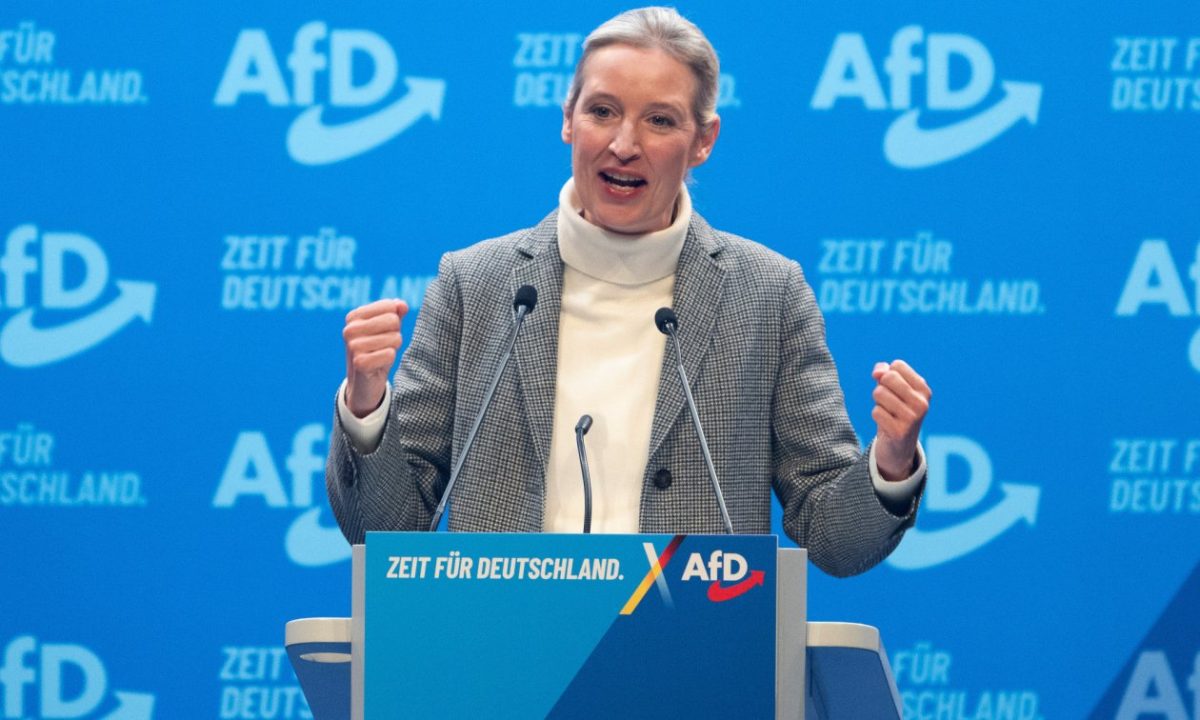
At a regional party congress in Magdeburg, the Alternative for Germany (AfD) approved a sweeping election platform that could become the basis for the most right-wing regional government in Germany since the Second World War.
The roughly 150-page document includes a sharp tightening of migration policy, the abolition of protected status for Ukrainian refugees, and a course toward restoring relations with Russia.
AfD’s lead candidate Ulrich Siegmund presented the program as a plan for the party to come to power without coalition partners. According to him, the goal is to achieve “45 percent plus” in the September 6 election for the Saxony-Anhalt state parliament. Siegmund promised “consistent deportations, remigration, and free childcare facilities,” making clear that the party intends to pursue a maximally hardline domestic policy.
One of the most controversial points of the platform was the demand to abolish the protected status of Ukrainian refugees in Germany and encourage their return home. At present, under the EU temporary protection mechanism, about 1.2 million Ukrainians are legally residing in the country. AfD is effectively proposing to revise this approach and make Ukrainians’ stay in Germany not a guarantee of safety, but a temporary and conditional measure.
At the same time, the party advocates improving relations with Russia, which directly contradicts the line of the German federal government, which supports Ukraine. At the federal level, AfD has long demanded the lifting of anti-Russian sanctions, the resumption of gas supplies through Nord Stream, and the abandonment of parts of the climate agenda, including withdrawal from the Paris Agreement.
The program also addresses the ideological restructuring of domestic institutions. AfD proposes abolishing the State Agency for Civic Education, revising the broadcasting system, and tying state funding for public associations to their “commitment to the democratic order and patriotic core values.” Critics see this as an attempt to subordinate public life to party ideology.
The rhetoric at the congress only deepened opponents’ concerns. Hans-Thomas Tillschneider, deputy chairman of the party’s regional branch, said that children need not anti-racism lessons but self-defense classes. Statements like this only reinforced fears that AfD is betting not on social reconciliation, but on further radicalization of the public agenda.
During the congress, protests took place outside the conference center in Magdeburg. Several hundred people came out with signs reading “No to racism” and “Magdeburg for banning AfD.” Among the protesters were activists from the group “Grandmothers Against the Right” and supporters of the Green Party. Green Party member Reinhard Dasbach told AFP that AfD must be “stopped at any cost.”
At the same time, concern is growing not only among the party’s political opponents, but also in the business community. Commenting on the platform to Handelsblatt, business representatives acknowledged serious economic problems and a general fear of deindustrialization, but said that AfD lacks clear and realistic solutions, especially in energy policy.
Ahead of the September 6 election, AfD remains the favorite in the campaign: polls give the party around 40 percent of the vote, well ahead of Chancellor Friedrich Merz’s CDU, which is polling at about 25 percent. At the same time, the regional Office for the Protection of the Constitution has already classified the AfD branch in Saxony-Anhalt as a “proven right-wing extremist organization.” The state’s prime minister, Sven Schulze, has repeatedly said that a coalition with AfD is out of the question.
Against this backdrop, the September election in Saxony-Anhalt is becoming not just a regional campaign, but a test of how far Germany is prepared to go in normalizing far-right politics.


 English
  Русский