The duration of power outages may increase due to the repair of a major nuclear power plant unit – Energoatom
13.06.2024 14:08
A Kyiv prosecutor is suspected of embezzling more than 97 thousand euros
13.06.2024 14:53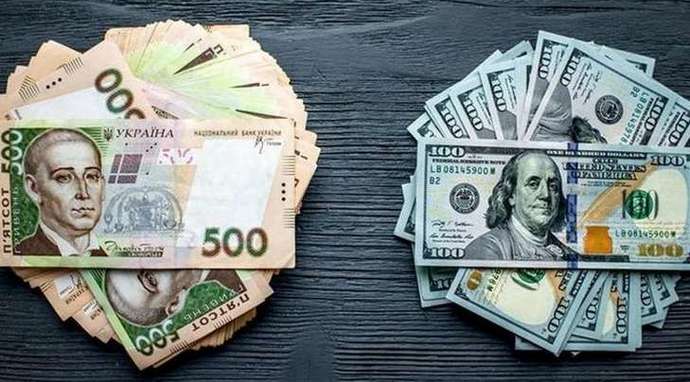
The reduction in the National Bank of Ukraine’s (NBU) key interest rate today negatively impacted the hryvnia, leading to a decrease in its exchange rate against the dollar. On June 13, the non-cash dollar exchange rate rose to 40.80 UAH/USD, and the cash rate reached 41.25 UAH/USD.
Interbank trading began at 40.55 UAH/USD, peaked at 40.80 UAH/USD, and corrected to 40.77 UAH/USD by the close. Demand for the dollar on the Bloomberg platform jumped from yesterday’s $188 million to $298.7 million, exceeding the average daily volume of last week, which was $197.5 million. The volume of sales from NBU’s foreign exchange reserves was estimated at $200-220 million.
“Until noon, the dollar on the interbank market traded at about 40.55-40.60 UAH/USD. Many expected the key rate to remain at the previous level of 13.5%, considering Ukraine’s unfavorable inflation prospects due to the recent devaluation of the hryvnia and rising electricity tariffs. However, in the afternoon (even before the official NBU statement on the rate, which is always announced at 14:00), information about a 0.5% rate cut (to 13%) leaked onto the market, and the rate jumped to 40.80 UAH/USD (asks reached as high as 40.8170 UAH/USD, but no deals were made at that price), and only by the close did the market slightly pull back. The rate cut surprised some and was seen more as a political move—a demonstration of the stability of our market (raising the rate is a response to a problem), while for others, it signaled accelerated dollar purchases. This is the standard reaction of businesses and speculators. The lower the key rate, the lower business deposit rates, and the less profitable it is to hold hryvnia in accounts. It moves to currency speculation, one of which we saw today,” explained the chairman of one of the banks.
By the end of the day, the official hryvnia/dollar exchange rate rose from 40.4441 UAH/USD to 40.6908 UAH/USD—a new historical high for the NBU. Maximum cash sale prices of the dollar in bank cash desks increased by 10-15 kopecks, reaching 41.20-41.25 UAH/USD, with rates set by “BTA Bank,” “TASKombank,” and “OTP Bank.” The average range was 40.85-41.15 UAH/USD. Currency buybacks from the public occurred in the corridor of 39.85-40.80 UAH/USD.
The largest retail banks, “Privatbank” and “Oschadbank,” set purchase-sale rates for the American currency at the same level—40.40-41.0 UAH/USD. Card rates were even higher: the sale maximum reached 41.50 UAH/USD (set by “Akkordbank”), and the average range was 40.35-41.10 UAH/USD. Purchases were in the range of 39.54-40.80 UAH/USD.
Commenting on the exchange rate situation, NBU Deputy Chairman Yuriy Heletiy cited several reasons for the increased demand for the dollar and the devaluation of the hryvnia:
- Slower inflow of export currency earnings from agricultural producers, whose return period was previously reduced from 180 to 90 days.
- Gradual removal of currency restrictions by the NBU, expanding business opportunities for purchasing foreign currency.
- Increased budgetary calculations in foreign currency, including advance payments for certain commodity groups.
Previously, discussions of state currency purchases primarily focused on military needs, but now energy has also been mentioned. Payments for imported electricity, which Ukraine buys in Europe, are estimated at $800 million.
“In April, we imported 0.3 GW, in May—0.6 GW. According to NBU’s forecast, electricity imports this year will cost Ukraine about $800 million,” reported NBU Deputy Chairman Serhiy Nikolaychuk.


 English
  Русский