Dnipro plunges into blackout: residents go without power for three days
26.11.2026 08:32
Billionaire close to Trump agrees with Lukoil to buy sanctioned foreign assets
26.11.2026 09:34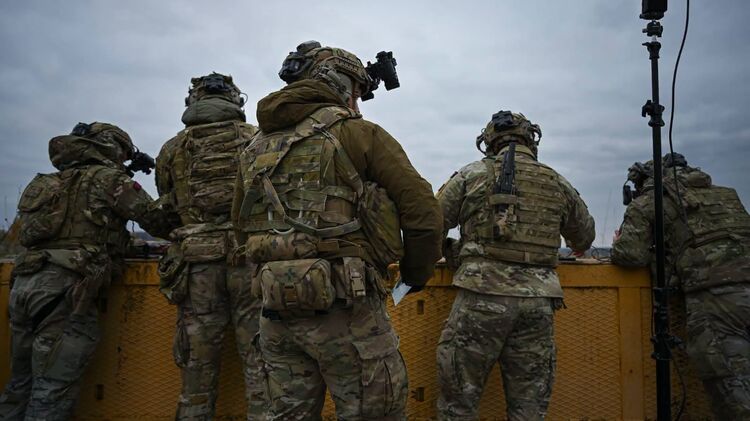
About a hundred Ukrainian soldiers were killed or went missing during the Ukrainian Armed Forces’ attempt to recapture Toretsk in May 2025. According to sources in the command, Ukrainian President Volodymyr Zelensky insisted on holding the city.
This is stated in an investigation by hromadske.
A year and a half later, no one has been held accountable for the operation, and most of the commanders involved in its execution have been promoted.
By the beginning of May 2025, Russian forces controlled virtually all of Toretsk. The remaining part of the city was in the gray zone. Nevertheless, the command decided to launch a counterattack with the forces of the first mechanized battalion of the 100th Brigade of the Ukrainian Armed Forces, which was in reserve.
According to the then brigade commander, Ruslan Tkachuk, the main goal of the operation was not so much to recapture Toretsk as to divert Russian forces that had broken through Ukrainian defenses and were advancing towards Kostiantynivka. In two weeks, Russian forces had advanced 11 kilometers.
Other officers involved in the defense of Toretsk believe the operation was doomed from the start. They point to the high concentration of Russian FPV drones, which made a mechanized assault extremely risky.
“The commander with his deputies should have led the assault, not send people on a stupid mission. All the brigade commanders laughed at it. We moved away from mass assaults back in 2023. We should have forgotten about such assaults: heavy losses and no result,” said one of the battalion commanders.
Nevertheless, on May 6, more than 100 Ukrainian soldiers were sent to Toretsk in 21 armored vehicles. Seven vehicles did not return. The infantry managed to occupy a number of buildings in the city center, including a police station. However, they almost immediately came under intense Russian fire.
One of the surviving participants in the operation said that before the assault, the command promised the mission would take an hour and a half. However, after capturing the building, the soldiers were denied evacuation and ordered to hold the defense.
The soldiers had virtually no supplies of water and food, but only ammunition was delivered to them. The command also refused to allow them to leave the captured building, despite its gradual destruction under fire. Eventually, one of the soldiers died under a concrete slab, and the publication’s interlocutor was wounded and made his own way out of the city.
Despite the significant losses of the first group, on May 8, the command sent about 50 more people to Toretsk in eight armored vehicles.
The wife of one of the missing participants in the second wave of the assault said that her husband already knew about the tragedy that had occurred two days earlier. Before being sent, he told her that the soldiers were ordered not to retrieve the dead and wounded.
“He called as if saying goodbye. He knew he might not return, but he went. He said: ‘I can’t abandon the guys. If I’m destined to die, the main thing is that it’s quick,'” the woman recalls.
Her husband is still listed as missing.
Journalists, using open sources, have identified the names of 86 servicemen of the 100th Brigade who were killed or went missing in Toretsk from May 6 to 10, 2025. However, the data on losses is not final. Some participants in the operation continued fighting for the city for up to three more months.
One of the publication’s interlocutors said that at the headquarters of the operational-tactical group “Luhansk,” they reported daily deaths of 15-20 servicemen during those days.
“An entire battalion of motivated people, who were preparing for some big task, were simply burned in the end. What’s the point, when 99% of Toretsk is already lost, of going there? To hold positions that in a week there will be nothing, and most importantly no one, to support? In the end, it achieved nothing. The enemy wiped out the best, destroyed the equipment. It had no effect on the enemy’s further advance,” said one of the officers.
The then brigade commander Tkachuk admitted that he did not receive enough people and resources to implement the plan. However, he claims the operation achieved its main goal — the Russian command transferred part of its forces from the direction of the offensive on Kostiantynivka to Toretsk, which allowed the Ukrainian Armed Forces to bring up additional brigades and close the breach that had formed.
At the same time, other officers call the operation a complete failure and question why the command approved the assault at all if significantly larger forces were required for its successful execution.
Two hromadske sources, who were serving in the “Luhansk” group at the time, claim that the decision to hold Toretsk came personally from Zelensky.
“The President’s Office pressured that Toretsk needed to be held as long as possible, because there was a threat to Kostiantynivka. So the battalion that was in reserve was sent there, but they should have simply refused. I think there was an unspoken instruction from the Office — of course, not an official order. And the gentlemen generals were not against taking a risk, recalling the former glory of previous successes,” said one of the interlocutors.
Another source claims that similar situations occurred later.
“The president has repeatedly demonstrated such behavior. Recently, he did not accept that both the corps and the commander-in-chief reported that we had lost Rodynske. The president said: ‘No, go ahead, recapture it,'” the publication’s interlocutor stated.
At the same time, the then commander-in-chief of the Ukrainian Armed Forces, Oleksandr Syrskyi, denies Zelensky’s involvement. According to him, the president “gave no orders regarding the planning or direct execution of these actions.” Syrskyi claims the operation was at the tactical level and was directly led by the brigade commander. At the same time, he admitted that the General Staff was informed about the preparation of the assault, and the commander-in-chief himself allocated the necessary forces and means.
Hromadske sources also believe that the assault could not have taken place without the consent of the commander of the “Khortytsia” group and current commander-in-chief of the Ukrainian Armed Forces, Mykhailo Drapatyi, since forces under the control of “Khortytsia” were involved in supporting the operation.
As hromadske notes, most of the commanders responsible for preparing and conducting the assault were subsequently promoted. The then commander of the “Luhansk” group, Serhiy Sirchenko, became deputy commander of the “North” Operational Command, Tkachuk became deputy commander of the 19th Army Corps, and Roman Ostapchuk, who commanded the assault battalion, took command of the 100th Mechanized Brigade.
Meanwhile, relatives of missing servicemen have been waiting for information about their fate for a year and a half.
“I want there to be thoughtful orders for the guys who are still alive, who are still fighting. So that they are not treated as expendable material. If the orders were thoughtful and the guys were valued, perhaps there wouldn’t be so many missing and dead,” says the wife of one of the assault participants.
Earlier, we reported that Marine Serhiy Volynskyi, who defended Mariupol and Azovstal, criticized the Ukrainian Armed Forces’ operation in Krynky, Kherson region, and called it a command failure and a tragedy.


 English
 Русский