Zelensky: Starshield restriction is technically imposed by SpaceX
28.10.2026 12:02
Ex-former Prosecutor General Kravchenko accused NABU and the Office of the President of an attempted assassination
28.10.2026 13:00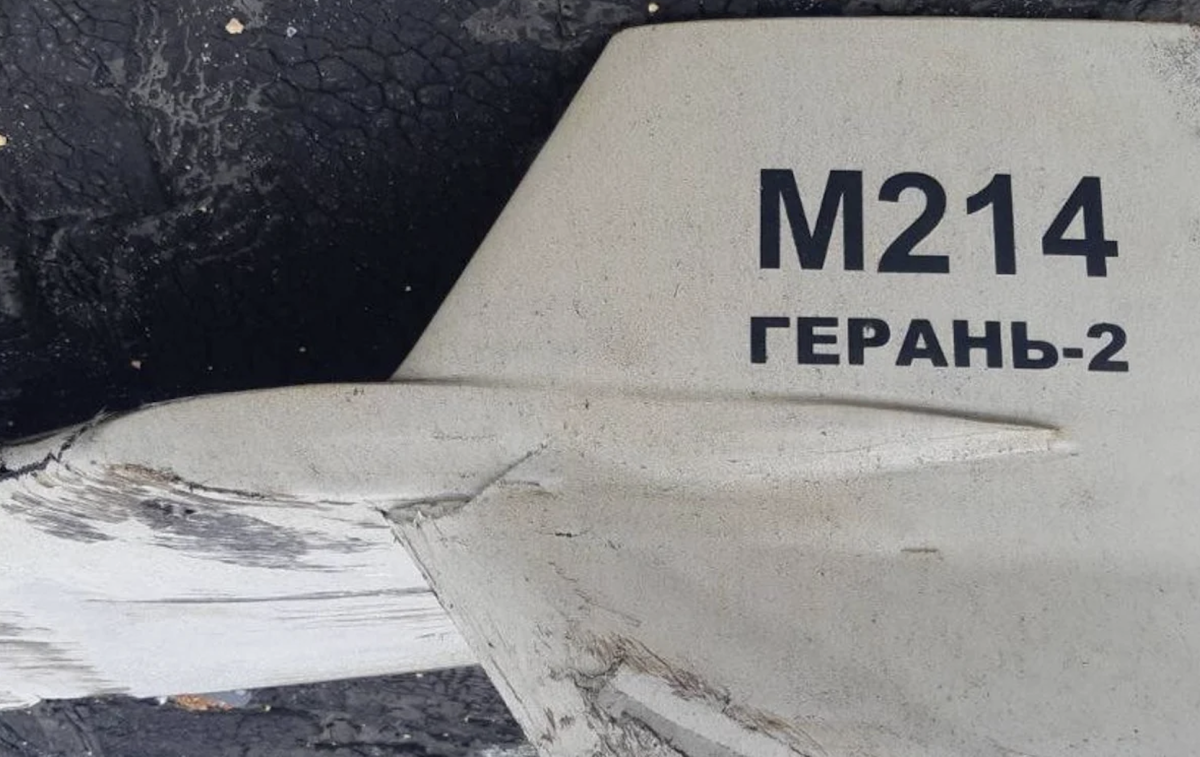
Starting November 18, China will require export licenses for certain drones and key components for them, including engines, autopilots, and onboard communications equipment.
Ukraine’s sanctions envoy said the new rules cover the engines that equip Russian “Geran” strike drones.
The rules were published on October 19 in a joint announcement by China’s Ministry of Commerce, the General Administration of Customs, and the Equipment Development Department of the Central Military Commission. According to a summary on the Chinese government website, items with the specified characteristics “cannot be exported without a license.” A ministry spokesperson said these items have “clear signs of dual use” and that China will approve applications that meet the requirements.
What the rules cover
The controls apply to drones capable of flying beyond the operator’s line of sight for 30 minutes to three hours and maintaining stability in wind gusts of 46.3 km/h or more. They also cover drones with a flight duration of three hours or more and certain models with a range of 300 km or more, Militarnyi reports.
Brushless motors come under control if they meet all four criteria at once: voltage of at least 48 volts, power of at least 3 kW, power density of at least 3 kW/kg, and a rated speed of no more than 3000 rpm. The controls also apply to corresponding speed controllers and certain carbon-fiber propellers. Exporters must report technical specifications, purpose, and end user to customs, and customs may detain shipments that raise doubts.
The package of measures also relaxes the rules for certain civilian drones. The payload threshold at which crop-spraying drones are exempt from licensing is raised from 20 to 80 liters, South China Morning Post reports. According to Bloomberg, these measures are part of a broader set of restrictions that also affects industrial equipment. Separately, in August Beijing introduced strict screening of every export application to the United States for drone-related products.
Cautious optimism in Kyiv
Vladyslav Vlasiuk, the Ukrainian president’s commissioner for sanctions policy, cited an explanation from China’s Ministry of Commerce.
“Formally, the core of Russian long-range strike drones has come under control,” he said, according to Ukrainska Pravda.
He listed engines for the “Gerans,” turbojet engines for the jet-powered versions, autopilots, and jam-resistant navigation.
Vlasiuk stressed that licensing is not a ban: “reliable” exporters can obtain general permits valid for up to three years, and there are many grounds for refusal. According to him, the established thresholds mostly do not affect components for mass-produced FPV drones used at the front: motors, speed controllers, batteries, cameras, and fiber optic cable.
“We will demand that the new rules be applied to known suppliers to the Russian defense-industrial complex,” he said.
He added that Ukraine and its partners will monitor licenses, transit routes, and re-exports.
Uneven consequences
According to Militarnyi, Russia may still be able to obtain components with Beijing’s approval. Ukraine has weaker ties with China, so for Kyiv the same rules could mean delays, additional checks, and higher costs.


 English
 Русский