Strike on Moscow–Simferopol bus in Yenakiieve: 7 killed, 11 wounded
03.06.2026 06:30
Rinat Akhmetov outlines three scenarios for ending the war
03.06.2026 08:04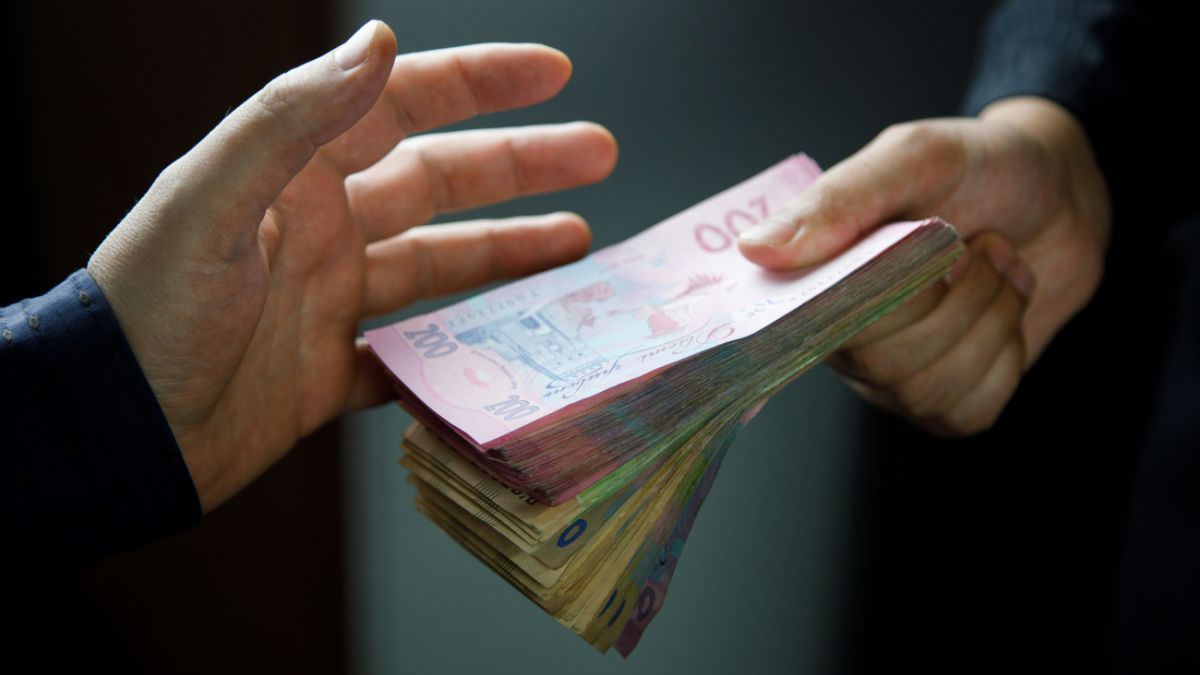
The public initiative Stop-Parasyte (Grant Watch Ukraine) has described the 10 most common methods used by professional “civic activists” to steal international aid.
This was reported by Vladimir Boyko, a veteran of the Russo-Ukrainian war and journalist.
According to him, the amounts involved run into tens and hundreds of millions of dollars, pocketed by people who call themselves “representatives of civil society.”
Topping the list are kickbacks in the grant-receiving process. The well-known kickback rate, according to Boyko, is 20%. It must be paid to the Ukrainian office of the grant-maker or to a corrupt employee of a foreign embassy who is a Ukrainian national.
“That is precisely why grants are only awarded to ‘insiders,'” Boyko stated.
Foreign staff, he said, generally do not take kickbacks and are not even aware of what their Ukrainian colleagues are doing.
In second place is double funding: the same line item is included in the financial reports of both the primary project implementer and the subcontractor. Boyko notes that the grant-maker does not carry out any real verification of financial reporting and fails to notice that several implementers have simultaneously billed for, say, the rental of the same venue for a “roundtable.”
Third place goes to the procurement of services whose authenticity cannot be verified — services “to improve, enhance, strengthen, support,” and the like. Financial reports for such expenditures, according to the veteran, are submitted in the form of charts, tables, and histograms whose content no one understands, including the “activists” who compile the reports themselves.
The Stop-Parasyte list also includes other schemes:
— “Dead souls”: the performance of non-existent work is attributed to outside individuals;
— payment of a salary to the same person simultaneously from the primary grant recipient and from subcontractors;
— kickbacks from subcontractors;
— payment for services that were never actually provided;
— hiring of “any friends” — including government officials;
— payment of bonuses to “tame” journalists on fabricated pretexts;
— mutual services: professional “civic activists” register several pseudo-civic organizations that engage one another to carry out work stipulated under grant programs.
Boyko separately mentions the Anti-Corruption Action Center (AntAC) of Vitaliy Shabunin. According to his data, AntAC earned 188 million hryvnias from grant embezzlement over the years of the full-scale war. AntAC head Shabunin was listed as serving in the Armed Forces of Ukraine for more than four years and was recently discharged on health grounds. According to Boyko, during his fictitious service alone in the 207th Separate TRO Battalion, Shabunin received more than 900,000 hryvnias in pay, additional remuneration for combat and special missions, and “combat” payments.



 English
  Русский