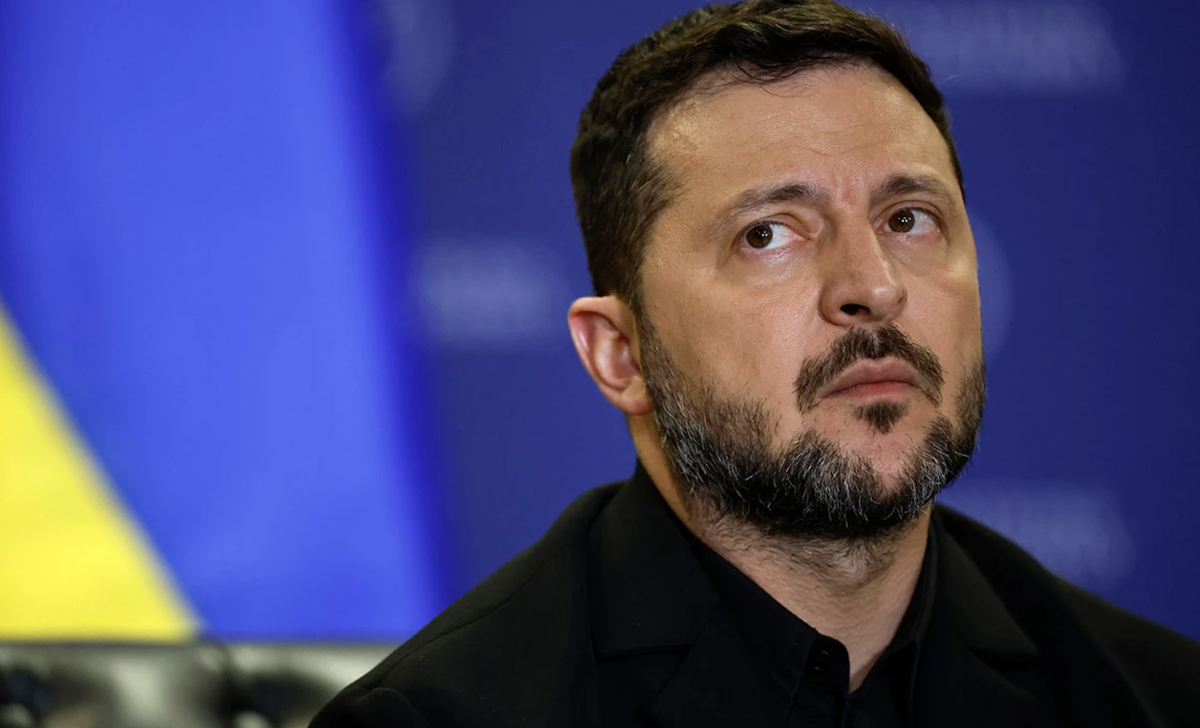
Fico revealed that the head of the European Commission scolded him for communicating with Trump
31.03.2025 16:03
Trump hinted that Ukraine is demanding NATO membership in exchange for a ‘tough’ subsoil deal
01.04.2025 07:14
Europe considering increasing Russian gas imports amid growing tensions with U.S. President Donald Trump.
This is reported by the German political magazine Spiegel.
The publication notes that the European Union finds itself in an energy trap: in the West, there’s Donald Trump, who is trying to impose the purchase of American liquefied natural gas (LNG); in the East, there’s Russia, insisting on the revival of the Nord Stream 2 project.
Europe’s dual position is most clearly reflected in what Brussels isn’t doing. For example, by the end of March, EU Energy Commissioner Dan Jørgensen had promised to present a master plan for the complete rejection of Russian gas supplies. According to preliminary data, the EU aims to reduce imports from Russia to zero by 2027 — including oil and uranium supplies. Upon taking office, Jørgensen promised to develop the relevant strategy within 100 days. However, as we see, that deadline has passed — without results.
According to insiders, there are two reasons for this. First, the EU does not want to appear as a hindrance to peace talks between the U.S. and Russia by prematurely ruling out the possibility of resuming Russian gas supplies. Second, the unstable global energy situation is preventing Brussels from making a strategically important decision.
After Russia’s invasion of Ukraine and the reduction in gas supplies from Russia, the EU managed to compensate for the resulting deficit with American LNG. But now the White House is led by a president who “also wants to blackmail the world with his gas,” and Europe finds itself confused between two superpowers, the magazine notes.
If the U.S. can no longer be relied upon as a stable supplier of gas — where should Europe get its resources from? Russia already has ideas on this, Spiegel reports. Russian Foreign Minister Sergey Lavrov stated last week that the U.S. and Russia are discussing the repair of the Nord Stream pipelines as part of peace negotiations over Ukraine. These pipelines were largely destroyed in late 2022 as a result of sabotage — reportedly carried out by a Ukrainian special ops group, according to Spiegel.
In Germany, politicians and businesspeople have begun talking again about the possible resumption of Russian gas supplies after a peace agreement between Kyiv and Moscow. Among them are Christian Democratic Union (CDU) members of parliament Thomas Bareiß and Jan Heinisch, as well as representatives of the chemical industry. CDU’s potential chancellor candidate Friedrich Merz has also not ruled out such a possibility. Only the deputy head of the Green Party faction in the Bundestag, Julia Verlinden, called such statements “irresponsible.”
Given the current situation, Brussels is trapped. If the EU continues to pursue the plan to abandon Russian gas by 2027, it will deepen its dependence on an increasingly unpredictable U.S. But if the EU partially moves closer to Russia, it will end up reliant on two “undesirable partners” — though perhaps not as critically on either of them.
At the same time, the EU has little time to deliberate.
There has never been a formal ban on pipeline gas supplies from Russia. If the pipelines are repaired, supply could resume at any moment.
It’s worth recalling that reports have surfaced in the media that the U.S. is discussing with Russia and Germany the purchase of Nord Stream and other energy infrastructure.


 English
  Русский