

Croatia’s prime minister said that Ukraine’s accession to the EU before the start of 2027 is unrealistic
24.04.2026 10:01
Members of the Verkhovna Rada consider it unrealistic to restore heating in Kyiv’s Darnytskyi district by winter
24.04.2026 12:00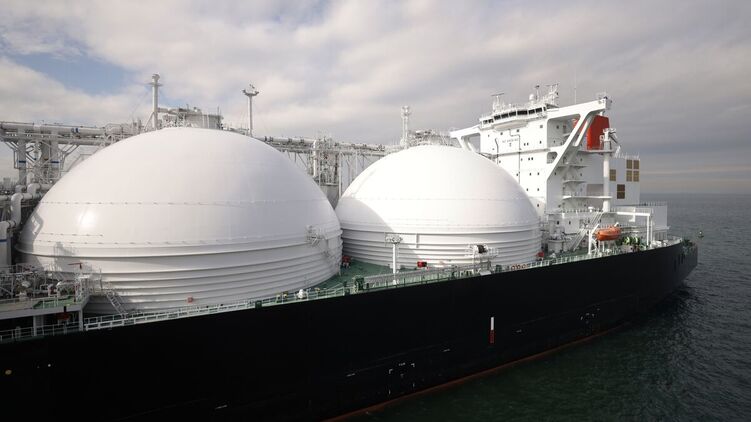
Starting Saturday, April 25, the European Union will ban purchases of Russian liquefied natural gas (LNG) under short-term contracts.
The ban will come into force at a difficult moment, when the war in the Middle East is seriously disrupting global supplies. This could drive gas prices higher, although deliveries under long-term contracts may continue until the end of the year.
This was reported by Bloomberg.
The EU covers about 12% of its gas needs with supplies from Russia, with part of that fuel arriving by pipeline. The ban on spot-market purchases under short-term contracts could cut off between 2.8 million and 3.5 million tons of Russian LNG per year. That amounts to about 3% of the bloc’s total LNG imports last year.
The reduction in supply is happening at a time when the benchmark gas price in the region has already jumped by about 40% because of the conflict in the Middle East. Europe will need to buy more fuel in the coming months to replenish depleted reserves before next winter, precisely at a moment when global supplies have unexpectedly tightened.
If the situation worsens, the European Commission has the authority to declare an emergency and temporarily allow spot purchases of Russian fuel.
“We do not expect this lever to be used quickly, given the reputational risks of backtracking on the ban so soon after its introduction. The more serious test will come on January 1, 2027, when long-term flows cease,” said Tom Purdie, lead LNG analyst at Energy Aspects.


 English
  Русский