Turkish Pegasus and Turkish Airlines cancel dozens of flights to Russia after drone threats
02.09.2026 19:05
Koretsky: government found 70 billion in savings and will direct them toward defense
02.09.2026 21:02
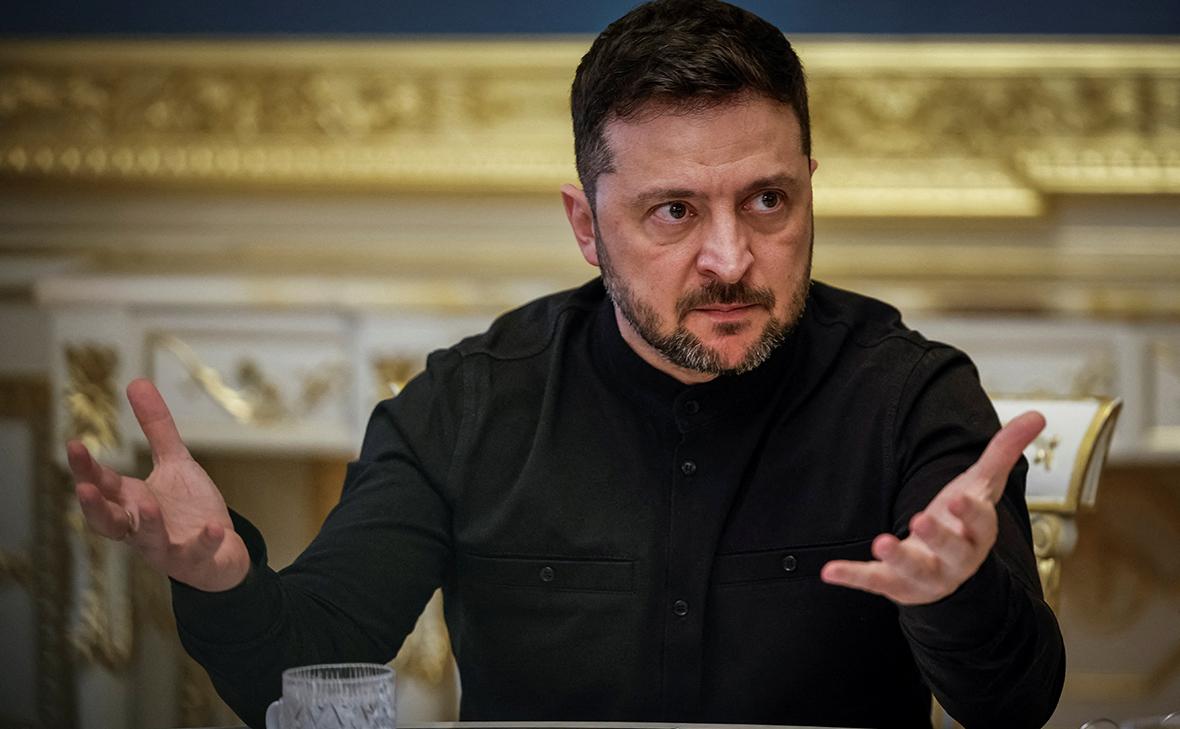
Incumbent Ukrainian President Volodymyr Zelensky would receive 23% of the vote if presidential elections were held in the near future.
These are the results of a sociological survey conducted by the company Info Sapiens between August 8 and 23.
Second place in the presidential rating goes to Ukraine’s ambassador to the United Kingdom and former Commander-in-Chief of the Armed Forces of Ukraine Valery Zaluzhny, with 12.7% of the vote. Third place is held by former Defense Minister Mykhailo Fedorov, who would receive votes from 7.1% of respondents.
Further down the rating are member of parliament and leader of the European Solidarity party Petro Poroshenko and head of the President’s Office Kyrylo Budanov — both with around 5.5% of electoral support. Approximately 3% each are ready to vote for boxer Oleksandr Usyk, Kharkiv mayor Ihor Terekhov, and commander of the 3rd Army Corps of the Eastern Operational Command of the Ukrainian Ground Forces Andriy Biletsky.
Fedorov’s figures grew significantly over the month: in July, only 2.5% of those surveyed would have voted for him. Ruslan Rokhov, head of the U Electoral Data Project, explains the current situation as follows:
“According to other sociological surveys, immediately after the start of the ‘cardboard’ protests, the former minister’s rating stood at 13.4%. From this one can conclude that the rating nearly halved due to negative assessments of his statements made in interviews and addresses to citizens. I predict that his agreement to become an adviser to the Italian defense minister will reduce Fedorov’s support in the September survey by another one or even several percentage points,” — Rokhov said.
Zelensky’s electoral support did not change significantly over the same period, falling by just 0.8%.
In the party rating, the gap between the top three is considerably smaller than in the presidential one. A notional Zelensky party would receive votes from 13.7% of respondents, a Zaluzhny party from 12.1%, and a Fedorov party from 11.4%. Fourth place is shared by European Solidarity with 6.5% and a notional Budanov party with 6.4%. A notional party of frontline cities led by Ihor Terekhov and Vitaliy Kim would receive 4.8% of the vote, and a notional Usyk party 4.5%. All other parties, even accounting for the redistribution of undecided voters’ votes, would not clear the 5% threshold.
Rokhov urges caution in interpreting the data obtained:
“It should be understood that the surveys are conducted under wartime conditions, and therefore electoral sentiments should be regarded as the potential of individual figures and their teams, rather than as the results they would achieve once hostilities have ceased and the security situation allows elections to be held. It should also be noted that results will change depending on who participates and who withdraws from political activity.”
In August, the share of those who believe the country is moving in the wrong direction rose to 46%; in July that figure stood at 38%.
The survey was conducted using the CATI method based on a random sample of mobile phone numbers among approximately 1,000 respondents across all Ukrainian territories under government control. The sample is representative of Ukraine’s population aged 18 and over by gender, age, region, and settlement size. The theoretical margin of error does not exceed 3.1% at a confidence level of 0.95%. U Electoral Data Project is a joint research initiative of Info Sapiens and Public Policy Development Office.


 English
  Русский