Diesel prices rise at Ukrainian gas stations: fuel prices on August 13
13.08.2026 08:31
Ukrainian Armed Forces mining territories with drones due to shortage of standard weaponry
13.08.2026 09:32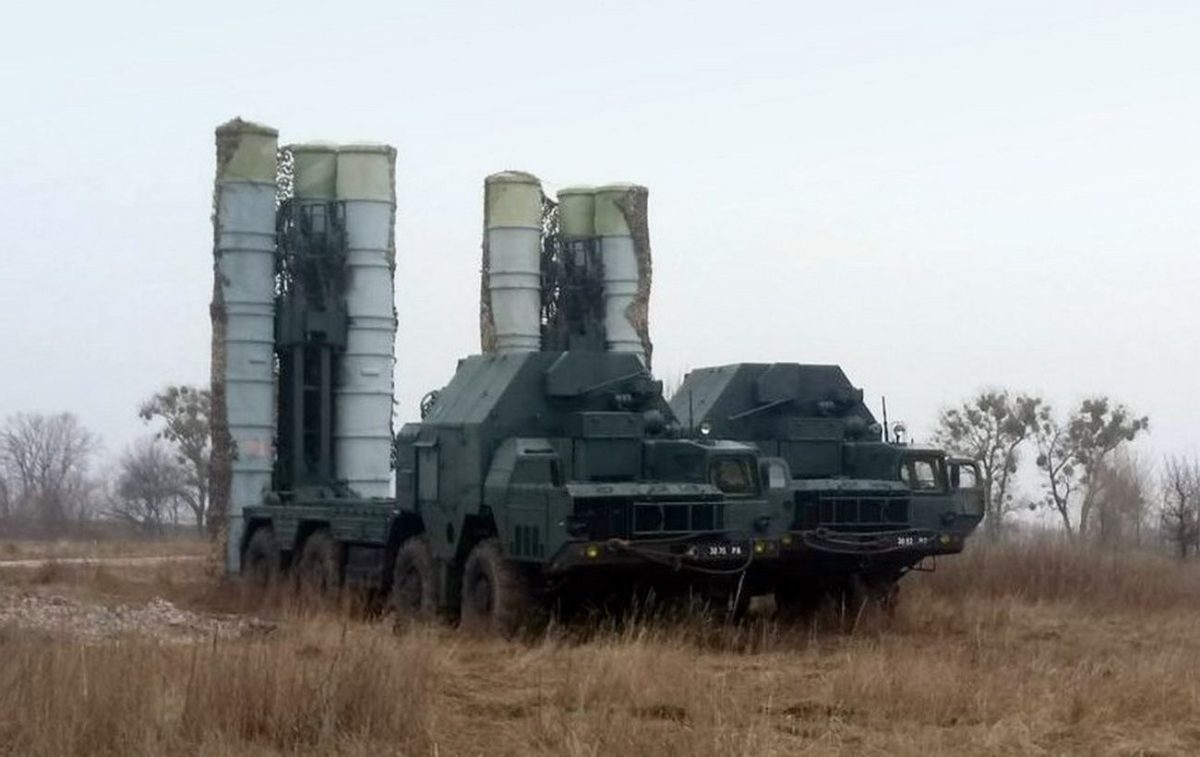
The overall arsenal of air defense systems and missiles available to NATO significantly exceeds Russia’s capabilities — yet no one anticipated a protracted war.
That assessment was given in a comment to UNIAN by military expert and chairman of the Reserve Council of the Ground Forces of the Armed Forces of Ukraine, Ivano Tymochko.
Responding to the question of why Ukraine chronically lacks defensive assets when, beyond Patriot, other systems exist to counter ballistic missiles, the expert stressed that launch systems alone are not enough.
“There must be an entire complex: electronic warfare, radio monitoring, guidance systems, command and control, satellite communications, and so on. The Americans provide us with intelligence, satellite imagery, and reconnaissance data. It is on the basis of that data that systematic and synchronized strikes against incoming enemy missiles take place,” Tymochko said.
Beyond the complexity of the system itself, the expert drew attention to the enormous personnel requirements. According to him, the maintenance staff and crews of a single Patriot battery number around 100 people. All of them must be trained not only on simulators and at training centers, but also given the opportunity to conduct live missile launches in order to practice intercepting aerial targets in real conditions.
“This is a very complex process. It is not simply one air defense system or even one battery. It is a far more branching network of interaction and joint operation. After all, such systems are guided primarily using satellite data,” Tymochko noted.
Maintaining the combat readiness of such systems also requires constant information exchange, repair facilities, and the ability to carry out repairs promptly, the expert added.
Speaking about the production of interceptor missiles, Tymochko clarified that PAC-3 missiles are manufactured under license partly in Germany and partly in Japan, while the main production is concentrated in the United States. In his view, the current shortage of interceptors is above all a question of monopoly over the product.
“Transferring production under license to other countries, especially those with lower labor costs, automatically makes the product cheaper. As a result, the original manufacturer, by licensing production to other countries, risks losing its monopoly or seeing its product devalued. We would hardly act that way ourselves, but they take into account that we might introduce some design modifications or, at the very least, develop our own equivalent,” the expert explained.
Asked whether the West had underestimated the scale of Soviet and Russian production by betting on a small number of expensive precision systems rather than mass quantities, Tymochko clarified that it was not Russia but the Soviet Union that produced them, while Russia has largely been drawing systems from storage and modernizing them. The real problem, he said, lies elsewhere.
“No one anticipated that the war would be protracted. The overall arsenal that NATO as a whole possessed, and still possesses even now, significantly exceeds Russia’s capabilities. But it is spread across different countries. That is, if an attack on NATO were to occur, a comprehensive response and counteraction would follow. But when each country acts separately, you get the situation we have now,” Tymochko said.
Earlier, military analyst and Ukrainian Armed Forces reserve major Oleksiy Hetman noted that Russia is not independently capable of producing ballistic missiles in quantities sufficient for mass strikes against Ukraine. To that end, the country is employing North Korean ballistic missiles KN-23 and KN-24, which by their technical specifications can deviate from a target by approximately 200 meters and are not precision weapons.


 English
  Русский