
TCC servicemen detained in Rivne for beating a man during mobilization activities
25.09.2026 13:32
Erdogan calls attacks on vessels in the Black Sea “inexplicable” at meeting with Zelensky
25.09.2026 15:04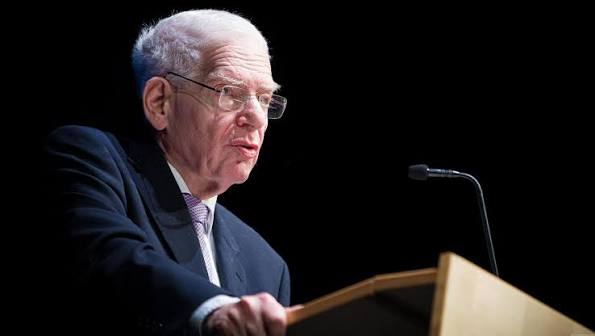
The victory of the Left party in Berlin’s elections has prompted urgent warnings from the leaders of Jewish communities in Germany and Israel, who have called on other parties not to form a coalition with the winners.
The regional elections in September 2026 ended in a historic defeat for Chancellor Friedrich Merz’s Christian Democratic Union (CDU). The far-right Alternative for Germany (AfD) won in two eastern states, while the far-left Die Linke captured Berlin.
On September 6, the AfD received 43.8% of the vote in Saxony-Anhalt — more than double its result in the 2021 elections — while the CDU collapsed from 37.1% to 17.2%. Two weeks later, on September 20, the AfD won in Mecklenburg-Vorpommern with 38.2%, pushing the CDU below the five-percent parliamentary threshold for the first time. On the same day in Berlin, the Left posted its best-ever result: the party came first with 25.7%, more than doubling its previous support level, ahead of the CDU (18.8%) and the AfD (16.3%).
“The worst electoral defeat for the CDU in many years — perhaps even decades,” was how Merz himself described the outcome of the Saxony-Anhalt elections.
According to an INSA poll, only 14% of Germans consider Merz a suitable candidate for chancellor, while 78% hold the opposite view. In nationwide polls, the AfD has for the first time pulled ahead of the CDU/CSU: approximately 28–29% against roughly 20%.
The results have caused a split within the CDU. On September 16, eight CDU state premiers issued a joint statement calling for the restoration of voter confidence, but conspicuously omitted any mention of Merz — a deliberate distancing gesture, according to analysts. Hendrik Wüst, premier of North Rhine-Westphalia and head of the CDU’s largest state branch, has emerged as the most frequently cited alternative candidate for chancellor. Three scenarios are being discussed within the party: a voluntary transfer of power, the formation of a minority government, or a confidence vote that could trigger early federal elections.
“We are experiencing a fundamental transformation of Germany’s party-political system,” Merz acknowledged.
The Left’s victory in Berlin immediately alarmed Jewish communities. Josef Schuster, president of the Central Council of Jews in Germany, urged the SPD and the Greens to refuse any coalition that would bring the Left to power, stating that the party follows a “systemic model” of suppressing antisemitism. The president of the Jewish community in Berlin, Gideon Joffe, compared handing control of the capital to the Left to “letting the fox guard the henhouse.”
Israel’s ambassador to Germany, Ron Prosor, warned that the party’s rise was turning what had previously been only a theoretical threat into a “concrete and immediate existential danger” for Berlin’s Jewish community. Merz said that “Jewish life in Germany is no longer safe,” calling it “a disgrace.”
Left party co-chair Ines Schwerdtner rejected the accusations, insisting that criticism of the Israeli government should not be equated with antisemitism. The party’s mayoral candidate, Elif Eralp, said she would “do everything possible to ensure that Jews — as well as Muslims, LGBTQ+ people, and all other residents of our city — feel safe.”


 English
  Русский