Budanov announced a “trigger event” that could end in a “catastrophe” for Ukraine
12.04.2026 18:02
Ukraine’s Defense Ministry said that Ukrainian businesses could arrange private air defense for themselves
13.04.2026 05:32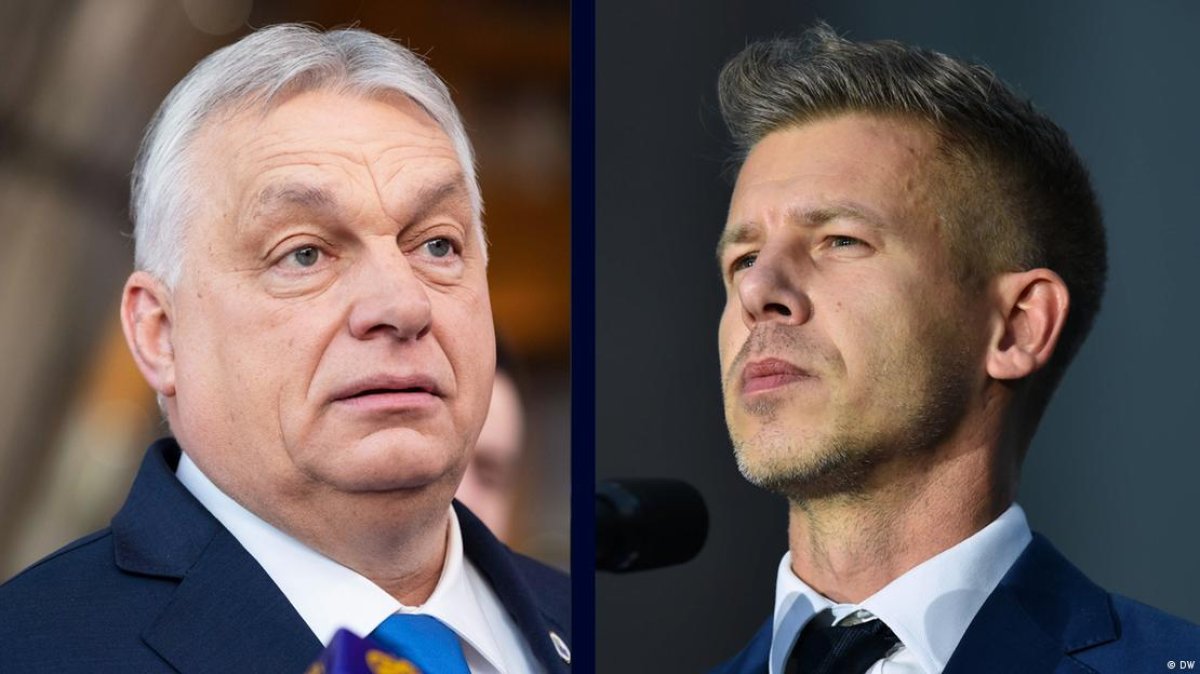
Voting has concluded in Hungary’s unicameral parliamentary elections, which also determined who will become the country’s next prime minister. According to results based on the counting of more than 90% of the ballots, opposition Tisza party leader Péter Magyar won by a wide margin.
His party secured a constitutional majority in parliament, which will allow it to pass laws without support from other factions.
The rule of Prime Minister Viktor Orbán’s Fidesz party has come to an end after 16 years. The parliamentary elections ended in a crushing victory for the opposition: out of 199 seats, 138 went to the opposition Tisza party led by Péter Magyar, who himself had still been a member of Fidesz just two years ago.
By midnight on April 13, more than 95% of the ballots had been counted: Tisza was receiving 138 seats, Fidesz 54, and Our Homeland seven.
Hungary’s new prime minister will be elected within the next 30 days, President Tamás Sulyok said.
In a country of nearly 10 million people, Viktor Orbán’s ruling alliance held 135 seats in parliament before the vote. That was a constitutional majority, allowing it to amend the constitution, pass key laws, and appoint top officials on its own, effectively excluding the opposition from major decision-making. Magyar’s party will hold even more seats in the new parliament.
The election saw record turnout: half an hour before polling stations closed, turnout had reached 77.8%. By comparison, the final figure in the 2022 elections was 69.5%. Pollsters had predicted record turnout, and Hungarian television showed long lines at some polling stations in Budapest.
After reports of the opposition’s victory, Magyar addressed his supporters near the parliament building.
“Together we have overthrown Orbán’s system, and together we have liberated Hungary, we have taken back our country,” he said from the stage before a crowd of thousands.
“Never in the history of democratic Hungary have so many people voted, and no party has ever received as strong a mandate as Tisza,” he added.
Viktor Orbán, meanwhile, acknowledged the unsuccessful and “painful” outcome of the parliamentary elections for his party. The prime minister said the picture was already clear, even though the vote count had not yet been completed.
Before the election, Orbán was actively supported by U.S. President Donald Trump and by J.D. Vance, who visited Hungary. Fidesz built much of its campaign around opposition to Ukraine. Orbán urged voters to support his party so as “not to let Hungary be dragged into war,” claiming that Magyar was acting as an agent of Kyiv and intended to support Volodymyr Zelensky.
The opposition, for its part, accused Orbán of working for Moscow, claiming that Russian political consultants and media had helped his party during the campaign.
After the preliminary results were announced, Péter Magyar said he was already receiving congratulations from foreign leaders. German Chancellor Friedrich Merz and NATO Secretary General Mark Rutte had already contacted him. French President Emmanuel Macron also congratulated him.
“I have just spoken with Péter Magyar to congratulate him on his victory in Hungary. France welcomes the victory of democracy, the commitment of the Hungarian people to the values of the European Union, and Hungary’s commitment to Europe,” Macron wrote on X.
British Prime Minister Keir Starmer, Ukrainian President Volodymyr Zelensky, European Commission President Ursula von der Leyen, leaders of the Nordic countries, and many other European politicians also issued congratulations.
Péter Magyar is the new leader of Hungary’s opposition and Viktor Orbán’s main rival. He has a legal education and for a long time was part of the ruling system: after studying in Budapest and doing an internship in Berlin, he worked in government institutions, dealt with European law, and interacted with EU institutions. Magyar had even been a member of Fidesz and cooperated with Orbán’s government before moving into opposition.
The turning point came in 2024 amid a political scandal over a presidential pardon. After that, Magyar publicly accused the authorities of corruption and abuse, sharply broke with Fidesz, and launched his own political campaign. His speeches quickly gained popularity, and the Tisza party, which he joined, soon became the main opposition force.
Magyar bases his politics on closer ties with the European Union and reforming Hungary. He supports strengthening judicial independence and developing healthcare and education.
As for Russia and Ukraine, Magyar supports unblocking the EU’s €90 billion for weapons for Kyiv and also promises to end Hungary’s dependence on Russian hydrocarbons by 2035.
At the same time, he does not support fast-tracking Ukraine’s accession to the EU and proposes putting that issue to a referendum. He also opposes sending Hungarian troops into the conflict zone and seeks “pragmatic relations” with Moscow.

 English
  Русский