Ukraine’s foreign minister comments on scandal with Poland over “UPA heroes”
03.06.2026 08:30
Sikorski: Poland expects Ukraine to correct the UPA decree — negotiations ongoing
03.06.2026 09:20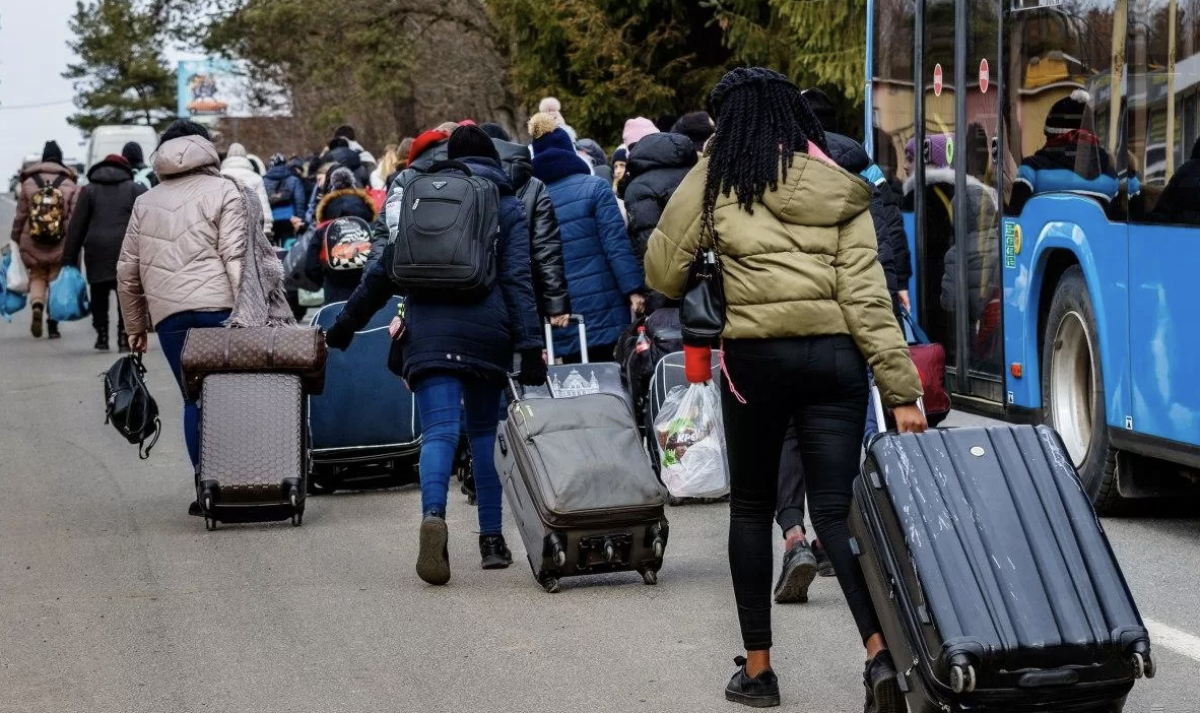
According to UNHCR, 5.9 million Ukrainians who left the country since the start of the invasion in February 2022 are currently abroad.
New research shows that with each year of war, the share of those planning to return is shrinking — and Ukraine still has no strategy for bringing these citizens back.
According to a study by the Centre for Economic Strategy (CES), 43% of Ukrainian refugees plan to return home, while 36% do not. Two-thirds of Ukrainians abroad are working-age people between 18 and 65, and young people under 35 account for more than half of all refugees — 56%.
Attitudes vary significantly by category. So-called classic war refugees are most inclined to return: 63% of them said they definitely or probably plan to come back. Among those who left in 2022–2024, an average of 20% have already changed their decision in favor of not returning. Citizens who left the country in 2024 are most likely to postpone their return to a later date — nearly 21% fall into this group.
Security remains the key condition for return: almost 80% of refugees are willing to come back only after the war has fully ended and a document has been signed that would allow civilian air routes over Ukraine to resume. Beyond security, economic and political factors play an important role: 38% of respondents cited a higher standard of living in Ukraine as an incentive, 32% cited improvements to the rule of law, and 30% cited the opportunity to find a job with decent pay. Financial support for relocating to another region and other forms of financial assistance were also listed as incentives.
Forecasts for the number of potential returnees diverge. UNHCR’s representative in Ukraine, Bernadette Castel-Hollingsworth, stated that between 3 and 3.5 million refugees would return to the country after the war ends. CES figures are considerably more modest: under an optimistic scenario — 2.2 million people, under a moderate scenario — 1.6 million, and under a pessimistic scenario — just 1.3 million.
Competition from host countries presents a separate problem. The largest numbers of Ukrainian refugees are concentrated in Germany, Poland, the Czech Republic, the United Kingdom, Spain, and Italy. Citizens who have integrated into local societies, learned the language, and found employment are often no longer dependent on either housing availability or social assistance from the host state. If residency procedures in a given country become more restrictive, many families, according to the study’s authors, are more likely to choose another country with more lenient conditions than to return to Ukraine.
Among the measures the state must implement to attract citizens back, the authors list the following. In the economic sphere — the introduction of preferential tax regimes, incentives for small business lending, the development of accessible mortgages, and a stable legislative environment, including with regard to taxation of individual entrepreneurs. In the housing sphere — the accelerated implementation of housing programs for citizens who lost their homes during combat operations or found themselves under occupation. The lack of housing is identified as one of the strong factors keeping refugees from returning.
The authors consider improvements to anti-corruption legislation and the protection of investors’ rights to be equally important — without these, they argue, there is no point in counting on billions in investment in infrastructure and the economy. Investment activity, in turn, directly affects the availability of jobs with decent pay — another key incentive for return.
In the social sphere, the authors point to the need for structural reforms in education and the launch of free state training and retraining programs — accessible both to those returning from abroad and to internally displaced persons. They separately highlight the need to expand access to professional psychological support for those affected by the war — both civilians and veterans — with the involvement of grants and international partners.
The article was prepared by Yulia Tatyk.


 English
  Русский