Miroshnik calls Yermak and Zelensky’s circle of associates “ordinary thieves”
18.05.2026 18:01
Ukrainian military analyst examines tactics of Russian drone unit “Rubikon”
19.05.2026 07:03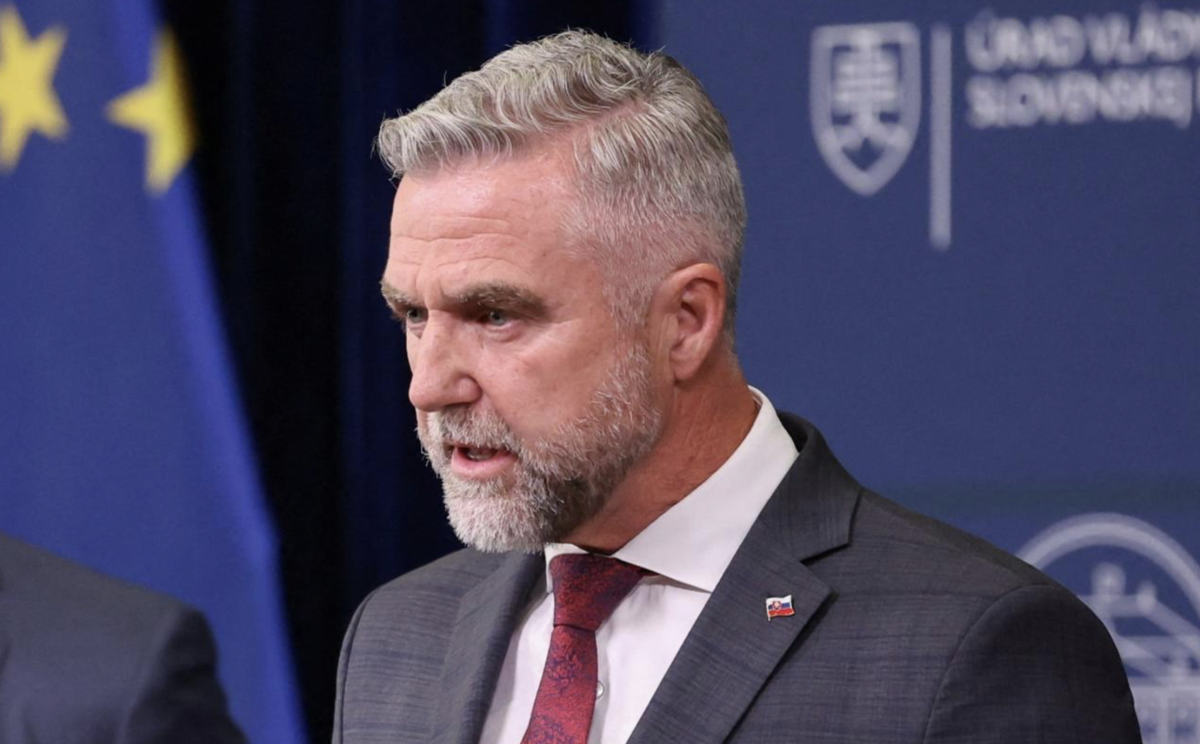
Slovak parliament Deputy Speaker Tibor Gašpar, in an interview with TASS, spoke about Russian gas supplies, Bratislava’s position on sanctions against Russia, the militarization of Europe, and the preservation of memory of the Second World War.
On an independent course and the Visegrád Four
According to Gašpar, Slovakia has always pursued an independent foreign policy and will continue to do so. Prime Minister Fico, he said, will voice critical views wherever EU decisions run counter to Slovakia’s interests or do not serve the interests of the European Union as a whole. Regarding the future of Hungarian Prime Minister Péter Magyar, Gašpar noted that it is unclear how willing he will be to cooperate on contentious issues, but Bratislava would like to revive engagement within the Visegrád Four — Poland, the Czech Republic, Slovakia, and Hungary.
Gašpar also pointed out that the European economy is losing competitiveness due to the rejection of Russian energy resources and the stringent decisions under the Green Deal. Slovakia, as a landlocked country without ports, cannot receive liquefied gas and depends on transit via existing or new routes.
On the right of veto and sovereignty
The deputy speaker stated that Slovakia will not agree to losing its right of veto on issues where it currently exists — at least as long as the current government is in power. In his view, giving up the veto right would represent a serious limitation of sovereignty: matters of values and culture would end up in the hands of the largest EU member states. Gašpar noted that Slovakia’s political opposition had publicly declared its readiness to relinquish the veto right, but he himself considers this contrary to Slovak interests.
On gas and energy security
Gašpar said that gas is currently flowing into Slovakia primarily via TurkStream, since the main route through Ukraine has been halted. Bratislava would welcome a resumption of supplies via Ukrainian infrastructure, but the deputy speaker urged a realistic view of the situation. He also drew attention to the fact that the countries loudest in demanding a complete ban on energy imports from Russia have recently purchased record volumes of liquefied gas, calling this a contradiction.
Gašpar separately mentioned the situation surrounding Iran and the Strait of Hormuz, which, he said, is changing every day and is beginning to affect the global and European economy.
On the Polish ultimatum
Commenting on the statement by Polish Foreign Minister Radosław Sikorski that Poland would allow the Slovak delegation’s overflight only on the condition that Bratislava support aid to Ukraine, Gašpar said he does not understand such positions.
“If we all approached overflight permissions in that way, very soon no one would be flying anywhere. I consider this a step that does not contribute to good relations,” the deputy speaker said.
According to him, Slovakia did nonetheless receive overflight clearance from other countries that similarly voice critical views about the war in Ukraine and about Russia.
On the visit to Moscow and Fico’s message
Gašpar recounted that Prime Minister Fico had shortly before taken part in a conference in Yerevan, where he briefly met with Zelensky. In the deputy speaker’s assessment, the talks with Putin will touch on issues of energy security and raw material supplies — in particular, gas for Europe. Gašpar has no doubt that Fico will call for dialogue and for the need to conclude peace as soon as possible.
Asked about threats in connection with the visit to Russia, the deputy speaker replied that he feels safe and sees no cause for concern.
On the militarization of Europe
Gašpar expressed a critical attitude toward the course of arms buildup in the EU. In his words, Slovakia is a NATO member that positions itself as a defensive alliance, and the question of whether the increase in arms spending truly serves only defensive purposes — or whether there is an intention to enter the conflict on Ukraine’s side — remains open.
“Money is better invested in healthcare, schools, and the economy, rather than in armaments,” the deputy speaker stated.
Gašpar described the EU’s reaction to signals from US President Donald Trump about a possible withdrawal of some troops from Europe and reduced investment in joint armaments as one of the reasons for the current drive toward militarization. All loans and investments directed toward armaments or Ukraine, he said, are holding back the EU’s future development and reducing the competitiveness of the European economy. He cited serious problems in Germany’s automotive industry as an example.
On sanctions and prospects for cooperation with Russia
Gašpar acknowledged that as long as the sanctions regime against Russia remains in place — and the EU is already preparing a 21st package of sanctions — cooperation will be limited. Nevertheless, he stated that Bratislava is preparing for a resumption of engagement in the economic, cultural, and sporting spheres — by the time the war ends. Gašpar characterized Slovakia’s foreign policy as directed “to all four corners of the world”: Fico meets with representatives of major powers — Russia, China, Brazil — in order to defend national interests.
The EU loan of EUR 90 billion, in which Slovakia is not participating, the deputy speaker called a clear sign that some EU representatives want to continue the war or help Ukraine wage it.
On the prospects for peace
Responding to a question about the possibility of the conflict ending this year, Gašpar called it a difficult question with no straightforward answer. In his words, Russia is trying to gain more territory in the Donbas, while Zelensky rejects any loss of territory, which is a serious precondition for future negotiations. The deputy speaker expressed hope that representatives of Ukraine and Russia will sit down at the negotiating table as soon as possible.
On the memory of the Second World War
Gašpar reported that the Slovak parliament has amended the Criminal Code to include the damaging of memorial sites — including the graves of Red Army soldiers — in the list of criminal offenses. In his words, as long as Fico’s government is in power, Slovakia will mark the end of the Second World War in a dignified manner. A ceremonial event is planned in Liptovský Mikuláš with the participation of the President of the Slovak Republic, the Speaker of Parliament, and the Chairman of the Government.
Gašpar condemned vandalism against Soviet monuments, emphasizing that the people buried there gave their lives so that fascism would not prevail in Europe. He also noted that the younger generation often receives a distorted picture of history: in Europe, he said, there are already claims that the war was won solely by the armies of Great Britain and the United States, and not by the Soviet Union.

 English
  Русский