“Murderers”: a protest rally was held in Budapest over the brutal killing of a Hungarian in Zakarpattia
July 12, 2025
“Tired” or hiding? Yuriy Boyko left Ukraine under the guise of a diplomatic mission
July 13, 2025
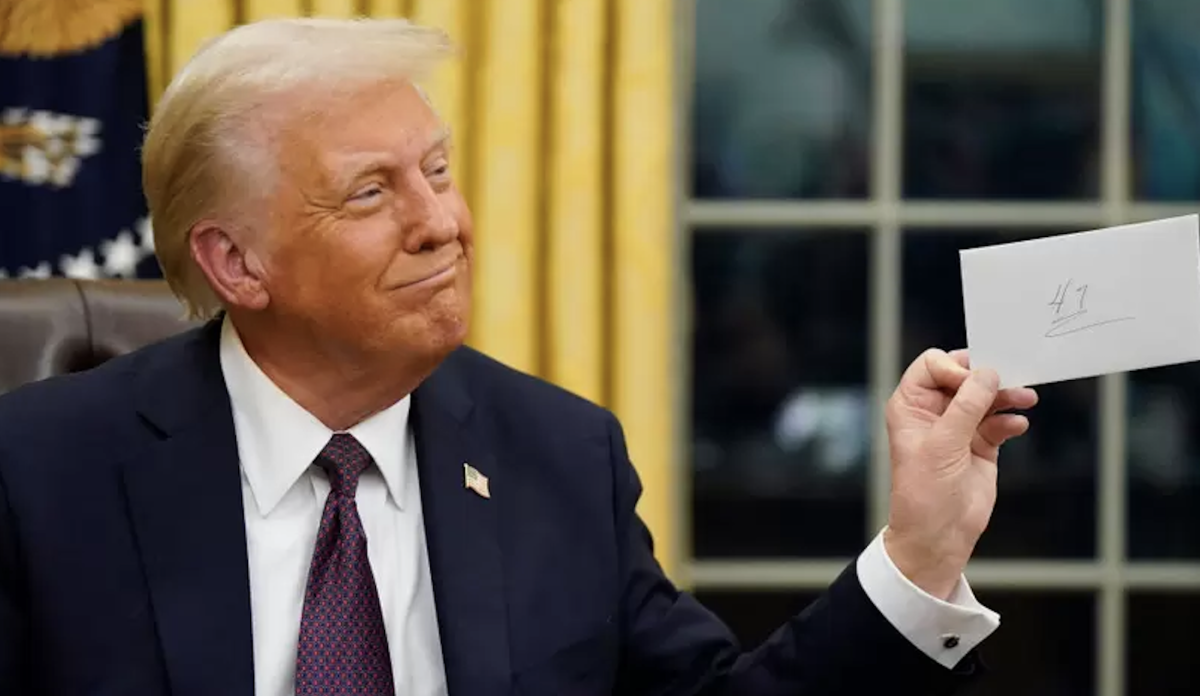
President Donald Trump, who has intensified his criticism of Vladimir Putin, has only partially resumed military aid to Kyiv, while carefully avoiding direct involvement in a prolonged conflict.
As of July 1, the Pentagon suspended deliveries of several key weapons, including Patriot missiles, HIMARS systems, and artillery shells for howitzers. Officially, the pause was attributed to logistical needs after urgent aid to Israel. In reality, however, it served as a political signal to Moscow. Only non-lethal forms of support continued — intelligence sharing, targeting assistance, and early warning systems.
Despite this, the Kremlin showed no willingness to make concessions: on the night of July 4, Russia launched over 550 strikes on Ukraine, and on July 9, a new record was set with 728 drones. Moscow clearly interpreted the U.S. pause as a sign of hesitation and used the opportunity to increase pressure.
Having failed to secure concessions, Washington resumed limited supplies on July 7: only 10 Patriot missiles — compared to 30 previously withheld. Trump also voiced support for a potential new sanctions package, but the draft legislation includes exemptions, weakening its impact.
While Trump’s rhetoric has grown tougher, his actions remain limited. Washington continues to avoid systemic support for Ukraine, relying on targeted measures and maintaining room for maneuver. U.S. aid increasingly appears to be a tool of political leverage rather than a strategy for Ukrainian victory.
Moscow’s response has been measured. Kremlin spokesperson Dmitry Peskov stated that Russia “calmly perceives” Trump’s statements, viewing them as part of a negotiation process rather than a real threat. According to him, Russia remains open to dialogue but sees no determination in U.S. actions to fully commit to its course.
Conclusion: The Trump administration is balancing between foreign policy assertiveness and the domestic slogan “America First,” avoiding long-term commitments to Ukraine. At the same time, Russia is demonstrating strength, not viewing current U.S. policy as a serious challenge.


 English
  Русский