
Bulgaria diverges from NATO in assessing Russia’s nuclear threats
02.10.2026 12:31
Russia uses jet drone with warhead to destroy power line towers for the first time
02.10.2026 13:31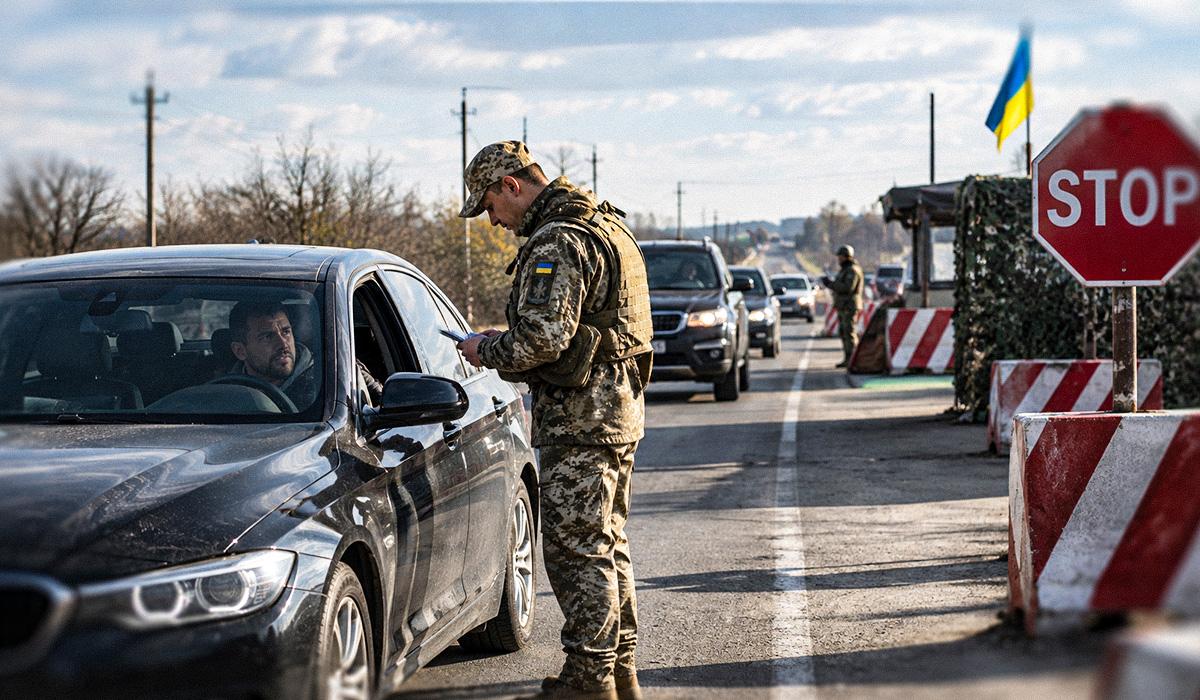
Lawyers have explained what powers Territorial Recruitment and Social Support Center (TCC) employees have when stopping vehicles, whether mobilization at a checkpoint is legal, and what happens to a car if the driver is taken away.
During martial law in Ukraine, situations arise where men are mobilized right on the street, in public places, or on the road. Ukrainians want to know how to behave in such cases and what to do if, after a driver is conscripted, his car is left unattended in the middle of the road.
Who has the right to stop vehicles
Lawyer and head of the legal company Prima Leader Group Dina Dryzhakova, in a comment to UNIAN, explained that under Cabinet of Ministers Resolution No. 1456, only authorized representatives of the authorities — the National Police, SBU, National Guard, and State Border Guard Service — have the right to stop vehicles. The TCC is not on this list.
TCC employees may man checkpoints and participate in document checks jointly with police, but they do not have direct authority to stop vehicles. Outside checkpoints, only the police may stop vehicles — and exclusively when there are substantial grounds to do so. This is provided for by Article 35 of Ukraine’s Law “On the National Police.” During martial law, the article was supplemented with a provision allowing police officers to stop vehicles to check documents — in particular, in cases of traffic violations or if a vehicle is on a wanted list.
What the TCC is authorized to do at a checkpoint
At checkpoints, jointly with police officers, TCC employees have the right to demand that military registration documents be presented together with a passport. This is regulated by the Law “On Mobilization Preparation and Mobilization” and Cabinet of Ministers Resolution No. 560. After checking documents, TCC employees have the right to serve a summons.
However, even when a summons is served, they cannot mobilize a man on the spot, the lawyer emphasizes. The mobilization process involves mandatory stages: verification of military registration data and completion of a military medical commission (MMC). Only after these stages can a decision on conscription be made. Mobilization at a checkpoint or on the street, without going through these stages and completing the relevant paperwork, is illegal.
What to do if you are taken to a TCC
If a man is brought to a TCC from the street or from a checkpoint, they have no right to take his phone, although in practice this sometimes happens. Before the phone is confiscated, one should try to send relatives a geolocation or let them know which TCC they are being taken to. A person has the right to a lawyer or legal assistance, though lawyers may be denied entry to the TCC.
If possible, what is happening should be recorded on camera. TCC employees are required to wear activated body cameras, and the detention and transfer must be recorded. Lawyers submit requests to obtain such footage, but in most cases the recordings do not exist.
Attention should be paid to whether an administrative offense report is being drawn up: administrative detention cannot last more than three hours. Documents must not be signed blindly, even under pressure. If a person disagrees with the legality of the actions taken, they may write: “I do not agree with the content,” “The detention was carried out unlawfully,” “The right to a lawyer and legal assistance was not observed.”
The law requires completion of the MMC before any conscription decision is made. The referral to the MMC must be registered in the referrals log, and the person who receives it is required to sign that log.
Where to file complaints about unlawful actions
Relatives may file a complaint with the hotline of the State Bureau of Investigations: the actions of the TCC may show signs of a criminal offense — kidnapping (Article 146 of the Criminal Code). Complaints may also be filed with the Ministry of Defense and the General Staff of the Armed Forces of Ukraine. If a person has been unlawfully mobilized, both the MMC decision and the mobilization order can be challenged in court.
What happens to the vehicle
GRACERS lawyer Inna Lokotkova explained to UNIAN that a car may not be left on the roadway, as this could lead to accidents and property damage. If the vehicle is on the roadway, the driver may be asked to park it and notify relatives so they can come and collect it. Police officers also have the right to call a tow truck, which will take the car to an impound lot if it is obstructing traffic.
The TCC has no authority to take the vehicle. If, after a driver’s mobilization, the car is left abandoned on the road, the man may be given the opportunity to retrieve the documents and lock it. Relatives can then come to the TCC where the person is being held, and one of the staff members will hand over the keys and documents. They must have documents confirming the family relationship: for example, a wife must present her passport and marriage certificate.


 English
  Русский